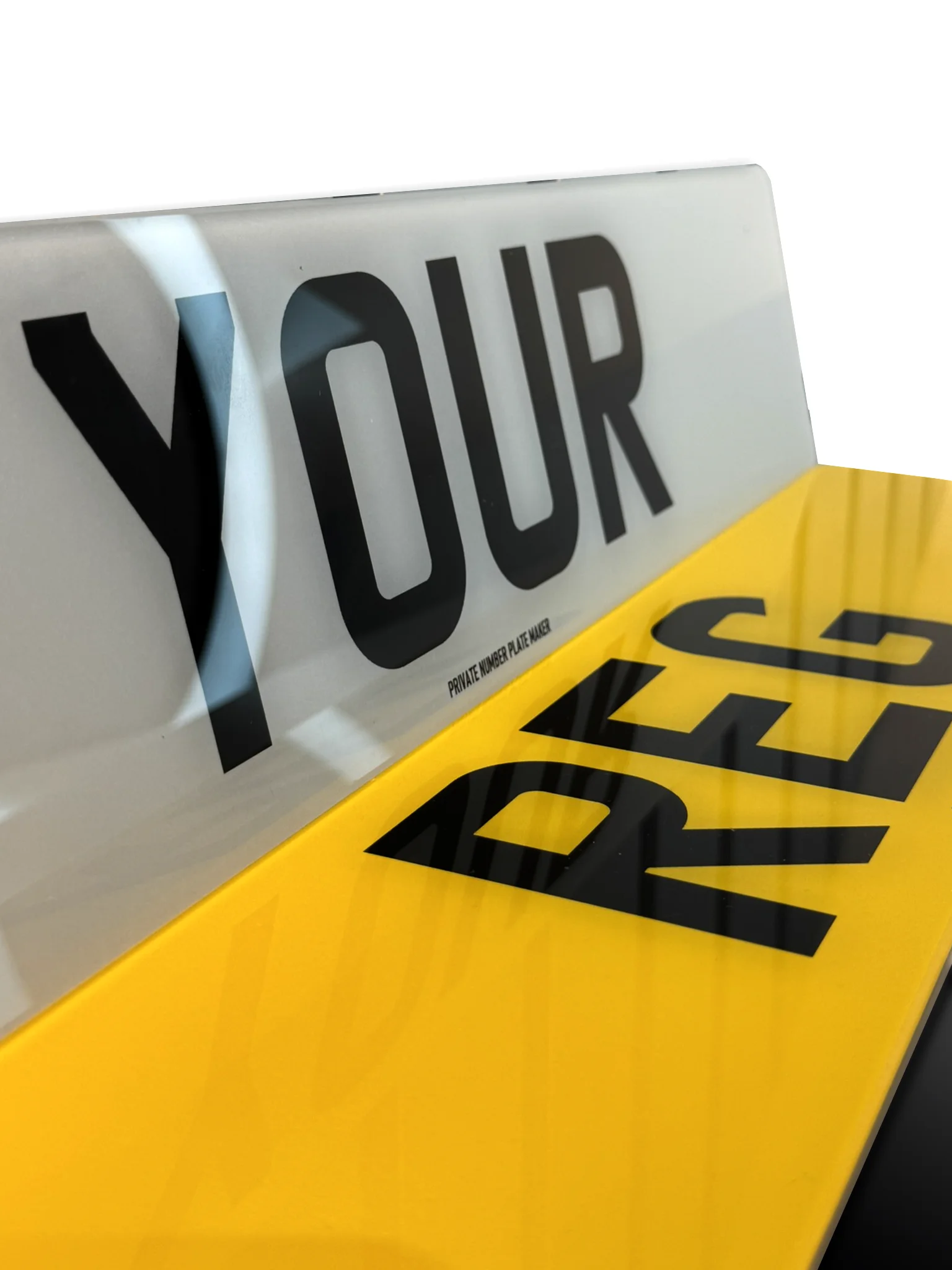
 Printed
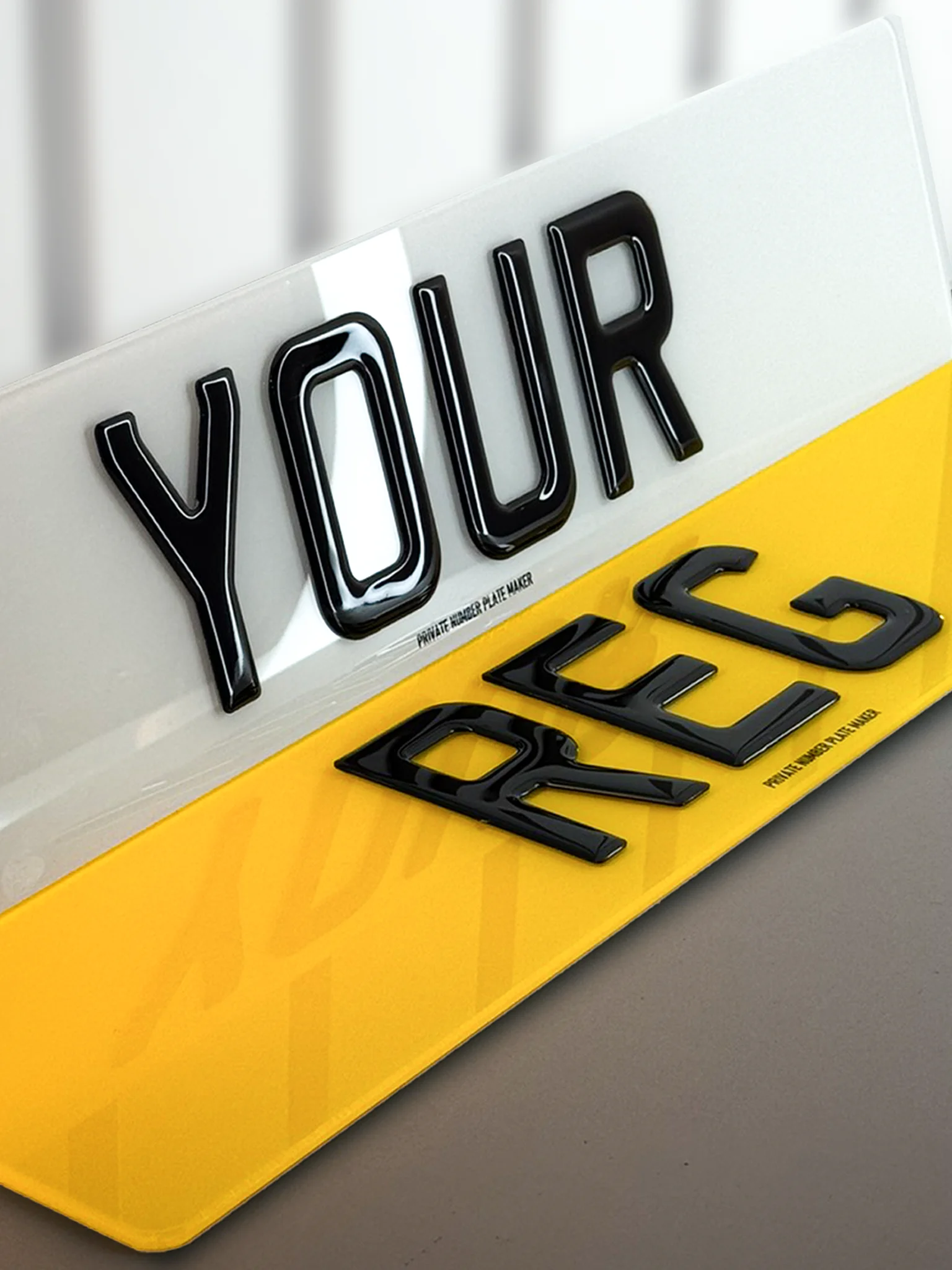 3D Plate
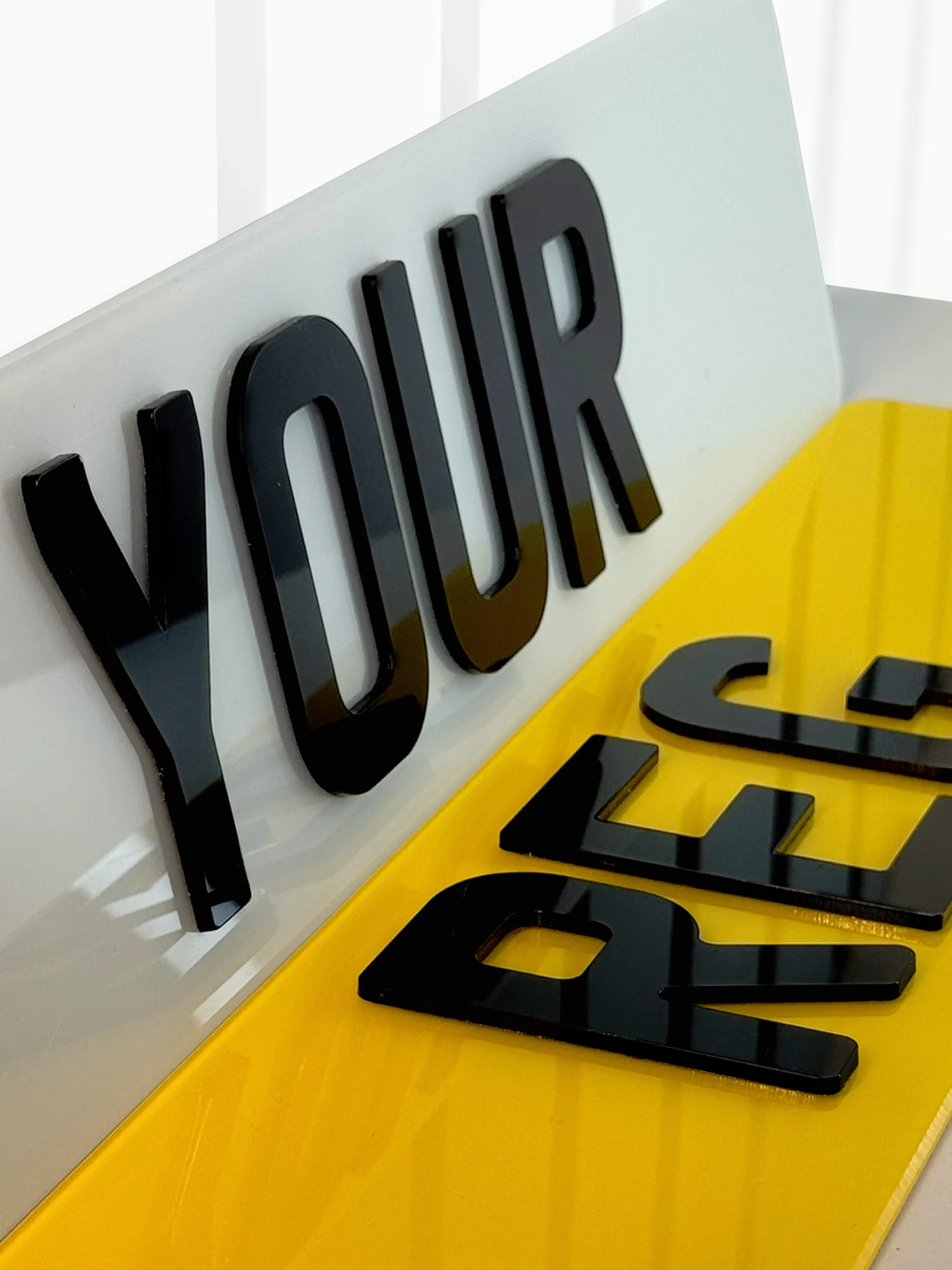 4D Plate
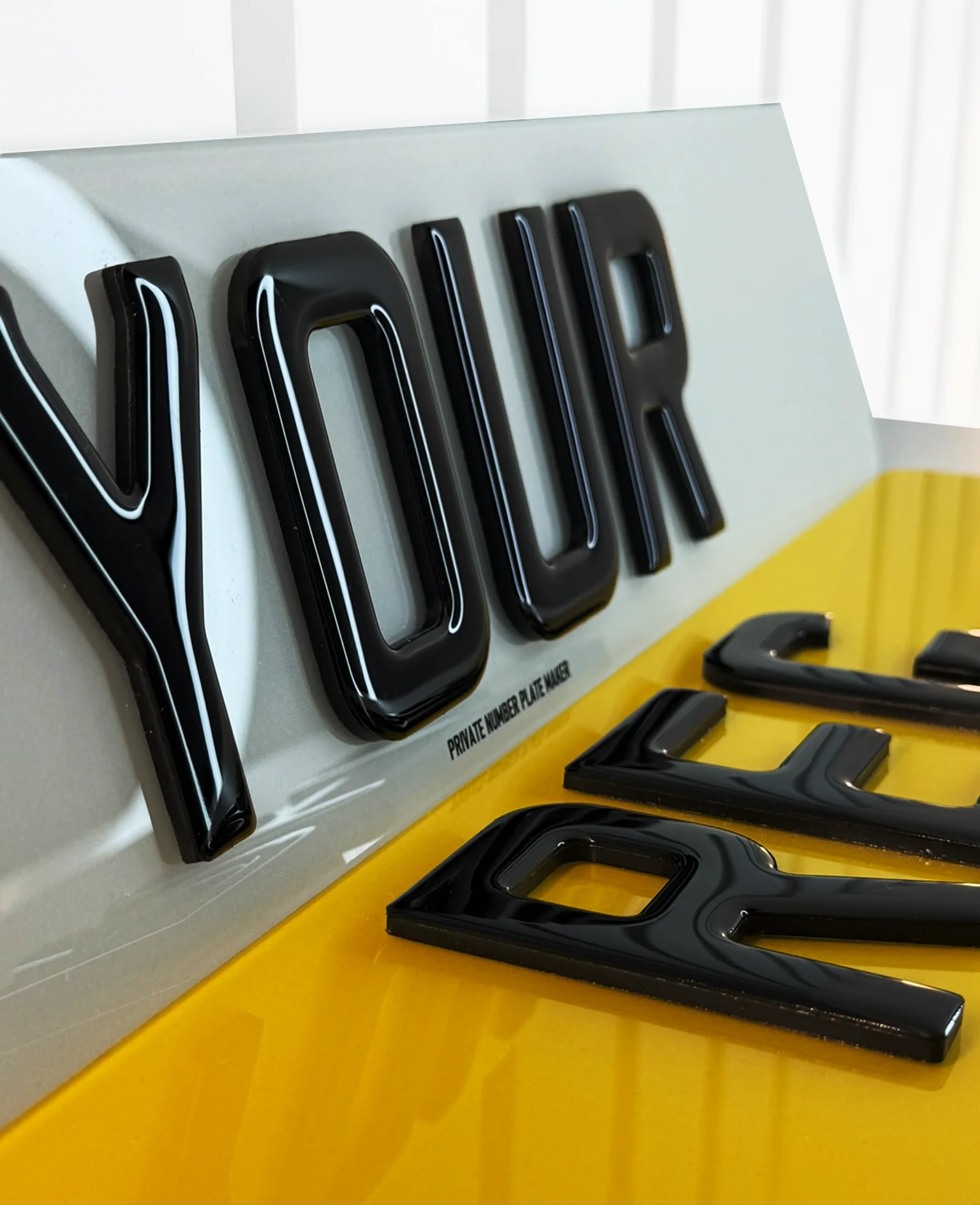 5D Plate
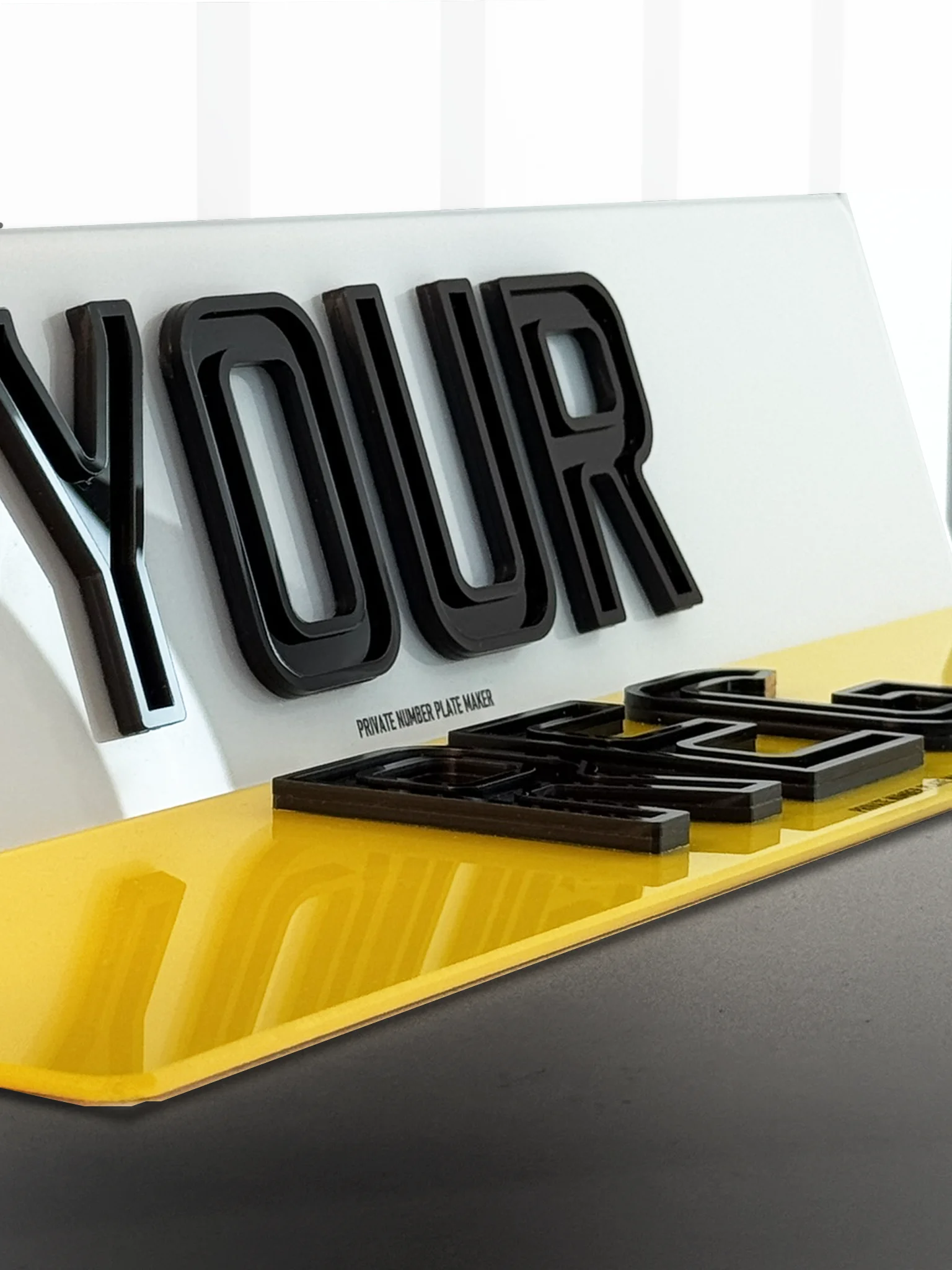 Ghost
Ghost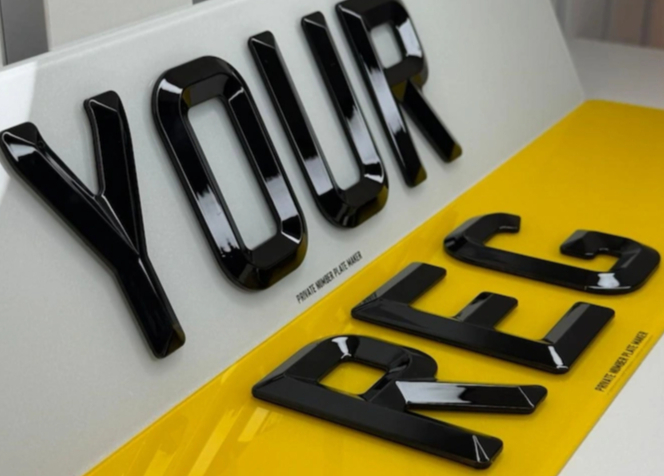 Bevel
Bevel3D vs 4D vs Standard: The Ultimate Number Plate Comparison Guide
Summary
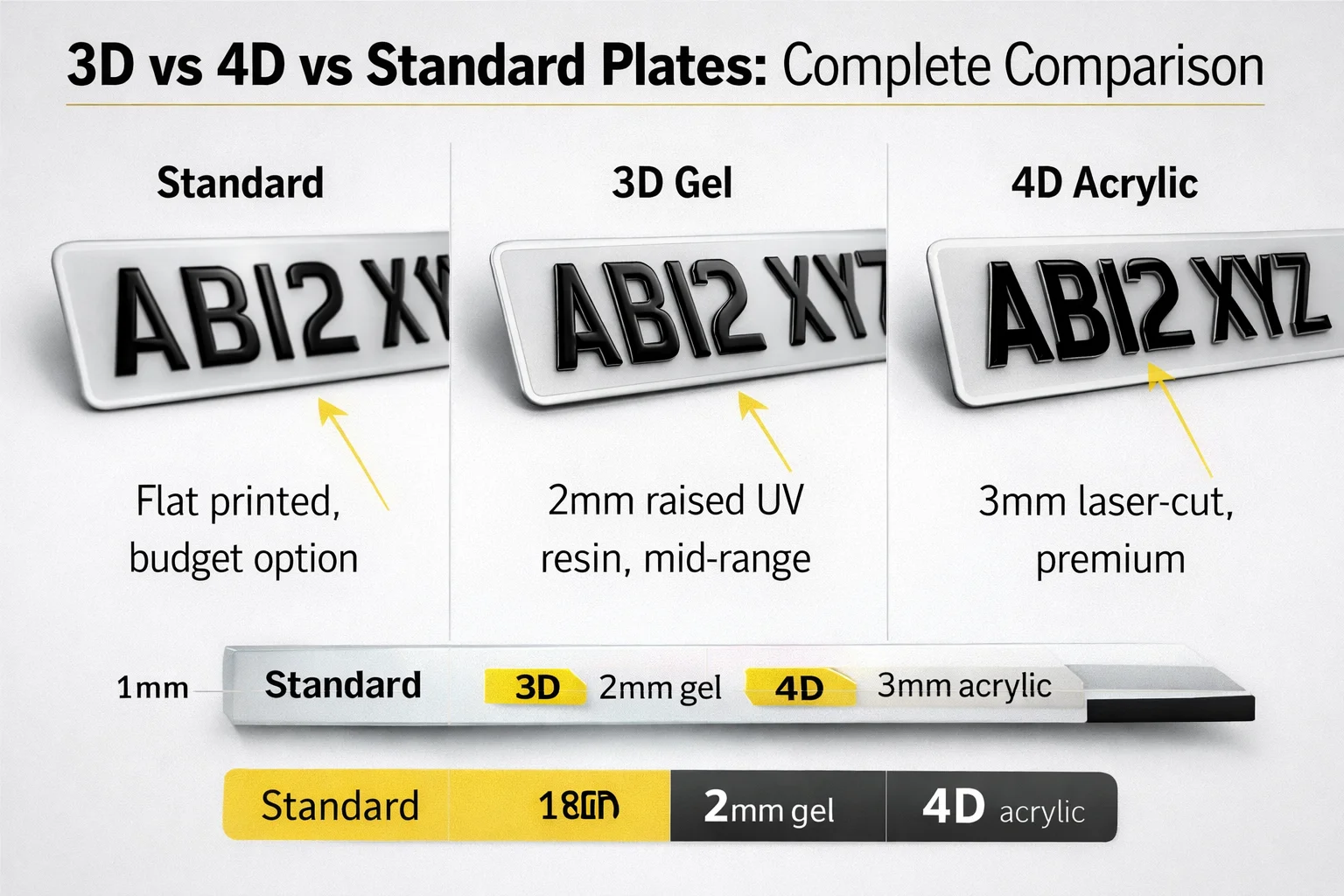
Choosing between 3D, 4D, and standard number plates comes down to three factors: budget, appearance preference, and durability requirements. Standard 2D plates use printed or digitally applied characters on reflective backing, making them the most affordable option that meets all DVLA legal requirements. 3D gel plates feature UV-cured resin gel raised approximately 2mm above the plate surface, offering a subtle premium look with good durability. 4D plates use 3mm laser-cut acrylic characters bonded to the plate base, providing the deepest, most pronounced 3D effect with superior longevity.
All three plate types are fully legal in the UK when manufactured to BS AU 145e:2018 standards with the correct Charles Wright 2001 font, proper character spacing, and appropriate supplier markings. The key differences lie in construction method, visual depth, material durability, and price point rather than legal compliance. At Private Number Plate Maker Ltd, we manufacture all three types on-site at our Ilford workshop using BS AU 145e-certified materials, ensuring every plate meets DVLA regulations regardless of which style you choose.
Compare all plate types in detail| BS AU 145e compliance guide
Quick Comparison Table: 3D vs 4D vs Standard Plates
| Feature | Standard 2D | 3D Gel | 4D Laser-Cut |
|---|---|---|---|
| Character Construction | Printed/digitally applied | UV-cured resin gel | Laser-cut acrylic |
| Character Thickness | 1mm (flat) | 2mm raised | 3mm raised |
| Visual Depth Effect | None (flat) | Subtle raised | Bold, pronounced |
| Durability Rating | Good | High | Very High |
| UV Resistance | Standard | High (gel protects) | Highest (solid acrylic) |
| Impact Resistance | Standard | High | Very High |
| Weathering Performance | 2,275 hours tested | 2,275+ hours tested | 2,275+ hours tested |
| Best For | Budget-conscious, fleet vehicles | Daily drivers, subtle premium look | Enthusiasts, premium vehicles |
| Price Range | Budget | Mid-range | Premium |
| Legal Status | Fully legal | Fully legal | Fully legal |
| BS AU 145e Compliant | Yes | Yes | Yes |
Understanding Plate Construction Methods
Standard 2D Number Plates
Standard plates use digitally printed or vinyl-applied characters on a reflective aluminium or plastic substrate. The characters are flat with no raised elements, making them the simplest and most cost-effective option. Despite their basic appearance, standard plates must still meet all BS AU 145e requirements for reflectivity, impact resistance, weathering, and NIR compatibility.
Construction Process:
- Reflective substrate cut to size
- Characters printed or applied using black ink/vinyl
- Protective coating applied for weathering resistance
- BS AU 145e mark and supplier details added
- Quality inspection before dispatch
Standard plates are ideal for fleet vehicles, short-term ownership, or owners who prioritise function over appearance. They remain the most popular choice for replacement plates following damage or theft.
3D Gel Number Plates
3D gel plates feature characters created using UV-cured resin gel applied over the black character base. The gel creates a raised effect approximately 2mm above the plate surface, giving a subtle premium appearance without the bold depth of 4D plates.
Construction Process:
- Reflective substrate prepared with black character base
- UV-cured resin gel applied to character areas
- Gel cured under UV light for hardening
- Clear gel allows black base to show through (no highlighting)
- BS AU 145e certification and supplier marks added
The clear gel protects the underlying black characters from UV fading and minor abrasion, extending plate lifespan compared to standard options. The raised effect is visible from close range but maintains ANPR readability at distance.
Learn more about 3D gel plates| How UV curing works| Real UK driver reviews
4D Laser-Cut Number Plates
4D plates use 3mm thick acrylic characters that are laser-cut to precise dimensions and bonded to the reflective plate base. This creates the most pronounced depth effect available while remaining fully DVLA compliant.
Construction Process:
- 3mm black acrylic sheet laser-cut to character shapes
- Characters precision-cut to Charles Wright 2001 font specifications
- Acrylic characters bonded to reflective substrate
- BS AU 145e testing for all performance requirements
- Supplier identification and certification marks applied
The solid acrylic construction provides superior resistance to stone chips, UV degradation, and weathering compared to both standard and 3D gel options. This makes 4D plates particularly suitable for high-mileage vehicles and owners seeking maximum longevity.
Complete 4D plates guide| 4D thickness specifications| ANPR compatibility guide
Technical Specifications Comparison
All plate types must meet the same fundamental dimensional requirements under the Road Vehicles (Display of Registration Marks) Regulations 2001:
| Specification | Requirement | Applies To |
|---|---|---|
| Character Height | 79mm | All car plates |
| Character Width | 50mm (excluding I and 1) | All plates |
| Stroke Thickness | 14mm | All plates |
| Character Spacing | 11mm | All plates |
| Age Identifier Gap | 33mm | All plates |
| Minimum Margins | 11mm | All plates |
| Font | Charles Wright 2001 | All plates |
The key difference between plate types is character depth, not the fundamental dimensions that affect legal compliance. Whether you choose standard, 3D, or 4D, the character height, width, spacing, and font remain identical.
Key point Charles Wright 2001 font explained| Documents DVLA document requirements
BS AU 145e:2018 Compliance Across All Plate Types
From 1 September 2021, all new number plates must comply with BS AU 145e:2018. This standard specifies four mandatory performance requirements that apply equally to standard, 3D, and 4D plates:
1. Reflectivity
All plates must meet photometric requirements ensuring visibility in all light conditions. The reflective substrate must be visible through and around characters for ANPR camera readability.
2. Impact Resistance
Plates must withstand stone chips and minor impacts without character damage or substrate cracking. 4D acrylic characters typically exceed minimum requirements due to solid construction.
3. Weathering
Materials must resist fading, cracking, or deterioration from UV exposure. BS AU 145e requires testing to 2,275 hours of UV exposure. 3D gel and 4D acrylic typically outperform standard printed characters in long-term weathering tests.
4. NIR Compatibility
Near Infrared compatibility ensures ANPR cameras can accurately read plates in all conditions. All compliant plates must pass NIR testing regardless of character construction method.
Durability and Longevity Comparison
| Plate Type | Expected Lifespan | UV Resistance | Stone Chip Resistance | Fade Resistance |
|---|---|---|---|---|
| Standard 2D | 3-5 years | Standard | Standard | Good |
| 3D Gel | 5-7 years | High (gel protects) | High | Very Good |
| 4D Acrylic | 7-10+ years | Highest (solid acrylic) | Very High | Excellent |
Factors Affecting Longevity:
- Parking conditions - Garage parking extends lifespan for all plate types
- Mileage - High-mileage vehicles benefit from 4D durability
- Climate - UK weather is moderate; extreme climates favour 4D construction
- Cleaning frequency - Regular gentle cleaning preserves all plate types
- Road conditions - Motorway driving increases stone chip risk, favouring 4D
Number plate maintenance tips| Is premium worth the investment?
MOT Compliance for All Plate Types
All three plate types pass MOT inspection when manufactured correctly to BS AU 145e standards. MOT testers check:
- Reflectivity - Plates must be made of reflective material meeting BS AU 145e:2018. Testers may use visual inspection or reflectivity meters. Clear gel overlay does not impair this requirement.
- Character Formation - Characters must be correctly formed using Charles Wright font. Dimensions and spacing must meet regulatory specifications. Raised elements must not distort character shapes.
- Condition - Plates must not be obscured, faded, cracked, or deteriorated. Gel surface should remain clear without yellowing or clouding. Acrylic edges should not be chipped to the point of character distortion.
- Markings - BS AU 145e:2018 marking and supplier details must be present and legible. Markings must be permanent, not applied as removable stickers.
Common 5D Plate MOT Failures (and How to Avoid Them)
Tinted or Darkened Gel
Failure reason: Reduced reflectivity breaches BS AU 145e requirements
Prevention: Ensure gel overlay is clear and untinted
Gel Delamination or Cracking
Failure reason: Damaged characters affect legibility
Prevention: Choose quality manufacturing; avoid abrasive cleaning
Missing or Obscured Markings
Failure reason: Required markings not visible
Prevention: Verify markings are present and legible before fitting
Incorrect Font or Dimensions
Failure reason: Characters do not meet Regulation 13 specifications
Prevention: Purchase only from DVLA-registered suppliers who verify compliance
If your 5D plates fail MOT, you cannot legally drive the vehicle except to pre-booked repair facilities or your home address (if current certificate has not expired). Replacement with compliant plates is required before retest.
Price Comparison and Value Analysis
| Plate Type | Typical Price Range (Pair) | Value Proposition |
|---|---|---|
| Standard 2D | £25-£40 | Best budget option, fully legal |
| 3D Gel | £40-£60 | Mid-range premium appearance |
| 4D Acrylic | £60-£90 | Maximum durability and depth |
Value Considerations:
- Short-term ownership (under 2 years) - Standard plates offer best value
- Medium-term ownership (2-5 years) - 3D gel balances cost and appearance
- Long-term ownership (5+ years) - 4D plates justify higher initial cost through longevity
- Premium vehicles - 4D plates complement high-end aesthetics
- Fleet/commercial - Standard plates minimise replacement costs
Which Plate Type Should You Choose?
Choose Standard 2D If:
- Budget is your primary concern
- You own fleet or commercial vehicles
- You plan to sell the vehicle within 2-3 years
- You prefer understated, functional appearance
- You need quick replacement plates
Choose 3D Gel If:
- You want subtle premium appearance without bold depth
- You seek better durability than standard at mid-range price
- You drive daily and want UV protection for characters
- You prefer the gel finish aesthetic
- You want upgrade from standard without 4D cost
Choose 4D Laser-Cut If:
- Maximum durability is your priority
- You own premium or enthusiast vehicles
- You want the most pronounced depth effect
- You plan long-term vehicle ownership
- You frequently drive on motorways (stone chip protection)
Legal Compliance: What Remains Constant
Regardless of which plate type you choose, the following legal requirements remain identical:
Mandatory for All Plates:
- Charles Wright 2001 font
- 79mm character height (cars)
- 11mm character spacing
- 14mm stroke thickness
- BS AU 145e:2018 certification mark
- Supplier RNPS identification number
- White front plate, yellow rear plate
- Reflective substrate meeting photometric standards
What Varies (Legally Acceptable):
- Character depth (1mm standard, 2mm 3D gel, 3mm 4D acrylic)
- Construction method (printed, gel, laser-cut)
- Price point
- Visual appearance (within compliance boundaries)
The DVLA does not specify character depth in regulations, only that characters must be easily distinguishable and readable. All three plate types meet this requirement when properly manufactured.
Are 3D gel plates legal?| Are 4D plates legal in 2026?| Are 5D plates legal?| ANPR-proof plates: illegal?
Our Manufacturing Approach at Private Number Plate Maker Ltd
As a DVLA-registered number plate manufacturer (RNPS ID: 75449), we produce all three plate types on-site at our Ilford workshop in Ilford. This gives us complete quality control over every plate regardless of type:
Standard Plates:
- BS AU 145e-certified reflective substrate
- High-quality digital printing for character application
- Protective coating for weathering resistance
- Full document verification before production
3D Gel Plates:
- Premium UV-cured resin gel (clear, no highlighting)
- Precise 2mm gel application for consistent depth
- UV curing process ensures gel hardness and durability
- Quality inspection for gel consistency across all characters
4D Laser-Cut Plates:
- 3mm black acrylic precision laser-cut
- Charles Wright 2001 font accuracy verified
- Professional bonding to reflective substrate
- Edge finishing for clean appearance
All plates undergo the same document verification process, carry BS AU 145e certification, and include our RNPS identification number. You can collect same-day from our Ilford workshop or receive next-day UK delivery.
Common Misconceptions About Plate Types
Myth: "4D Plates Are More Legal Than Standard"
Fact: All three plate types have identical legal status when manufactured to BS AU 145e standards. Legality depends on compliance with regulations, not plate construction type.
Myth: "3D and 4D Plates Fail ANPR Cameras"
Fact: Compliant 3D and 4D plates pass ANPR checks without issue. Problems only occur with illegal modifications like reflective coatings or incorrect fonts.
Myth: "Standard Plates Are Better for MOT"
Fact: MOT inspectors assess readability and compliance, not plate type. All three types pass when properly manufactured and maintained.
Myth: "Premium Plates Are Just Marketing"
Fact: 3D gel and 4D acrylic provide measurable durability advantages through UV protection and impact resistance. The premium reflects material costs and construction complexity.
Myth: "You Need Different Documents for Different Plate Types"
Fact: Document requirements are identical regardless of plate type. V5C, V750, V778, V948, driving licence, or passport verification applies to all orders.
5D Plates: The Next Evolution
5D number plates combine 3D gel and 4D acrylic construction, featuring 3mm laser-cut acrylic characters with an additional 2mm gel layer (5mm total depth). This creates maximum visual depth while maintaining full DVLA compliance.
5D Construction:
- 3mm black acrylic laser-cut base
- 2mm UV-cured resin gel overlay
- 5mm total character depth
- Combines durability of 4D with gel finish of 3D
5D plates represent the premium end of the market, offering the deepest character effect available while meeting all BS AU 145e requirements.
Complete 5D plates guide| 5D vs 4D vs 3D comparison| 5mm 4D vs 5D plates| 5D plates for car shows
Installation and Fitting Considerations
All plate types use standard fixing hole positions and fit conventional number plate holders. Installation considerations:
Standard Plates:
- Lightest weight
- Easiest to handle during fitting
- Standard fixing screws work perfectly
3D Gel Plates:
- Slightly heavier than standard
- Gel surface requires careful handling to avoid scratches
- Standard fixing method applies
4D Acrylic Plates:
- Heaviest due to acrylic thickness
- Acrylic edges may require careful positioning in some holders
- Standard fixing method applies
For all plate types, ensure fixing screws are tightened securely but not over-tightened to avoid cracking. Acrylic plates (4D and 5D) benefit from rubber washers to distribute pressure.
Maintenance Requirements by Plate Type
| Maintenance Task | Standard | 3D Gel | 4D Acrylic |
|---|---|---|---|
| Cleaning Frequency | Monthly | Monthly | Monthly |
| Cleaning Method | Soft cloth, mild soap | Soft cloth, mild soap | Soft cloth, mild soap |
| Avoid | Abrasive cleaners, pressure washers | Abrasive cleaners, sharp objects | Abrasive cleaners, sharp objects |
| Wax/Protectant | Optional | Optional | Recommended for acrylic |
| Inspection | Check for fading/cracking | Check gel integrity | Check acrylic edges |
Pro Tips:
- Never use pressure washers directly on character surfaces
- Avoid parking under trees (sap damages all plate types)
- Winter road salt should be rinsed off promptly
- Inspect plates monthly for early damage detection
Frequently Asked Questions
The main difference between 3D and 4D number plates lies in their construction and character depth. 3D gel plates feature UV-cured resin gel raised approximately 2mm above the plate surface, offering a subtle premium appearance. 4D plates use 3mm laser-cut acrylic characters bonded to the reflective base, creating a more pronounced depth effect with superior durability. Both types are fully DVLA compliant when manufactured to BS AU 145e:2018 standards with the correct Charles Wright 2001 font.
Yes, both 3D gel and 4D laser-cut number plates are fully legal in the UK when manufactured in compliance with the Road Vehicles (Display of Registration Marks) Regulations 2001 and BS AU 145e:2018. As a DVLA-registered manufacturer (RNPS ID: 75449), we ensure all plates feature the mandatory Charles Wright 2001 font, correct character spacing, BS AU 145e certification mark, and our supplier identification. Legality depends on compliance with these standards, not the plate construction type.
For maximum durability, 4D laser-cut acrylic plates typically offer the longest lifespan (7-10+ years) due to solid acrylic construction providing superior resistance to UV degradation, stone chips, and weathering. 3D gel plates offer a mid-range option with good UV protection from the clear gel layer (5-7 years expected lifespan). Standard 2D plates remain a reliable, budget-friendly choice (3-5 years) when properly maintained. All types meet BS AU 145e:2018 weathering requirements of 2,275 hours UV exposure testing.
No, properly manufactured 3D and 4D plates do not affect MOT inspection or ANPR camera readability. The Road Vehicles Regulations and BS AU 145e:2018 require all plates to maintain NIR (Near Infrared) compatibility and character legibility regardless of construction method. MOT testers assess readability, correct font, and compliance markings - not character depth. At our Ilford workshop, we verify every plate meets these requirements before dispatch.
Your choice depends on budget, appearance preference, and durability needs. Standard 2D plates offer the best value for budget-conscious owners or fleet vehicles. 3D gel plates provide subtle premium styling with improved UV protection at a mid-range price. 4D laser-cut acrylic plates deliver maximum durability and pronounced depth for enthusiast or premium vehicles. All three types are equally legal when manufactured to BS AU 145e:2018 standards.
This guide references the following official and verified sources:
DVLA Official Guidance - Displaying Number Plates
Official government guidance on number plate display requirements
Road Vehicles (Display of Registration Marks) Regulations 2001
Statutory instrument governing registration mark display
www.legislation.gov.ukBritish Standards Institution - BS AU 145e:2018
Specification for Retroreflecting Number Plates
knowledge.bsigroup.comBritish Number Plate Manufacturers Association (BNMA)
Industry association guidance and standards
www.bnma.orgVehicle Excise and Registration Act 1994
Primary legislation for vehicle registration
www.legislation.gov.ukDVLA INF104 Vehicle Registration Numbers and Number Plates
Official DVLA guidance document
www.gov.uk