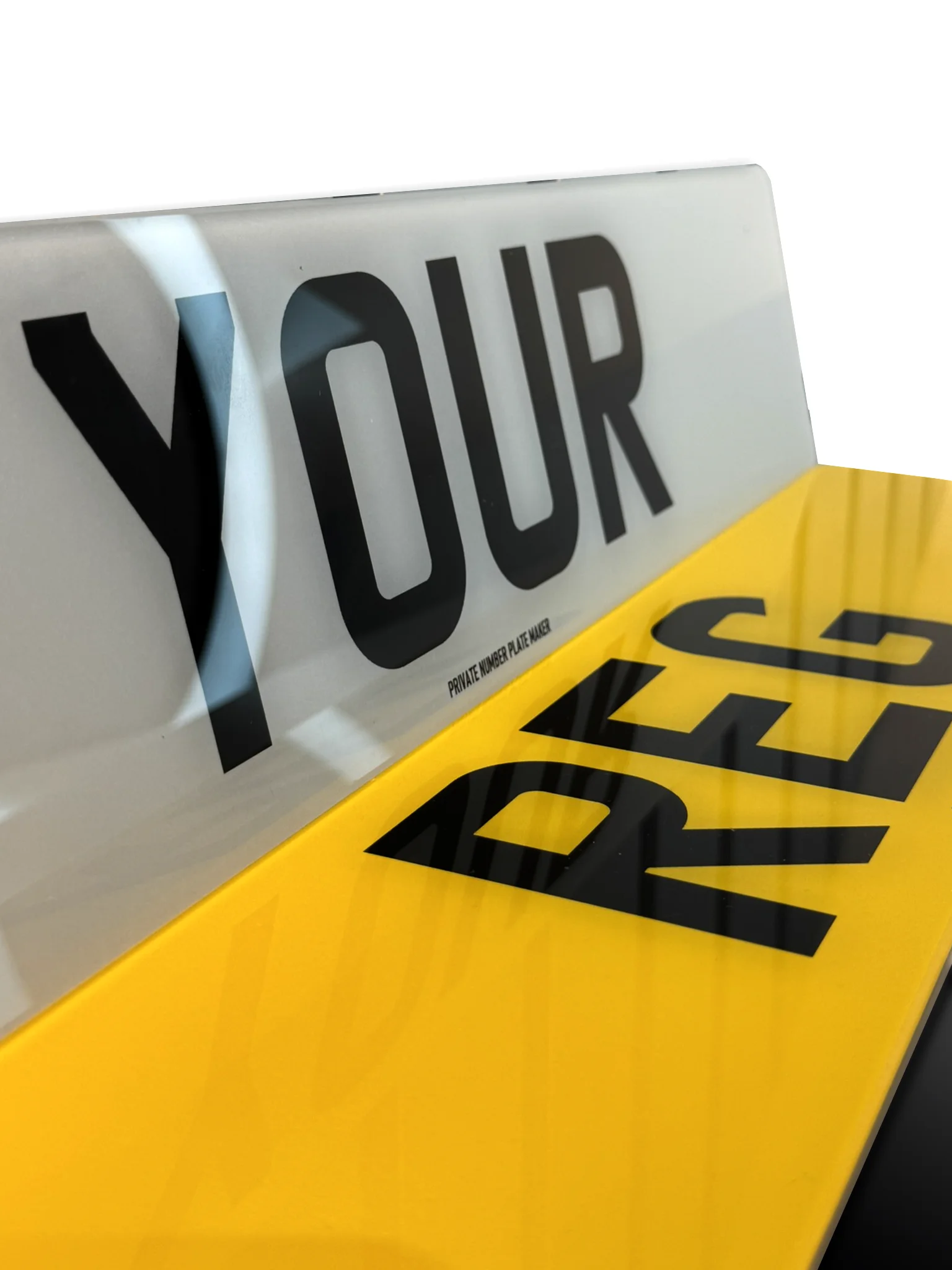
 Printed
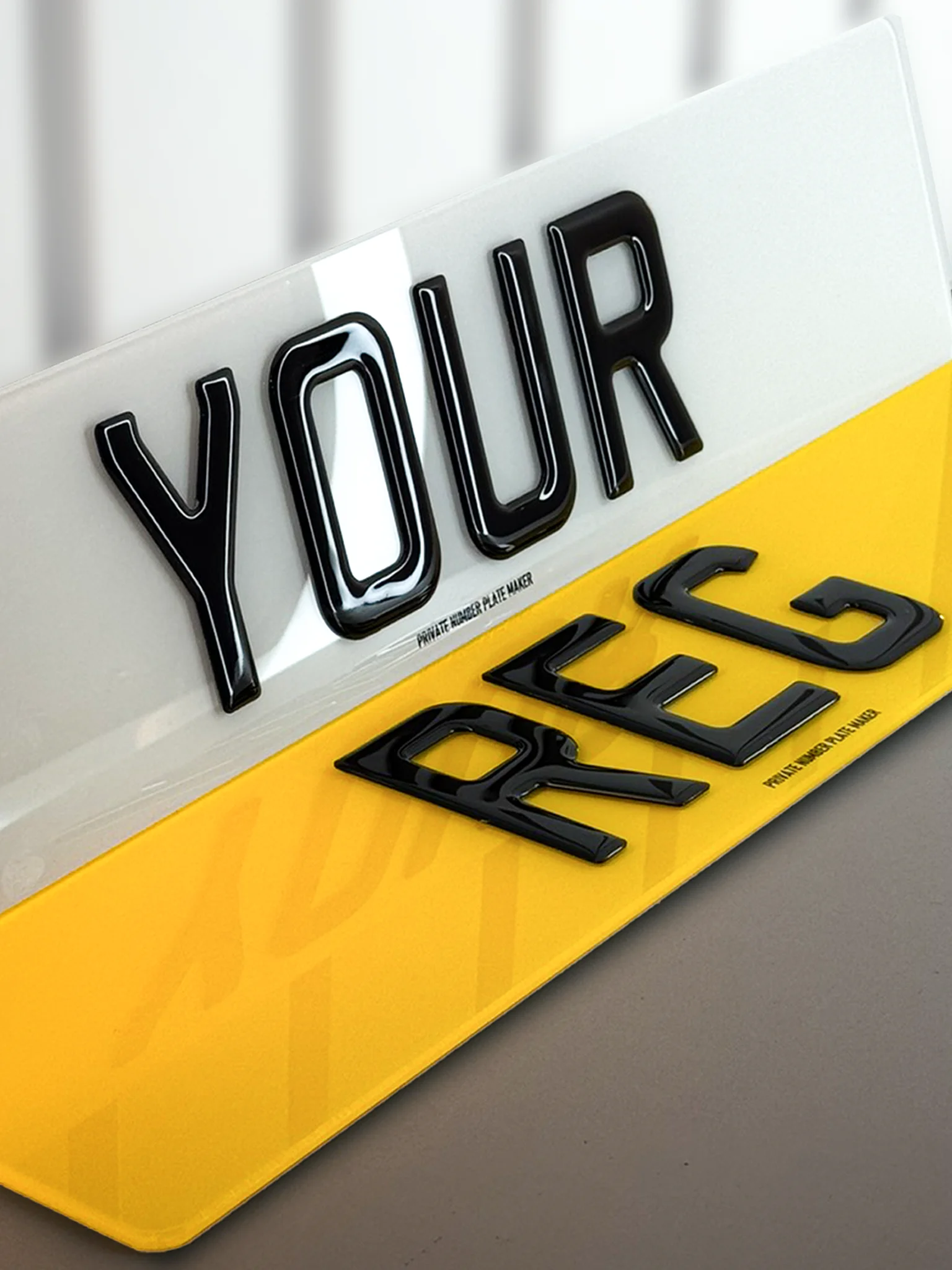 3D Plate
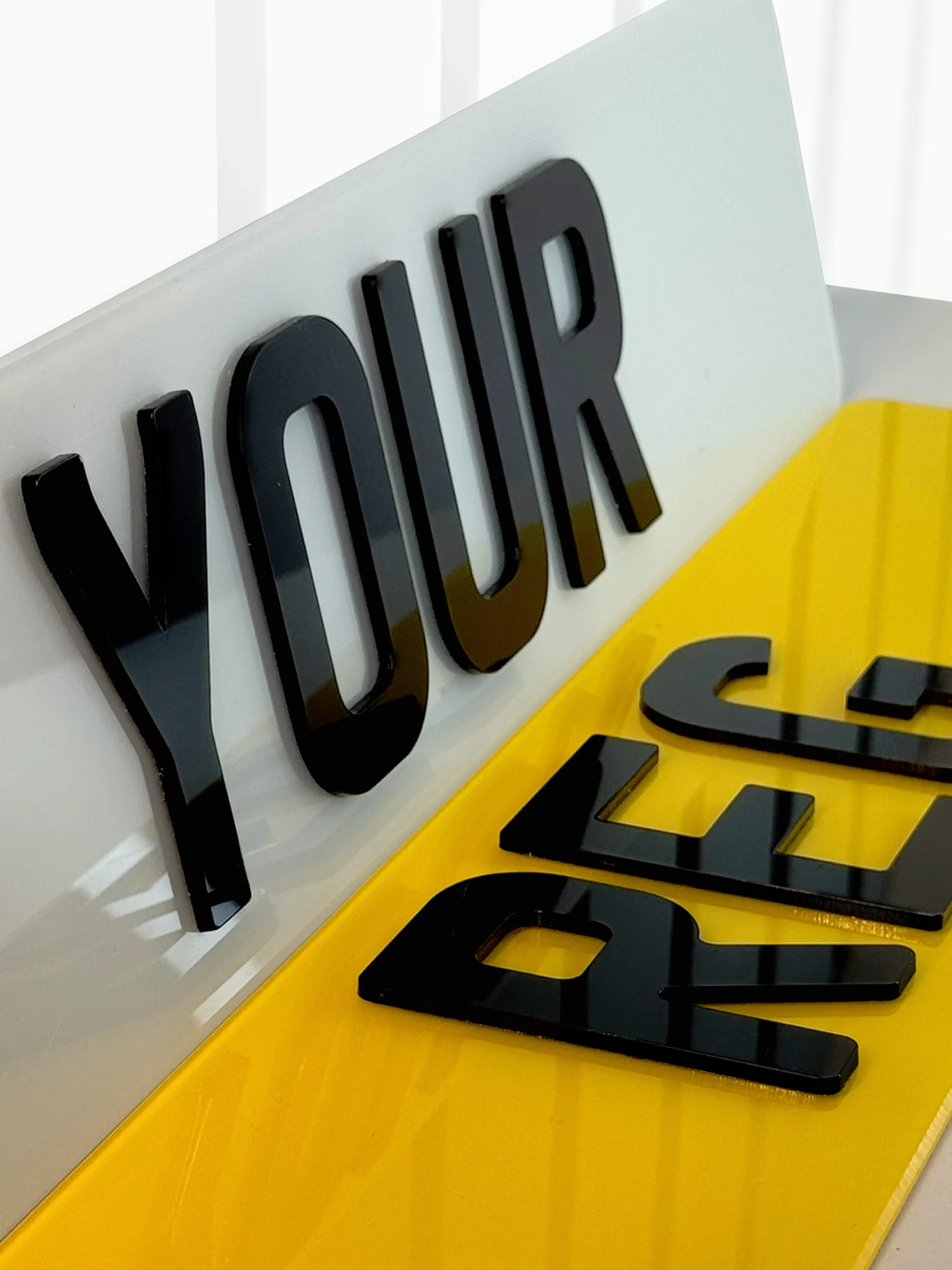 4D Plate
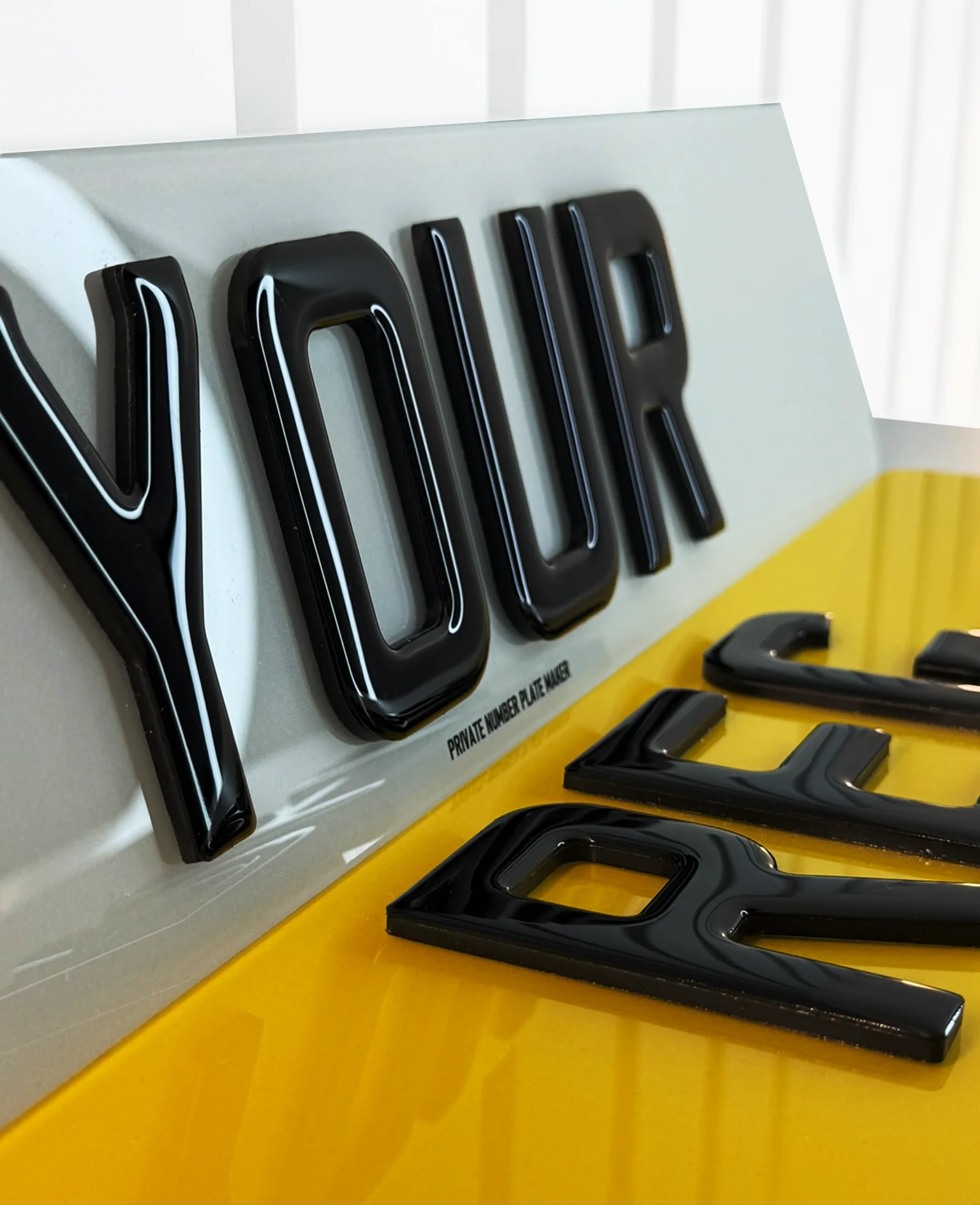 5D Plate
 Ghost
Ghost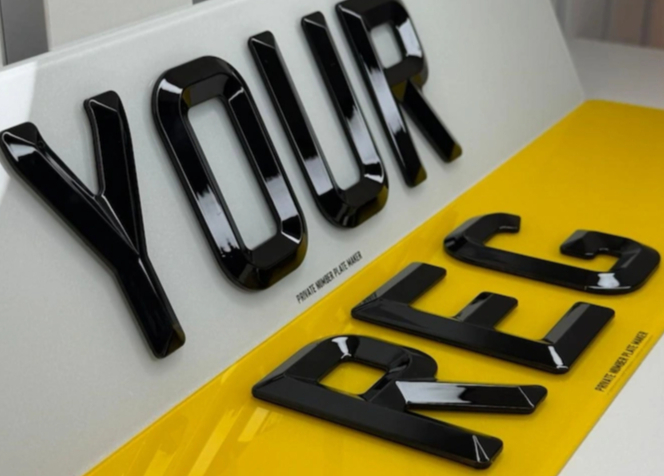 Bevel
BevelAre 4D Plates Legal in 2026? Complete UK Regulations Guide
Summary
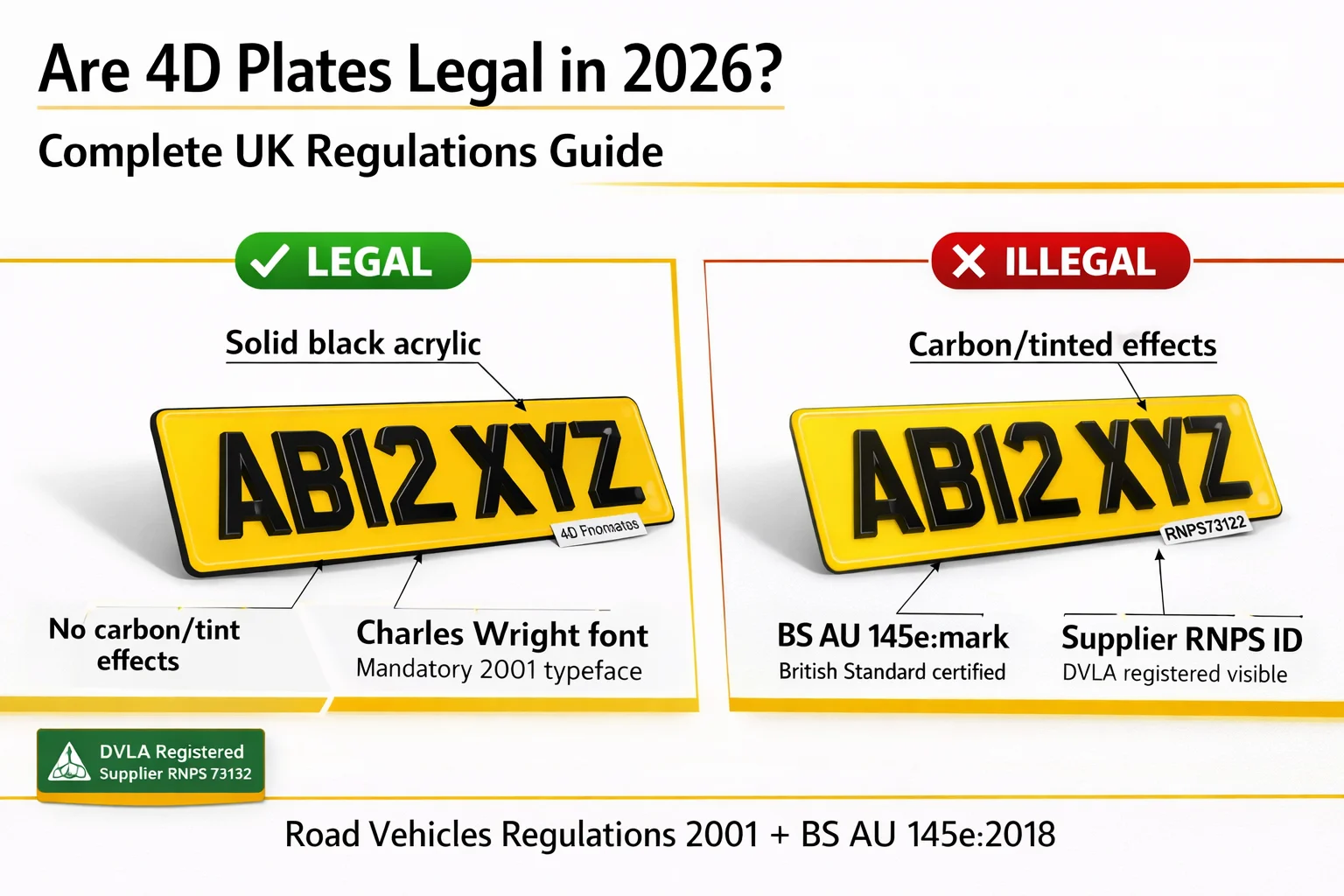
Yes, 4D number plates are fully legal in the UK throughout 2026 when manufactured to BS AU 145e:2018 standards with solid black laser-cut acrylic characters, the mandatory Charles Wright 2001 font, correct character spacing and dimensions, and visible supplier RNPS identification. The key compliance requirements are: characters must be solid black only (no carbon fibre effects, ghost tints, or coloured acrylic), only the background substrate can be reflective (not the characters), plates must carry the BS AU 145e certification mark, and the supplier's RNPS ID must be visible on the plate.
At Private Number Plate Maker Ltd, we manufacture every 4D plate on-site at our Ilford workshop using BS AU 145e-certified materials and verify all required documents before production as a DVLA-registered supplier (RNPS ID: 75449). Our 4D plates use 3mm laser-cut black acrylic bonded with automotive-grade adhesive, ensuring full compliance with the Road Vehicles (Display of Registration Marks) Regulations 2001 and BS AU 145e:2018 standards.
This guide explains the specific legal requirements for 4D plates in 2026, what makes 4D plates illegal, enforcement penalties, MOT compliance, and how to verify your plates meet all regulations. We reference official sources including DVLA guidance, British Standards Institution publications, and current legislation to ensure all information is accurate and verifiable.
Related guide: 4D number plates explained Guide | 4D plate FAQ Guide
The Short Answer: Yes, 4D Plates Are Legal in 2026
4D number plates remain 100% legal for UK roads throughout 2026 when manufactured correctly. The DVLA has not banned 4D plates, and they continue to be accepted for MOT inspection, ANPR camera systems, and all enforcement purposes when compliant with existing regulations.
Four Key Legal Requirements for 4D Plates:
| Requirement | Specification | Why It Matters |
|---|---|---|
| Character Colour | Solid black only | Regulation 16 compliance |
| Font | Charles Wright 2001 | Mandatory for vehicles 2001+ |
| Reflectivity | Background only (not characters) | ANPR camera compatibility |
| Supplier Markings | BS AU 145e + RNPS ID visible | DVLA registration requirement |
Related guide: Charles Wright font guide | BS AU 145e explained Guide
What Has Not Changed in 2026:
- 4D plates remain legal under existing regulations
- No new legislation specifically targeting 4D plates
- BS AU 145e:2018 continues as the required standard
- Same character dimensions and spacing requirements
What Has Changed in 2026:
- Increased enforcement focus on non-compliant plates
- More ANPR camera checks for plate compliance
- Stricter MOT testing for plate condition
- Higher awareness of illegal plate modifications
Related guide: Number plate fines UK Guide | How ANPR cameras work Guide
Legal Framework Governing 4D Plates
4D number plates are governed by the same regulations as all UK number plates.
Primary Legislation
Road Vehicles (Display of Registration Marks) Regulations 2001:
- Statutory Instrument 2001 No. 561
- Regulation 16: Characters must be easily distinguishable
- Schedule 4: Specifies character dimensions and spacing
- Applies to all vehicles regardless of plate type
Key Regulation 16 Requirements:
- Characters must not be treated to make them less distinguishable
- No patterns, textures, or effects on characters
- Solid black colour mandatory
- Correct font, spacing, and dimensions required
British Standard BS AU 145e:2018
From 1 September 2021, all new number plates must comply with BS AU 145e:2018:
Four Mandatory Performance Requirements:
| Requirement | What It Means | 4D Plate Compliance |
|---|---|---|
| Reflectivity | Background must reflect light appropriately | Reflective substrate behind acrylic |
| Impact Resistance | Must withstand stone chips and minor impacts | 3mm acrylic provides excellent protection |
| Weathering | 2,275 hours UV exposure testing | UV-stabilised acrylic resists fading |
| NIR Compatibility | Near Infrared readability for ANPR | Black acrylic absorbs infrared correctly |
Important: BS AU 145e:2018 applies to the plate substrate and materials, not specifically to character depth. The 3mm acrylic depth of 4D plates does not violate any standard requirements.
Related guide: BS AU 145e:2018 explained Guide
Vehicle Excise and Registration Act 1994
Section 42 of the Vehicle Excise and Registration Act 1994 provides enforcement powers for number plate offences:
Penalty Provisions:
- Fines up to Level 3 on the standard scale (currently £1,000)
- Fixed Penalty Notices for minor infringements (£100)
- Vehicle seizure in serious repeat offence cases
- MOT failure for non-compliant plates
What Makes 4D Plates Legal vs Illegal
Understanding the difference between compliant and non-compliant 4D plates protects you from penalties.
Legal 4D Plates (Compliant)
Legal 4D plates have these characteristics:
| Feature | Legal Specification | Why It Matters |
|---|---|---|
| Character colour | Solid black only | Regulation 16 compliance |
| Character material | Black acrylic (no tint) | Non-reflective, ANPR readable |
| Font | Charles Wright 2001 | Mandatory for vehicles 2001+ |
| Character depth | 3mm typical (no maximum specified) | Depth itself is not regulated |
| Background | Reflective (white front, yellow rear) | BS AU 145e requirement |
| Character finish | Non-reflective, matte or semi-gloss | Only background reflects |
| BS AU 145e mark | Present and visible | Certification requirement |
| Supplier RNPS ID | Present and visible | DVLA registration requirement |
Illegal 4D Plates (Non-Compliant)
4D plates become illegal when they have:
| Illegal Feature | Why It's Non-Compliant | Regulation Violated |
|---|---|---|
| Carbon fibre effect characters | Pattern makes characters less distinguishable | Regulation 16 |
| Coloured or tinted acrylic | Not solid black, affects ANPR readability | Regulation 16 |
| Ghost/tinted characters | Reduces character contrast | Regulation 16 |
| Reflective characters | Only background should reflect | BS AU 145e:2018 |
| Wrong font (not Charles Wright) | Mandatory font requirement | Regulation 11 |
| Incorrect character spacing | Dimensions specified in Schedule 4 | Schedule 4 |
| Missing BS AU 145e mark | Certification requirement | BS AU 145e:2018 |
| Missing supplier RNPS ID | DVLA registration requirement | RNPS regulations |
| Highlighting effects on characters | Creates shadows, reduces readability | Regulation 16 |
Related guide: Are ghost plates legal 2026 Guide | Illegal ghost plates penalties Guide
Common Illegal 4D Plate Modifications
Carbon Fibre Effects:
- Acrylic with carbon fibre pattern or texture
- Makes characters less distinguishable
- Violates Regulation 16 clearly
- Will fail MOT inspection
Tinted or Coloured Acrylic:
- Any colour other than solid black
- Includes smoked, blue-tinted, red-tinted acrylic
- Affects ANPR camera readability
- Not permitted under any circumstances
Reflective Character Coatings:
- Clear coat with reflective particles
- Only background substrate should reflect
- Interferes with ANPR systems
- BS AU 145e non-compliant
Highlighting or Shadow Effects:
- Gel or paint creating 3D shadows
- Makes characters less distinguishable
- Reduces contrast for cameras
- Regulation 16 violation
2026 Enforcement Context
Understanding current enforcement helps you stay compliant.
Increased Enforcement Focus
The DVLA announced tightened enforcement alongside the March 2026 '26' plate launch:
2026 Enforcement Priorities:
- More roadside ANPR checks for plate compliance
- Stricter MOT testing for plate condition
- Increased Trading Standards investigations
- Higher penalties for repeat offenders
- Focus on illegal plate suppliers
What This Means for 4D Plate Owners:
- Compliant 4D plates will pass all checks without issue
- Non-compliant modifications more likely to be detected
- Importance of buying from DVLA-registered suppliers increased
- Documentation and certification more important than ever
ANPR Camera Detection
ANPR systems can detect non-compliant 4D plates:
What ANPR Cameras Check:
- Character contrast and readability
- Infrared reflectivity patterns
- Font recognition (Charles Wright 2001)
- Plate presence and visibility
How Non-Compliant 4D Plates Fail:
- Tinted acrylic reduces infrared absorption
- Carbon patterns confuse character recognition
- Reflective characters cause glare issues
- Wrong spacing affects segmentation
Compliant 4D Plates:
- Solid black acrylic absorbs infrared correctly
- Clear character shapes for OCR recognition
- Proper spacing for accurate reading
- No interference with camera systems
Related guide: 4D plates ANPR definitive guide | Do 3D plates work with ANPR Guide
MOT Inspection in 2026
MOT testers check number plate compliance as part of the inspection:
MOT Plate Checks:
- Characters easily readable from reasonable distance
- Font matches Charles Wright 2001 specification
- No cracks, discolouration, or damage
- BS AU 145e mark present and visible
- Supplier identification visible
- Plate securely attached to vehicle
- No illegal modifications (carbon, tint, etc.)
Common 4D Plate MOT Failures:
- Characters detached or loose
- Carbon fibre effect visible on characters
- Tinted or coloured acrylic
- Missing or illegible BS AU 145e mark
- Significant fading affecting readability
- Plate not securely fixed
Technical Compliance Specifications
All 4D number plates must meet these specifications to remain legal.
Character Dimensions (Car Standard)
| Specification | Measurement | Tolerance |
|---|---|---|
| Character height | 79mm | +/- 1mm |
| Character width | 50mm (excluding I and 1) | +/- 1mm |
| Stroke thickness | 14mm | +/- 0.5mm |
| Character spacing | 11mm between characters | +/- 0.5mm |
| Age identifier gap | 33mm | +/- 1mm |
| Minimum margins | 11mm around edges | Minimum |
| Acrylic thickness | 3mm (typical 4D) | +/- 0.2mm |
Note: These dimensions apply regardless of plate type (2D, 3D, 4D, or 5D).
Font Requirements
Charles Wright 2001 font is mandatory for all vehicles registered from 2001 onwards:
Font Specifications:
- Introduced: 2001 (replacing previous font)
- Purpose: ANPR camera readability
- Character shapes: Specifically designed for optical recognition
- Applies to: All plate types including 4D
Why Font Matters for 4D:
- Laser cutting must follow exact Charles Wright shapes
- OCR systems trained on this specific font
- Alternative fonts will fail ANPR and MOT
- No variations or modifications permitted
Related guide: Charles Wright font guide
Reflectivity Requirements
Only the background substrate can be reflective, not the characters:
| Component | Reflectivity Requirement | Reason |
|---|---|---|
| Background substrate | Must be reflective | BS AU 145e requirement |
| Front plate | White reflective | DVLA regulation |
| Rear plate | Yellow reflective | DVLA regulation |
| Acrylic characters | Non-reflective only | ANPR compatibility |
| Adhesive | Non-reflective | Does not interfere |
How to Verify Your 4D Plates Are Compliant
Use this checklist to ensure your 4D plates meet all legal requirements.
Visual Inspection Checklist
Check your 4D plates against these criteria:
Compliant Plate Indicators:
- Characters are solid black (no patterns or effects)
- BS AU 145e:2018 mark visible on plate
- Supplier RNPS identification present
- Charles Wright 2001 font used
- Characters evenly spaced
- No tint or colour in acrylic
- Characters non-reflective (only background reflects)
- No cracks, peeling, or damage
Non-Compliant Warning Signs:
- Carbon fibre pattern visible on characters
- Acrylic appears tinted or coloured
- Missing BS AU 145e mark
- No supplier RNPS ID visible
- Characters have highlighting or shadow effects
- Wrong font or spacing
- Characters reflect light (should be matte)
- Visible damage or deterioration
Professional Verification
If uncertain about plate compliance, consider:
- Visit DVLA-registered supplier for inspection
- Request compliance documentation from manufacturer
- Check RNPS ID against DVLA register
- MOT tester can assess during inspection
- Trading Standards can advise on concerns
Our Ilford Workshop:
- Ilford location for in-person verification
- RNPS ID: 75449 displayed on all plates
- Compliance documentation available
- Same-day replacement if issues found
Related guide: Same-day number plates Ilford Guide | Replacement plates buying guide
Penalties for Non-Compliant 4D Plates
Understanding the consequences of non-compliance helps you make informed decisions.
Fixed Penalty Notices
Minor infringements can result in on-the-spot fines:
| Offence | Penalty | Circumstances |
|---|---|---|
| Minor plate infringement | £100 Fixed Penalty | First offence, minor issue |
| Non-compliant characters | £100 Fixed Penalty | Carbon effect, tint, etc. |
| Missing supplier marks | £100 Fixed Penalty | BS AU 145e or RNPS missing |
Important: Fixed Penalty Notices are discretionary; officers may issue verbal warnings for first minor offences.
Maximum Statutory Fines
Serious or repeat offences can lead to higher penalties:
Vehicle Excise and Registration Act 1994, Section 42:
- Maximum fine: Level 3 on standard scale (currently £1,000)
- Applies to: Serious non-compliance, repeat offences
- Court jurisdiction: Magistrates' Court
- Criminal record: Possible for serious cases
MOT Failure Consequences
Non-compliant 4D plates will fail MOT inspection:
MOT Failure Implications:
- Vehicle cannot pass MOT until plates replaced
- Driving without valid MOT is illegal (separate offence)
- Insurance may be invalidated
- Vehicle cannot be taxed without valid MOT
- Replacement plates required before retest
Retest Requirements:
- Compliant plates must be fitted
- Full retest may be required (not partial)
- Additional MOT fees apply
- Time off road while waiting for retest
Vehicle Seizure
In serious cases, police can seize vehicles:
When Seizure May Occur:
- Repeat offences after warnings
- Deliberate use of ANPR-proof plates
- Plates linked to other criminal activity
- Refusal to comply with officer instructions
Recovery Process:
- Compliant plates must be fitted
- Recovery fees apply
- Storage charges accumulate daily
- Documentation required for release
Buying Compliant 4D Plates in 2026
Choosing the right supplier ensures your plates remain legal.
Choosing a DVLA-Registered Supplier
Not all number plate suppliers follow compliance requirements:
DVLA-Registered Suppliers (RNPS) Must:
- Verify customer documents before production
- Use BS AU 145e-certified materials only
- Display RNPS identification on all plates
- Maintain production records for audits
- Follow DVLA guidance for registered suppliers
Risks of Unregistered Suppliers:
- May not verify documents properly
- Could use non-compliant materials
- No RNPS ID on plates (illegal)
- Difficult to trace if issues arise
- May produce illegal plate modifications
Questions to Ask Before Buying 4D Plates
Verify supplier compliance with these questions:
- Are you DVLA-registered with visible RNPS ID?
- Do plates carry BS AU 145e:2018 certification?
- What document verification do you require?
- Where are plates manufactured (physical address)?
- What warranty or guarantee do you offer?
- Can you provide compliance documentation?
- Are characters solid black only (no carbon/tint)?
Red Flags to Avoid:
- No RNPS identification on plates
- Prices significantly below market average
- No document verification required
- Only online presence, no physical address
- Vague compliance claims without certification
- Offers carbon fibre or tinted options
Our Manufacturing Standards at Private Number Plate Maker Ltd
As a DVLA-registered manufacturer (RNPS ID: 75449), we ensure 4D plate compliance through:
Material Control:
- 3mm solid black acrylic sheet (no tint or effects)
- UV-stabilised grade for UK climate
- Automotive-grade adhesive only
- BS AU 145e:2018 certified substrates
Manufacturing Standards:
- CO2 laser cutter calibrated regularly
- Charles Wright 2001 font verified
- Character dimensions checked on every plate
- Bond strength testing (batch sampling)
Quality Inspection:
- Every plate inspected before dispatch
- BS AU 145e mark applied correctly
- RNPS ID: 75449 on all plates
- Document verification completed first
Traceability:
- Production records maintained
- Batch tracking for quality issues
- Compliance documentation available
- Physical workshop for verification visits
Related guide: DVLA document requirements Guide | V5C vs V750 vs V778 Guide
Common Misconceptions About 4D Plate Legality
Clearing up myths helps you make informed decisions.
Myth: "4D Plates Were Banned in 2021"
Fact: 4D plates were never banned. The BS AU 145e update in September 2021 clarified that plates must have solid black characters without highlighting effects, but 4D laser-cut acrylic construction itself remains legal.
Myth: "Only 2D Plates Are MOT Legal"
Fact: All plate types (2D, 3D, 4D, 5D) are MOT legal when manufactured correctly. The MOT inspection focuses on readability and compliance, not character depth or construction method.
Myth: "4D Plates Fail ANPR Cameras"
Fact: Compliant 4D plates with solid black acrylic pass ANPR checks without issue. Problems only arise with illegal modifications like tinted acrylic, carbon effects, or reflective coatings.
Myth: "Carbon Fibre 4D Plates Are Legal"
Fact: Carbon fibre effect characters are illegal under Regulation 16. The pattern makes characters less distinguishable and violates the solid black character requirement.
Myth: "Tinted 4D Plates Are Acceptable"
Fact: Any tint or colour other than solid black is illegal. This includes smoked, blue-tinted, red-tinted, or any coloured acrylic variations.
4D vs Other Plate Types: Legality Comparison
All plate types have the same legal requirements when manufactured correctly.
All Plate Types Have Same Legal Requirements
| Plate Type | Legal Status | Key Compliance Requirements |
|---|---|---|
| Standard 2D | Fully legal | Solid black, Charles Wright, BS AU 145e |
| 3D Gel | Fully legal | Solid black, Charles Wright, BS AU 145e |
| 4D Laser-Cut | Fully legal | Solid black, Charles Wright, BS AU 145e |
| 5D Dual-Layer | Fully legal | Solid black, Charles Wright, BS AU 145e |
| Ghost Plates | Conditional | Legal only without reflective coating |
Key Point: Plate type does not determine legality - compliance with regulations does.
When Plate Type Matters for Compliance
While all plate types can be legal, some are more prone to compliance issues:
4D Plates:
- Risk: Carbon fibre or tinted acrylic options
- Compliance: Solid black acrylic only
- Enforcement: Increased scrutiny in 2026
3D Gel Plates:
- Risk: Highlighting effects on gel
- Compliance: Clear gel over solid black only
- Enforcement: Standard scrutiny
Ghost Plates:
- Risk: Reflective coatings making them ANPR-proof
- Compliance: No reflective coating permitted
- Enforcement: High priority in 2026 crackdown
Related guide: 4D vs 3D plates comparison Guide | 5D vs 4D vs 3D comparison Guide
Future Regulatory Changes to Watch
Stay informed about potential changes to number plate regulations.
Potential 2026-2027 Developments
Number plate regulations may evolve with technology:
Possible Changes:
- Stricter enforcement of existing rules
- New testing requirements for materials
- Enhanced supplier verification processes
- Higher penalties for non-compliance
- More frequent MOT plate checks
What Remains Certain:
- Charles Wright 2001 font will remain mandatory
- BS AU 145e standard will continue
- Solid black character requirement unchanged
- DVLA registration for suppliers required
How to Stay Compliant:
- Purchase from DVLA-registered suppliers only
- Verify BS AU 145e:2018 certification
- Keep plates clean and undamaged
- Replace plates showing wear or damage
- Monitor DVLA announcements for changes
Frequently Asked Questions
Yes, 4D number plates are fully legal in the UK throughout 2026 when manufactured to BS AU 145e:2018 standards. The DVLA has not banned 4D plates, provided they feature solid black laser-cut acrylic characters in the mandatory Charles Wright 2001 font, correct spacing per the Road Vehicles (Display of Registration Marks) Regulations 2001, and visible supplier RNPS identification. Characters must be non-reflective with only the background substrate reflecting. At our Ilford workshop (RNPS ID: 75449), we manufacture compliant 4D plates on-site with full document verification.
Compliant 4D plates must meet four key requirements under Regulation 16 and BS AU 145e:2018: characters must be solid black only (no carbon fibre, tint, or coloured effects), use the mandatory Charles Wright 2001 font, have non-reflective characters with only the reflective background substrate, and display both the BS AU 145e certification mark and supplier RNPS ID. The 3mm acrylic depth itself is not regulated, but all character dimensions must match Schedule 4 specifications. We verify all documents before production at our DVLA-registered Ilford workshop.
Yes, compliant 4D plates with solid black acrylic characters pass both MOT inspection and ANPR camera systems without issue. MOT testers check that characters are easily readable, use Charles Wright 2001 font, show no illegal modifications, and display visible BS AU 145e and supplier markings. ANPR cameras rely on proper infrared absorption, which solid black acrylic provides correctly. Problems only arise with illegal features like tinted acrylic, carbon effects, or reflective character coatings. All plates from our RNPS-registered workshop (75449) are manufactured for full compliance.
Non-compliant 4D plates can result in a £100 Fixed Penalty Notice for minor infringements, or fines up to £1,000 (Level 3 standard scale) under Section 42 of the Vehicle Excise and Registration Act 1994 for serious or repeat offences. Non-compliant plates will also fail MOT inspection, preventing vehicle tax renewal and potentially invalidating insurance. In severe cases, police may seize vehicles. Always purchase from a DVLA-registered supplier like Private Number Plate Maker Ltd (RNPS ID: 75449) to ensure compliance.
Check that your plate displays a visible RNPS identification number and the BS AU 145e:2018 certification mark. Verify the supplier's RNPS ID against the DVLA register, confirm they require document verification before production, and ensure they have a physical UK address. At our Castleview Gardens, Ilford workshop (RNPS ID: 75449), we display our registration on all plates, maintain production records, and offer in-person verification with compliance documentation available.
This guide references the following official and verified sources:
Road Vehicles (Display of Registration Marks) Regulations 2001
legislation.gov.ukBritish Standards Institution - BS AU 145e:2018
knowledge.bsigroup.comBritish Number Plate Manufacturers Association (BNMA)
bnma.orgVehicle Excise and Registration Act 1994
legislation.gov.ukDVLA INF104 Vehicle Registration Numbers and Number Plates
gov.ukGovernment Announcements via gov.uk (2026 Enforcement Updates)