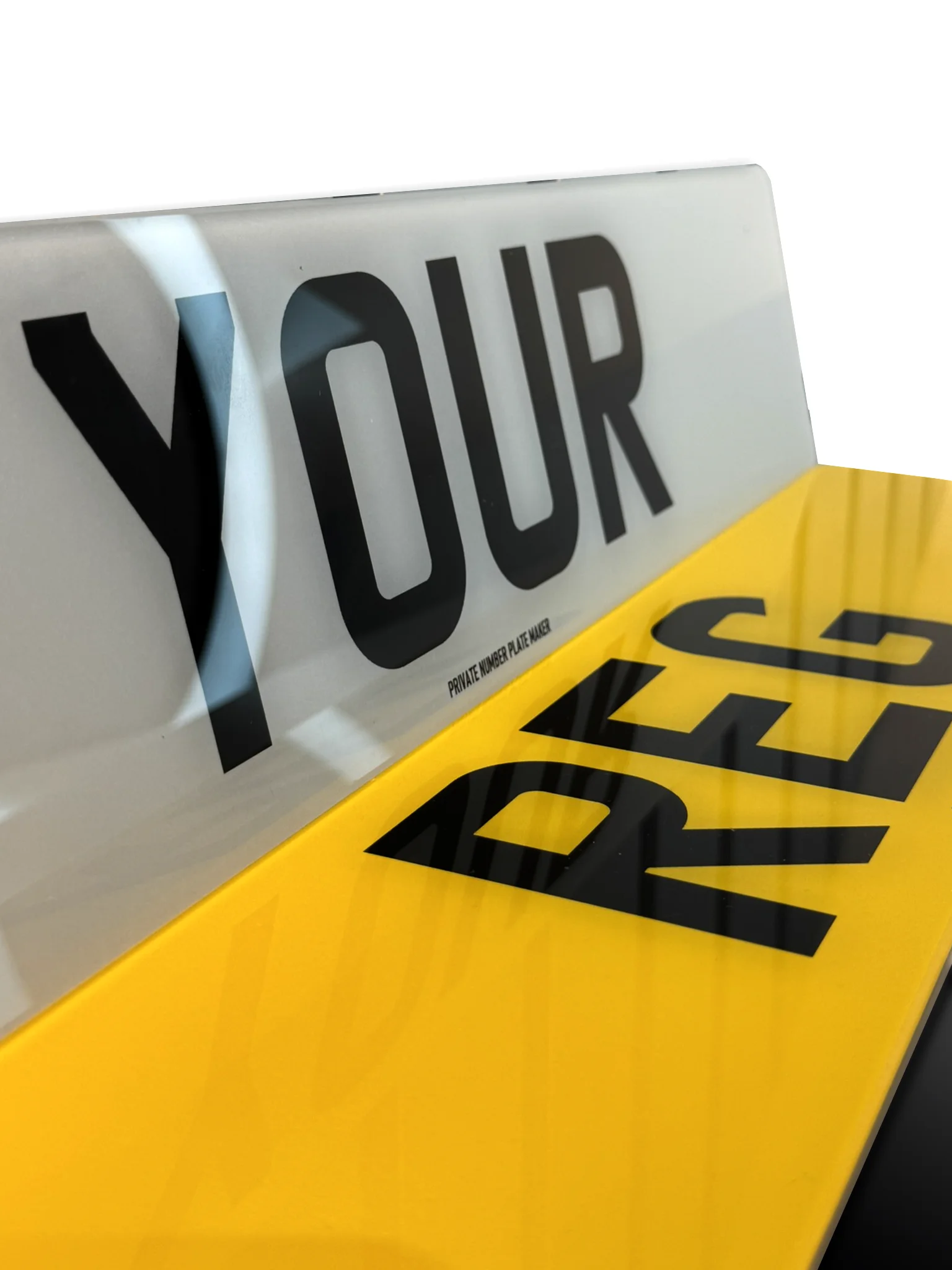
 Printed
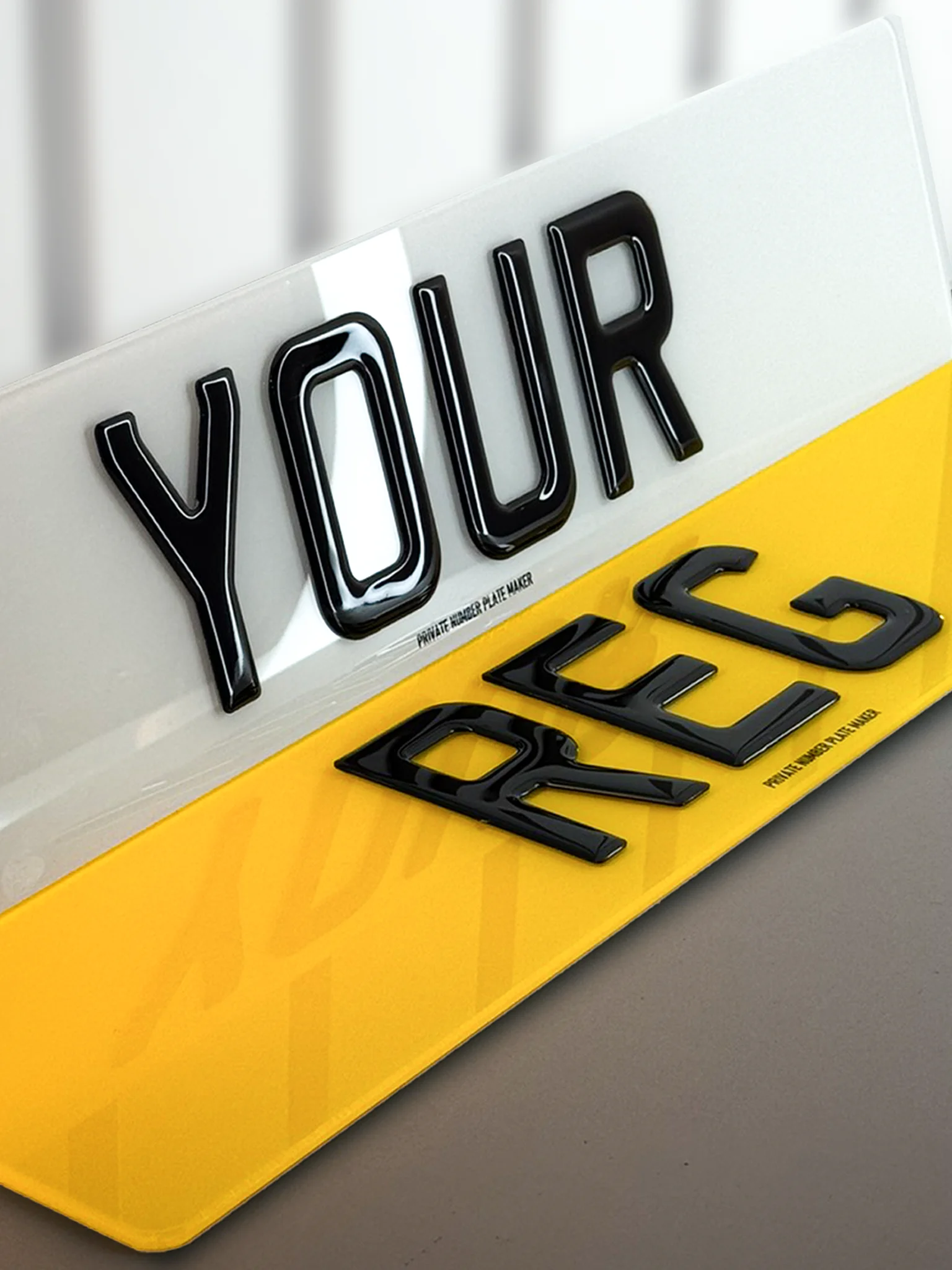 3D Plate
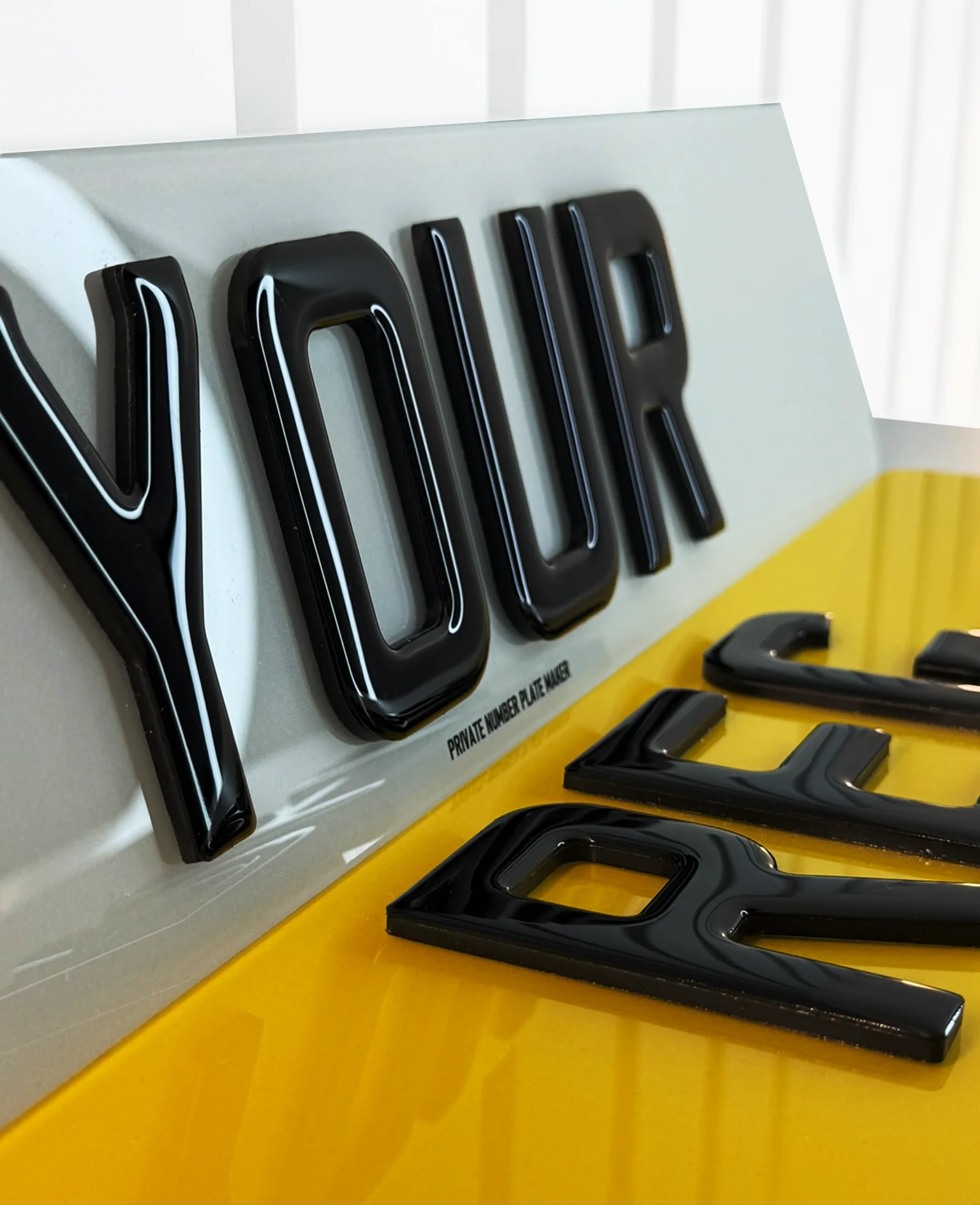
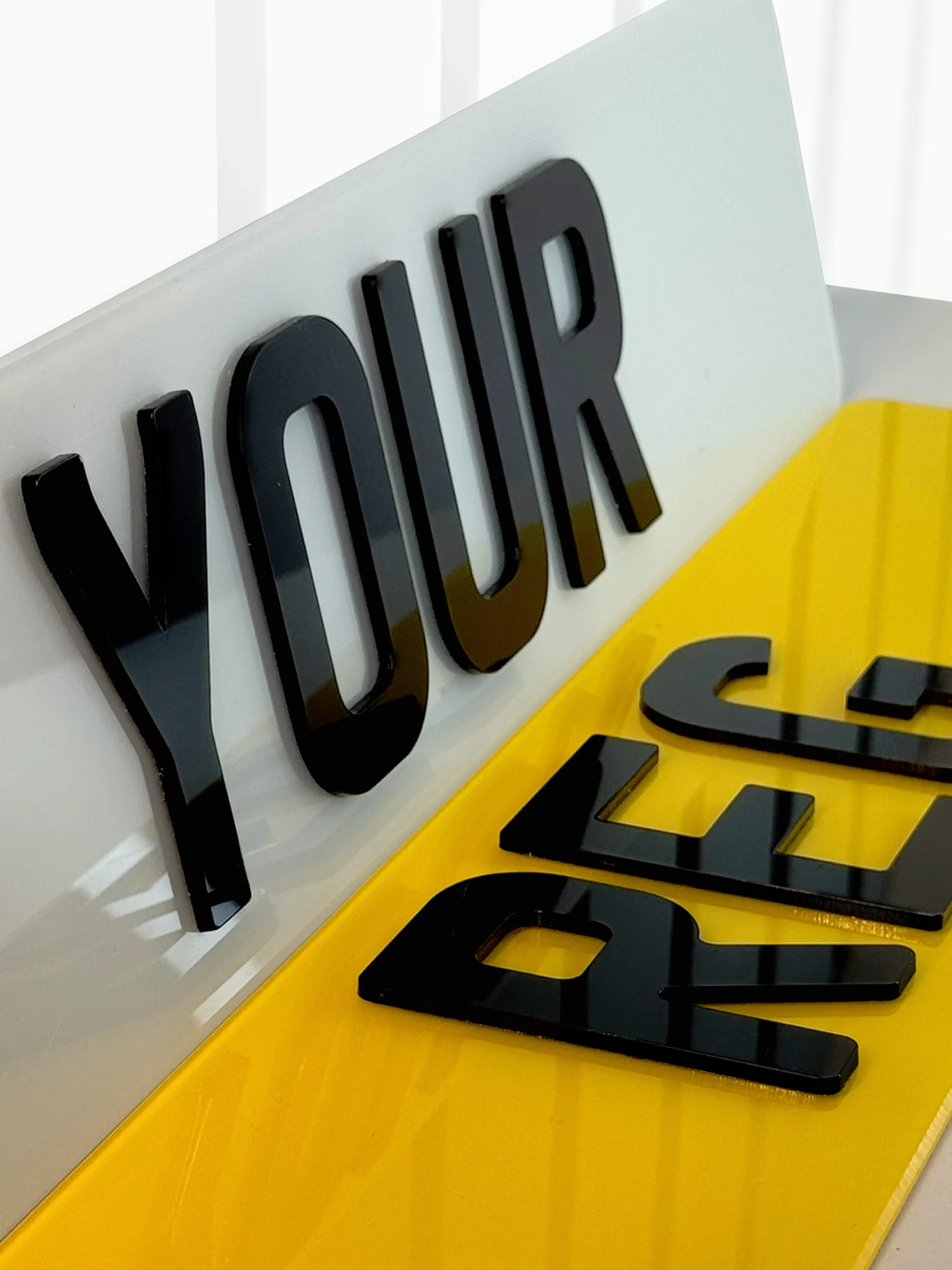 4D Plate
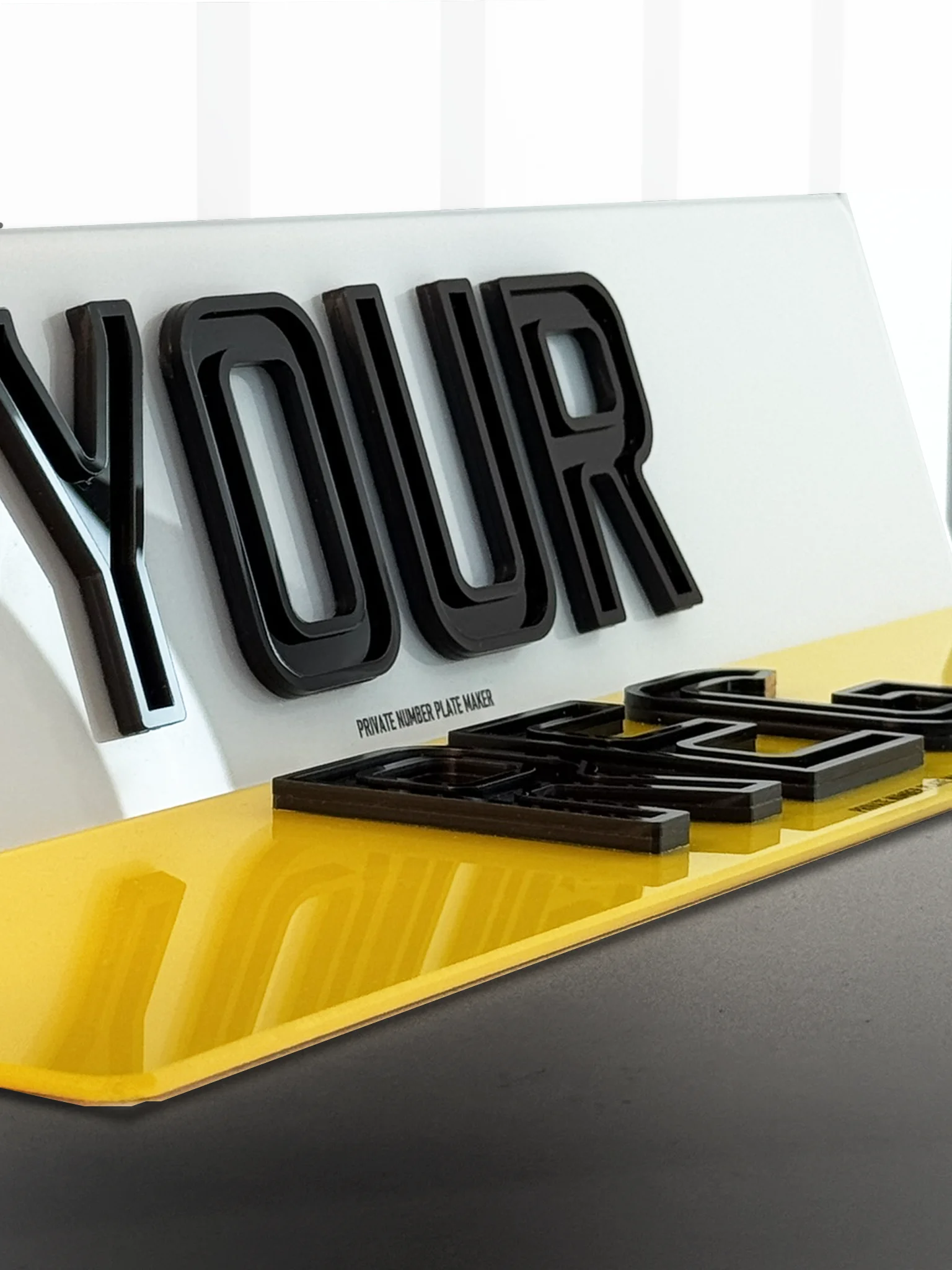
 5D Plate
 Ghost
Ghost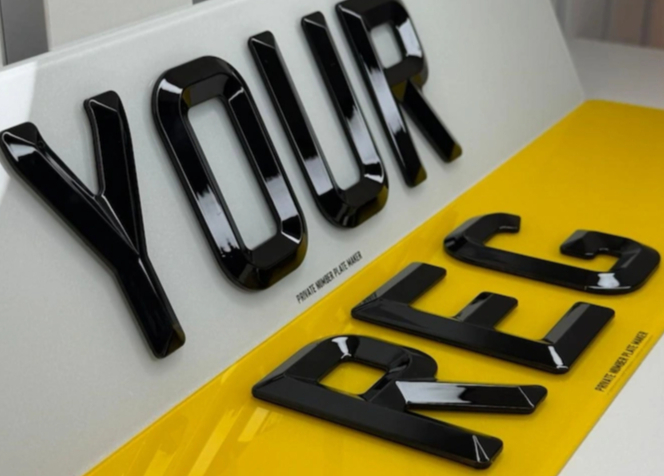 Bevel
Bevel4D Number Plate FAQ: Everything UK Drivers Need to Know
Summary
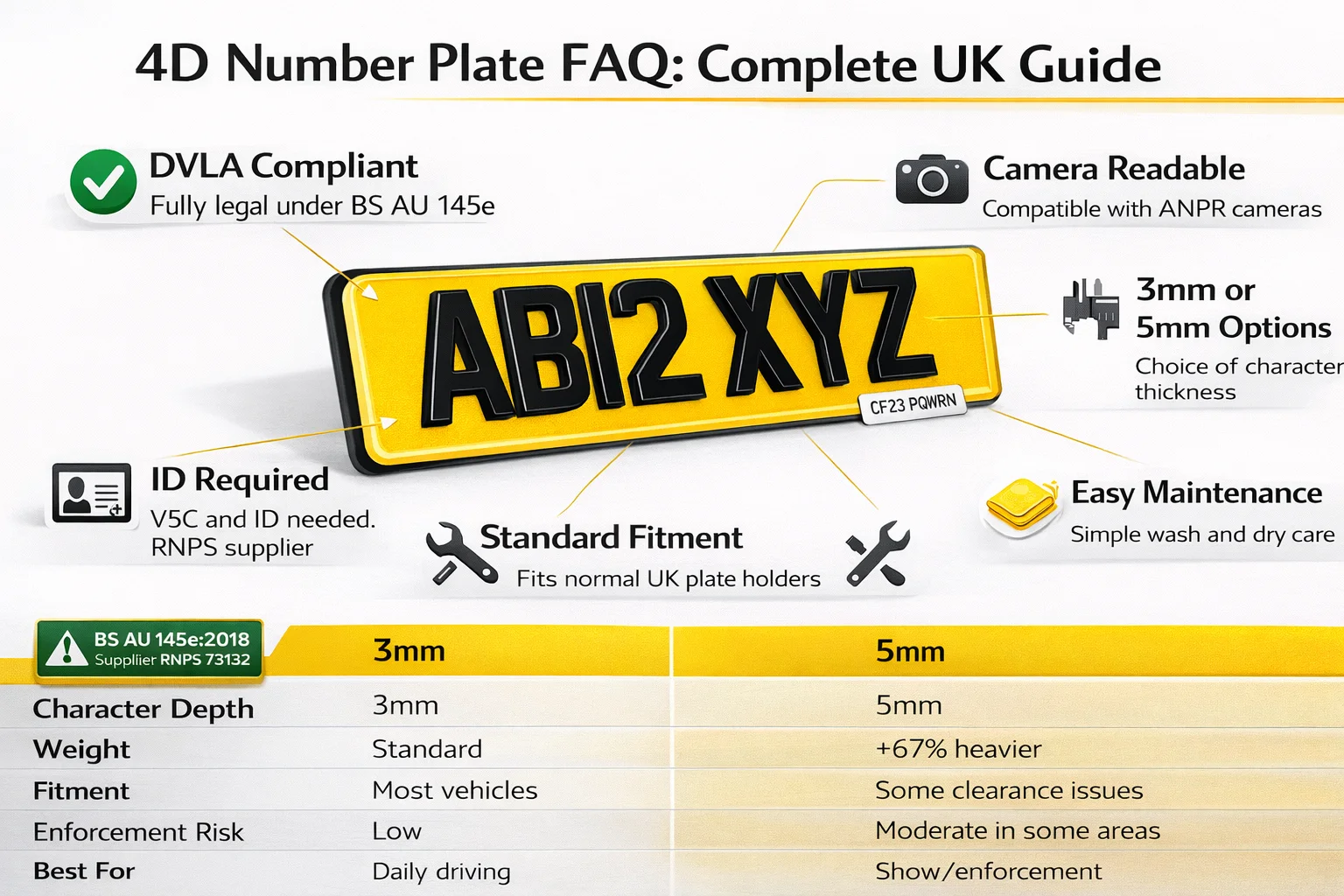
This comprehensive FAQ answers the most common questions UK drivers ask about 4D number plates, covering legality, ANPR compatibility, thickness options (3mm vs 5mm), cleaning, durability, document requirements, fitting, and troubleshooting. 4D plates are fully legal in the UK when manufactured to BS AU 145e:2018 standards with solid black laser-cut acrylic characters, the correct Charles Wright 2001 font, proper character spacing, and supplier RNPS identification.
At Private Number Plate Maker Ltd, we manufacture every 4D plate on-site at our Ilford workshop using BS AU 145e-certified materials and verify all required documents before production as a DVLA-registered supplier (RNPS ID: 75449). Our plates pass MOT inspection, work with ANPR cameras, and typically last 7-10+ years under normal UK driving conditions when properly maintained.
Related guide: Learn more about 4D plate technology in our main guide | 4D plates legality 2026
Legality & Compliance Questions
Are 4D Plates Legal in the UK 2026?
Yes, 4D number plates are 100% legal in the UK throughout 2026 when manufactured correctly. The key compliance requirements are:
- Solid black acrylic characters without highlighting or gradient effects
- Charles Wright 2001 mandatory font
- Correct character dimensions and spacing (79mm height for cars)
- BS AU 145e:2018 certified materials
- Supplier RNPS identification mark visible
Related guide: Are 4D plates legal in 2026? Complete UK guide | Charles Wright font requirements
What Makes 4D Plates Illegal?
4D plates become illegal when they have:
- Carbon fibre effect or patterned acrylic
- Tinted or coloured acrylic (must be solid black)
- Non-standard fonts other than Charles Wright 2001
- Incorrect character spacing or dimensions
- Missing BS AU 145e certification mark
- Missing supplier RNPS identification
- Reflective coatings on characters (only background reflects)
Under Regulation 16 of the Road Vehicles (Display of Registration Marks) Regulations 2001, characters must remain easily distinguishable to the eye.
Related guide: UK number plate fines: what you need to know
Do 4D Plates Need BS AU 145e Certification?
Yes, all new number plates manufactured from 1 September 2021 must comply with BS AU 145e:2018. This standard specifies four mandatory requirements:
- Reflectivity - background substrate must reflect appropriately
- Impact resistance - withstands stone chips and minor impacts
- Weathering - 2,275 hours UV exposure testing
- NIR compatibility - near infrared readability for ANPR
Related guide: What is BS AU 145e:2018? Full explanation
Can I Get Fined for Non-Compliant 4D Plates?
Yes. Penalties for illegal number plates include:
- Fixed Penalty Notice - £100 for minor infringements
- Maximum statutory fine - up to £1,000 (Level 3 standard scale) under Section 42 of the Vehicle Excise and Registration Act 1994
- MOT failure - vehicle cannot pass with illegal plates
- Vehicle seizure - in serious repeat offence cases
What Thickness 4D Plates Are Legal?
Both 3mm and 5mm acrylic thickness options are legal in the UK:
- UK regulations specify character dimensions, not acrylic thickness
- 3mm is standard and most common
- 5mm offers maximum depth and visual impact
- Both must meet all other compliance requirements
Note: No maximum thickness is specified in Road Vehicles Regulations 2001.
Related guide: 4D plate thickness guide: 3mm vs 5mm explained | 5mm 4D vs 5D plates
ANPR & Camera Compatibility
Do 4D Plates Work with ANPR Cameras?
Yes, compliant 4D plates work perfectly with ANPR (Automatic Number Plate Recognition) cameras. The solid black acrylic does not interfere with camera readability when:
- Acrylic is solid black (not tinted or coloured)
- Plate meets BS AU 145e NIR compatibility requirements
- Font is Charles Wright 2001
- Characters are properly spaced
Related guide: 4D plates ANPR definitive guide | How ANPR cameras work
Why Do Some 4D Plates Fail ANPR?
ANPR failures occur with non-compliant plates that have:
- Tinted or coloured acrylic reducing contrast
- Carbon fibre patterns confusing recognition
- Wrong font affecting character recognition
- Damaged or detached characters
- Incorrect spacing confusing camera systems
- Dirty plates affecting readability
Legal 4D plates from DVLA-registered suppliers pass ANPR checks without issue.
Will 4D Plates Pass MOT Inspection?
Yes, 4D plates pass MOT when manufactured correctly. MOT testers check:
- Characters easily readable from reasonable distance
- Font matches Charles Wright 2001 specification
- No cracks, discolouration, or damage
- BS AU 145e mark present and visible
- Supplier identification visible
- Plate securely attached to vehicle
- Character depth does not cause failure (both 3mm and 5mm acceptable)
The 3mm or 5mm acrylic depth itself does not cause MOT failure when compliant.
Do 4D Plates Affect Speed Cameras?
No, compliant 4D plates do not affect speed camera operation:
- Solid black acrylic absorbs infrared appropriately
- Character depth does not interfere with camera systems
- ANPR technology reads character contrast, not surface texture
- Thousands of 4D plates operate on UK roads without camera issues
Thickness & Depth Questions
What Is the Difference Between 3mm and 5mm 4D Plates?
The difference is acrylic character thickness and visual impact:
| Feature | 3mm 4D | 5mm 4D |
|---|---|---|
| Acrylic thickness | 3mm | 5mm |
| Character depth | Approximately 3mm raised | Approximately 5mm raised |
| Weight | Standard | Approximately 67% heavier |
| Visual impact | Standard 4D depth | Maximum 4D depth |
| Shadow effect | Moderate | Pronounced in sunlight |
| Price | Standard 4D pricing | Premium pricing |
| Best for | Daily driving | Show/enthusiast vehicles |
Which Thickness Should I Choose?
Choose 3mm If:
- Daily commuting vehicle
- High mileage driver (20,000+ miles annually)
- Urban driving (London, Birmingham, Manchester)
- Budget-conscious
- First-time 4D buyer
- Vehicle has recessed plate holder
Choose 5mm If:
- Show or display vehicle
- Enthusiast/modified vehicle
- Weekend or secondary vehicle
- Maximum appearance priority
- Lower mileage vehicle
- Flush plate mounting
Is 5mm Too Thick for Daily Driving?
5mm is legal for daily driving but consider:
- No specific regulation prohibits 5mm thickness
- Some anecdotal reports of increased attention in certain areas (not official enforcement data)
- 3mm has no reported enforcement concerns
- 5mm may not fit some recessed plate holders
- Additional weight requires secure fixings
Recommendation: For peace of mind on daily drivers, 3mm is the practical choice.
Does Thickness Affect Durability?
Yes, thicker acrylic offers marginal durability advantages:
| Durability Factor | 3mm | 5mm |
|---|---|---|
| Impact resistance | High | Very High |
| Stone chip resistance | High | Very High |
| Edge chipping risk | Low | Lower |
| Expected lifespan | 7-10+ years | 10+ years |
Note: Both thicknesses offer excellent durability when properly manufactured.
Fitting & Installation
Are 4D Plates Standard Size?
Yes, 4D plates use standard UK number plate dimensions:
| Vehicle Type | Front Plate | Rear Plate |
|---|---|---|
| Cars | 520mm x 111mm | 520mm x 111mm |
| Motorcycles | N/A | 225mm x 125mm (rear only) |
| Import plates | Variable | Variable |
Character dimensions remain 79mm height, 50mm width, 14mm stroke thickness regardless of acrylic thickness.
Do 4D Plates Fit Standard Holders?
3mm 4D Plates:
- Yes, fits virtually all standard plate holders
- Compatible with recessed holders
- Standard fixing screws work perfectly
5mm 4D Plates:
- Fits most standard holders
- May not fit deep recessed holders
- Check clearance before ordering
- May require longer screws
How Do I Fit 4D Plates?
Follow this fitting process:
- Remove old plates carefully
- Clean mounting surface thoroughly
- Position new plate correctly (front/rear)
- Insert screws through fixing holes
- Tighten securely (do not over-tighten - can crack acrylic)
- Check plate is secure and straight
- Use rubber washers to protect acrylic surface
Important for 5mm: Consider +2mm longer screws due to additional thickness.
Related guide: Complete number plate fitting guide with photos
Can I Fit 4D Plates Myself?
Yes, fitting 4D plates is straightforward for most vehicles. Consider professional fitting if:
- Vehicle has unusual mounting system
- You lack basic tools
- Previous plates were damaged during removal
- You want warranty on fitting work
- 5mm plates on vehicles with recessed holders
Cleaning & Maintenance
How Do I Clean 4D Plates?
Clean 4D plates using this method:
- Rinse with water to remove loose dirt
- Apply mild car shampoo with soft cloth or sponge
- Gently wipe acrylic characters (do not scrub hard)
- Rinse thoroughly with clean water
- Dry with soft microfiber cloth
What Should I Avoid When Cleaning 4D Plates?
Avoid these cleaning methods that can damage acrylic:
- Pressure washers directly on character surfaces (can damage adhesive bond)
- Abrasive cleaners or scouring pads (scratches acrylic)
- Solvent-based cleaners (white spirit, etc.) (can degrade adhesive)
- Sharp objects that can scratch acrylic
- Automatic car wash brushes (can catch on raised characters)
How Often Should I Clean My 4D Plates?
We recommend monthly cleaning under normal conditions:
- More frequently in winter (road salt damage)
- After long motorway journeys (insect buildup)
- Before MOT inspection (readability check)
- Immediately after exposure to tree sap or bird droppings
Can I Wax 4D Plates?
Yes, you can apply car wax to 4D plates. Benefits include:
- Additional UV protection for acrylic surface
- Easier cleaning (dirt releases more easily)
- Enhanced shine and appearance
- Extended acrylic lifespan
Apply wax sparingly and buff gently around raised characters. Recommended every 2-3 months.
Document Requirements
What Documents Do I Need to Buy 4D Plates?
Under Schedule 2 of the Road Vehicles Regulations 2001, you must provide one or more of these documents:
- V5C Registration Certificate (logbook)
- V750 Certificate of Entitlement
- V778 Retention Document
- V948 Authorisation Letter
- Valid driving licence (photocard or paper)
- Passport (as secondary ID)
Related guide: DVLA document requirements: what you need | V5C vs V750 vs V778 explained
Can I Use Digital Copies of Documents?
No. We require original documents or certified copies:
- Screenshots are not accepted
- Photos of documents on phones rejected
- Email copies not sufficient for verification
- Originals or certified copies required
This is a DVLA requirement for all registered suppliers, not our policy.
Related guide: How to photograph documents for verification
Why Do You Need My Documents?
Document verification is mandatory under DVLA regulations for all registered number plate suppliers. This protects:
- You - prevents fraudulent plate production
- Us - maintains our RNPS registration status
- Public - reduces vehicle crime opportunities
We verify all documents before production begins at our Ilford workshop.
Do Document Requirements Differ for 4D Plates?
No, document requirements are identical for all plate types:
- Standard 2D plates - same documents
- 3D gel plates - same documents
- 4D acrylic plates - same documents
- 5D dual-layer plates - same documents
The plate type does not affect legal documentation requirements.
Durability & Lifespan
How Long Do 4D Plates Last?
Properly manufactured 4D plates typically last 7-10+ years under normal UK driving conditions. Factors affecting lifespan include:
- Parking conditions (garage vs outdoor)
- Mileage and road types
- Climate and weather exposure
- Cleaning frequency and methods
- Quality of initial manufacturing
- Acrylic thickness (3mm vs 5mm)
Do 4D Plates Yellow Over Time?
Quality 4D plates should not yellow significantly if:
- UV-stabilised acrylic is used
- Plate meets BS AU 145e weathering requirements
- Regular cleaning removes contaminants
- Garage parking when possible
Yellowing indicates poor manufacturing, non-UV-stabilised acrylic, or extreme UV exposure beyond normal conditions.
Are 4D Plates More Durable Than 3D?
Yes, 4D acrylic plates offer better durability than 3D gel plates:
| Feature | 3D Gel | 4D Acrylic |
|---|---|---|
| UV Protection | High (gel protects) | Very High (solid acrylic) |
| Impact Resistance | High | Very High |
| Fade Resistance | Very Good | Excellent |
| Expected Lifespan | 5-7 years | 7-10+ years |
The solid acrylic construction provides superior resistance to stone chips, UV degradation, and weathering compared to 3D gel.
Related guide: Detailed 4D vs 3D comparison | 3D gel plates explained
What Damages 4D Plates?
Common damage causes include:
- Stone chips from motorway driving
- Scratches from improper cleaning
- Chemical damage from harsh cleaners
- Impact damage in car washes
- Extreme temperature cycling
- Physical impact (parking incidents)
- Adhesive failure (poor manufacturing)
Pricing & Value
Why Are 4D Plates More Expensive Than Standard?
4D plates cost more due to:
- Laser cutting equipment and operation
- Premium acrylic materials (3mm or 5mm cast acrylic)
- Automotive-grade adhesive
- Additional manufacturing time per plate
- Quality control for character bonding
- Higher material waste (cutting individual characters)
Are 4D Plates Worth the Extra Cost?
For most drivers, yes, if you:
- Plan to keep vehicle 5+ years
- Want premium appearance
- Value enhanced durability
- Park outdoors regularly
- Drive high annual mileage
- Own premium or enthusiast vehicle
For short-term ownership (under 3 years), 3D gel may offer better value.
Related guide: Are premium number plates worth the investment?
What Is the Price Difference Between 3mm and 5mm?
Typical pricing difference:
| Thickness | Typical Price Range (Pair) | Difference |
|---|---|---|
| 3mm 4D | £60-£90 | Standard 4D pricing |
| 5mm 4D | £80-£120 | +£20-£30 premium |
Note: Prices vary by supplier, location, and order volume. Verify current pricing before ordering.
Do You Offer Warranty on 4D Plates?
As a DVLA-registered manufacturer (RNPS ID: 75449), we stand behind our workmanship:
- Manufacturing defects covered
- BS AU 145e compliance guaranteed
- Documented production records maintained
- Physical workshop for verification visits
Contact our Ilford workshop for specific warranty terms.
Troubleshooting
My 4D Character Is Loose - What Do I Do?
Loose characters indicate manufacturing defect or damage:
- Contact supplier immediately if under warranty
- Do not attempt DIY re-bonding
- Document damage with photographs
- Request replacement if manufacturing fault
Properly bonded 4D characters should not detach under normal conditions.
My 4D Plate Is Fading - Is This Normal?
Some fading over 7-10+ years is normal, but premature fading suggests:
- Non-UV-stabilised acrylic used
- Poor manufacturing quality
- Extreme environmental exposure
- Harsh cleaning chemicals used
Contact supplier if fading occurs within first 3-5 years.
ANPR Camera Didn't Read My 4D Plate - Why?
Possible causes include:
- Dirt or grime on plate surface
- Damaged or cracked characters
- Incorrect plate positioning on vehicle
- Camera malfunction (not plate issue)
- Non-compliant plate manufacturing (tinted acrylic, wrong font)
Clean plate first, then contact supplier if problem persists.
Can I Repair Damaged 4D Acrylic?
No, damaged 4D acrylic cannot be properly repaired:
- Acrylic cannot be re-bonded reliably
- Repairs will not meet BS AU 145e standards
- MOT may fail with repaired plates
- Replacement is the only compliant option
Order replacement plates from DVLA-registered supplier.
Related guide: Complete UK buying guide for replacement number plates
Comparison With Other Plate Types
What's the Difference Between 3D and 4D Plates?
| Feature | 3D Gel | 4D Laser-Cut |
|---|---|---|
| Construction | UV-cured resin gel | 3mm or 5mm laser-cut acrylic |
| Character Depth | 2mm raised | 3mm or 5mm raised |
| Visual Effect | Subtle raised | Bold, pronounced with shadow |
| Durability | High (5-7 years) | Very High (7-10+ years) |
| Price | Mid-range (£40-£60) | Premium (£60-£120) |
| Legal Status | Fully legal | Fully legal |
Related guide: Detailed 4D vs 3D breakdown | All plate types comparison
Should I Choose 3D or 4D Plates?
Choose 3D Gel If:
- Budget is primary concern
- You plan to sell vehicle within 3-5 years
- You prefer subtle premium appearance
- Daily driving with moderate mileage
Choose 4D Acrylic If:
- Maximum durability is your priority
- You own premium or enthusiast vehicles
- You want the most pronounced depth effect
- You plan long-term vehicle ownership (5+ years)
- High annual mileage (15,000+ miles)
Are 5D Plates Better Than 4D?
5D plates combine 4D acrylic and 3D gel (3mm acrylic + 2mm gel = 5mm total):
- Maximum visual depth available
- Highest durability
- Premium price point (£80-£120+)
- Fully DVLA compliant
Best for enthusiasts seeking maximum premium appearance.
Related guide: Full comparison: 3D vs 4D vs 5D number plates | 5D plates explained
Ordering & Collection
How Long Does It Take to Make 4D Plates?
Production times at our Ilford workshop:
- Same-day collection available (order before cut-off time)
- Next-day UK delivery standard
- Complex registrations may require extra time
- Document verification completed before production
Related guide: Number plate delivery times guide
Can I Collect 4D Plates in Person?
Yes, we offer same-day collection from our Ilford workshop in Ilford:
- Bring original documents for verification
- Collection during workshop opening hours
- Plates ready within hours of order confirmation
- No delivery charges for collection
Related guide: Same-day number plates in Ilford: what you need to know
Do You Deliver 4D Plates UK-Wide?
Yes, we offer next-day UK delivery on all 4D plate orders:
- Secure packaging to prevent transit damage
- Tracking information provided
- Signature required on delivery
- Delivery charges apply (varies by location)
Can I Order 4D Plates Online?
Yes, order through our website with secure document upload:
- Encrypted document submission
- Email confirmation of order
- Production begins after verification
- Delivery or collection options selected at checkout
All online orders undergo same document verification as in-person orders.
Manufacturing & Quality
Where Are Your 4D Plates Made?
All our 4D plates are manufactured on-site at our Ilford workshop in Ilford, East London. We are not drop-shippers or resellers:
- Complete manufacturing control
- Direct quality oversight
- Same-day collection available
- Physical workshop you can visit
How Do You Ensure 4D Plate Compliance?
Our compliance process includes:
- BS AU 145e-certified materials only
- Charles Wright 2001 font verified
- Document verification before production
- Quality inspection on every plate
- RNPS identification on all plates
- Production records maintained
Can I Visit Your Workshop?
Yes, our Ilford workshop welcomes collection customers:
- Castleview Gardens, Ilford, East London
- Appointment recommended for collections
- Document verification completed on-site
- Same-day production available
This transparency distinguishes us from online-only resellers.
This guide references the following official and verified sources:
DVLA Official Guidance - Displaying Number Plates Rules
Official government guidance on number plate display requirements
Road Vehicles (Display of Registration Marks) Regulations 2001 (SI 2001/561)
Statutory instrument governing registration mark display
www.legislation.gov.ukBritish Standards Institution - BS AU 145e:2018
Specification for Retroreflecting Number Plates
knowledge.bsigroup.comBritish Number Plate Manufacturers Association (BNMA)
Industry guidance and best practices
www.bnma.orgVehicle Excise and Registration Act 1994
Enforcement powers and penalty provisions
www.legislation.gov.ukDVLA INF104 Vehicle Registration Numbers and Number Plates
www.gov.ukFrequently Asked Questions
Yes, 4D number plates are fully legal in the UK throughout 2026 when manufactured to BS AU 145e:2018 standards with solid black laser-cut acrylic characters, the mandatory Charles Wright 2001 font, and correct character spacing. As a DVLA-registered supplier (RNPS ID: 75449) based in Ilford, we verify all documents before production to ensure compliance with the Road Vehicles (Display of Registration Marks) Regulations 2001. Plates must display the BS AU 145e certification mark and supplier RNPS identification to be road-legal.
Yes, compliant 4D plates work perfectly with ANPR (Automatic Number Plate Recognition) and speed cameras when manufactured correctly. The solid black acrylic must meet BS AU 145e:2018 NIR compatibility requirements, use the Charles Wright 2001 font, and maintain proper character spacing. At our Ilford workshop, we ensure every plate passes NIR readability testing. Non-compliant plates with tinted acrylic, incorrect fonts, or poor spacing may fail camera recognition, so always choose a DVLA-registered manufacturer.
Both 3mm and 5mm acrylic thicknesses are legal in the UK, as regulations specify character dimensions, not acrylic depth. The 3mm option is standard, lighter, and fits all plate holders, making it ideal for daily drivers. The 5mm option offers maximum visual depth and marginally enhanced durability, best suited for show vehicles or enthusiasts. Both must meet BS AU 145e:2018 standards and use solid black acrylic with the Charles Wright 2001 font. Choose based on your vehicle type and aesthetic preference.
Under Schedule 2 of the Road Vehicles Regulations 2001, you must provide original documents or certified copies such as your V5C registration certificate, V750/V778 entitlement documents, or valid driving licence plus passport. As a DVLA-registered supplier (RNPS ID: 75449), we verify all documents on-site at our Ilford workshop before production. Digital copies, screenshots, or photos are not accepted. These requirements apply equally to all plate types and protect against vehicle crime.
Clean 4D plates monthly using mild car shampoo, a soft cloth, and gentle wiping around the raised acrylic characters, then rinse and dry with microfiber. Avoid pressure washers directly on characters, abrasive cleaners, solvents, or automatic car wash brushes that could damage the adhesive bond. Applying car wax every 2-3 months provides UV protection and easier cleaning. Proper maintenance helps your BS AU 145e:2018 compliant plates last 7-10+ years under normal UK driving conditions.
Related guide: Read real 4D number plate reviews from UK drivers