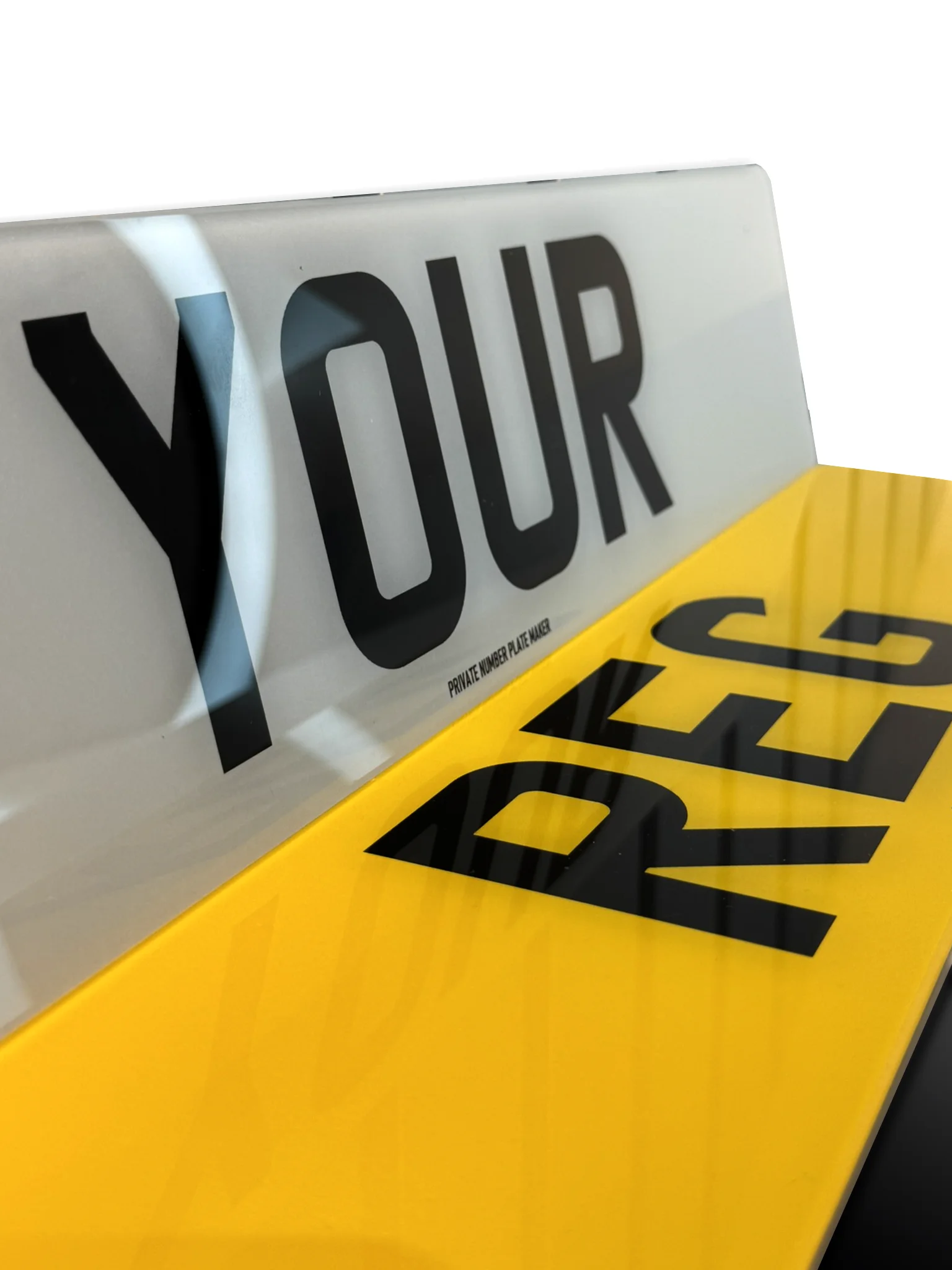
 Printed
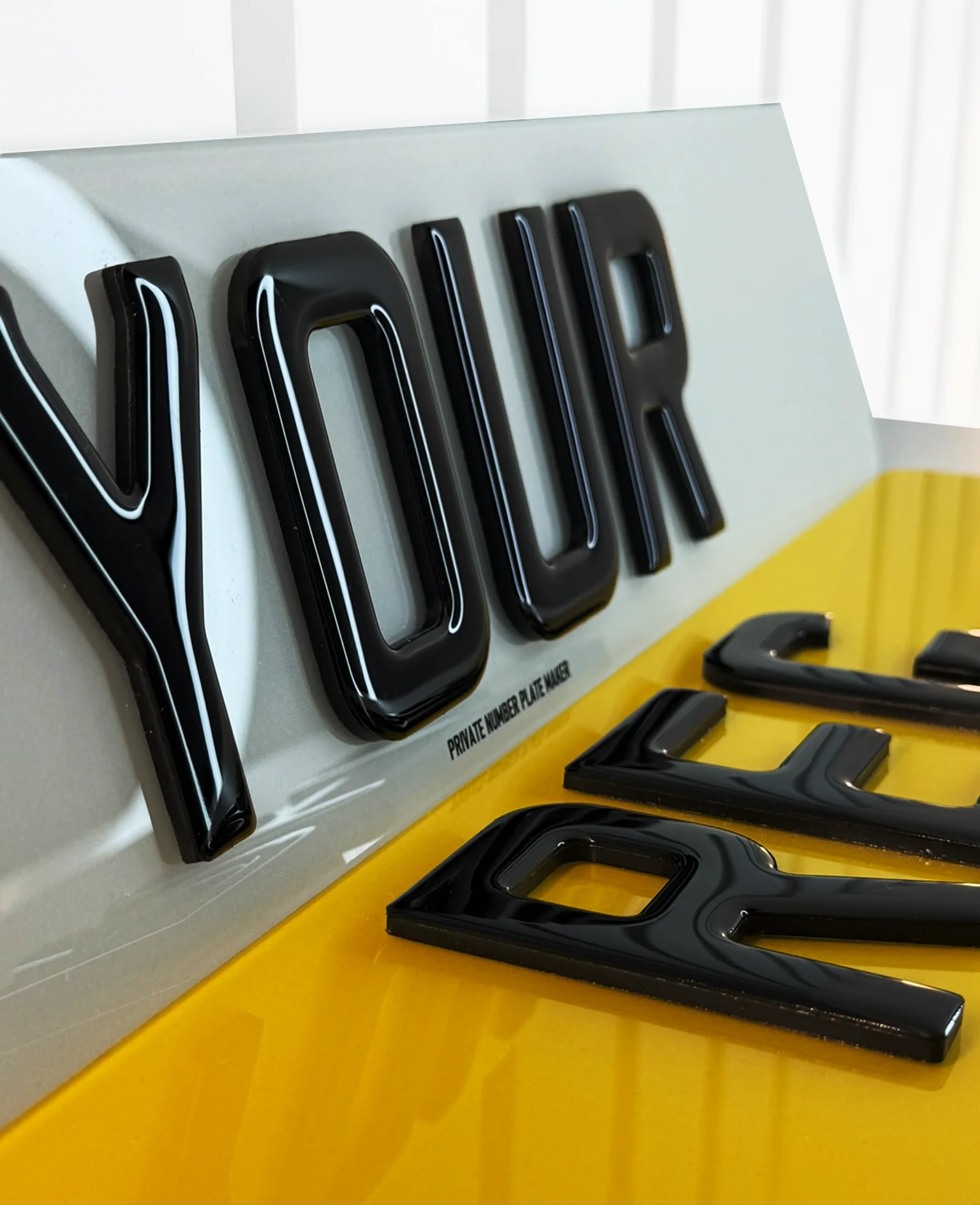
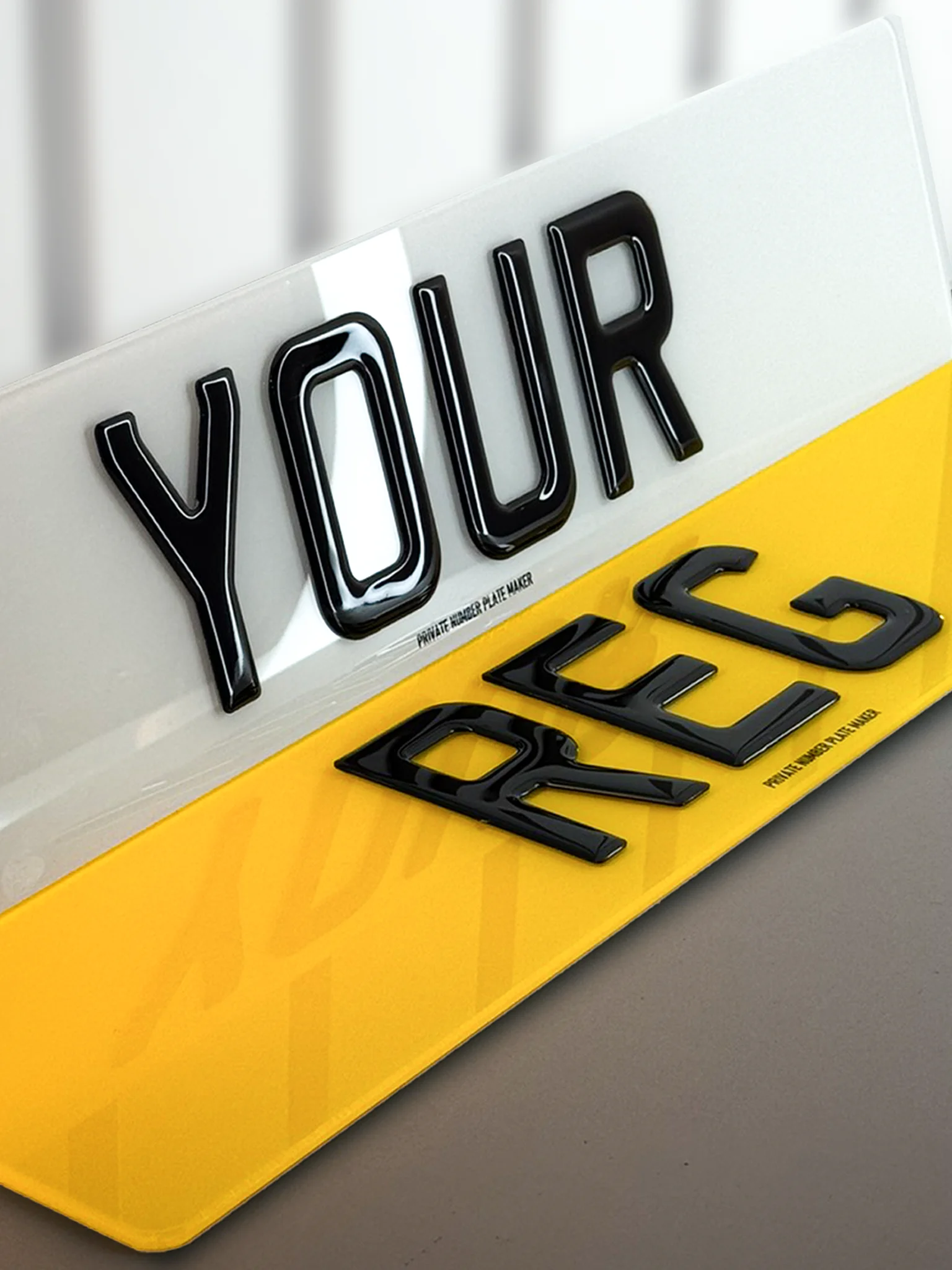 3D Plate
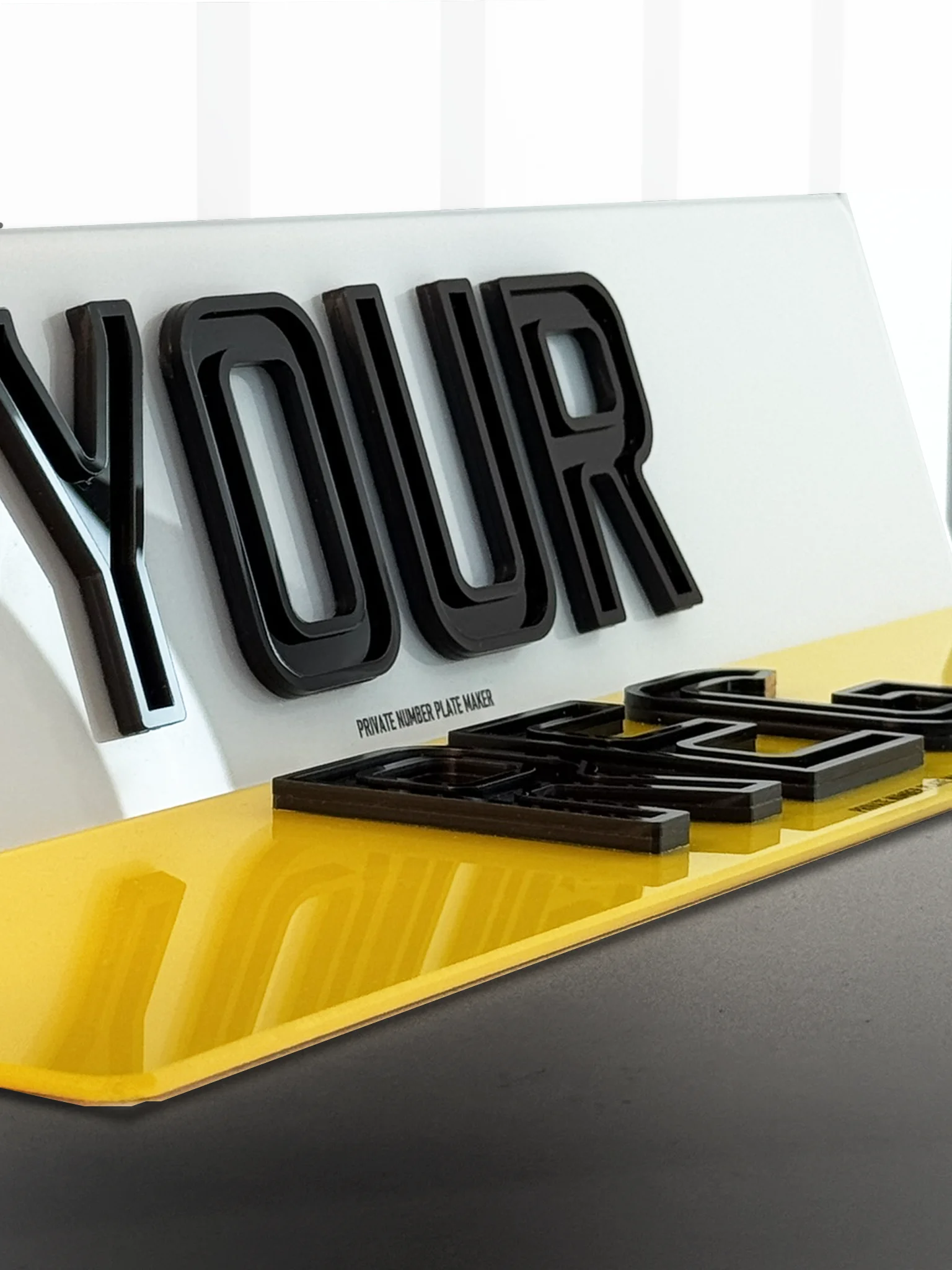
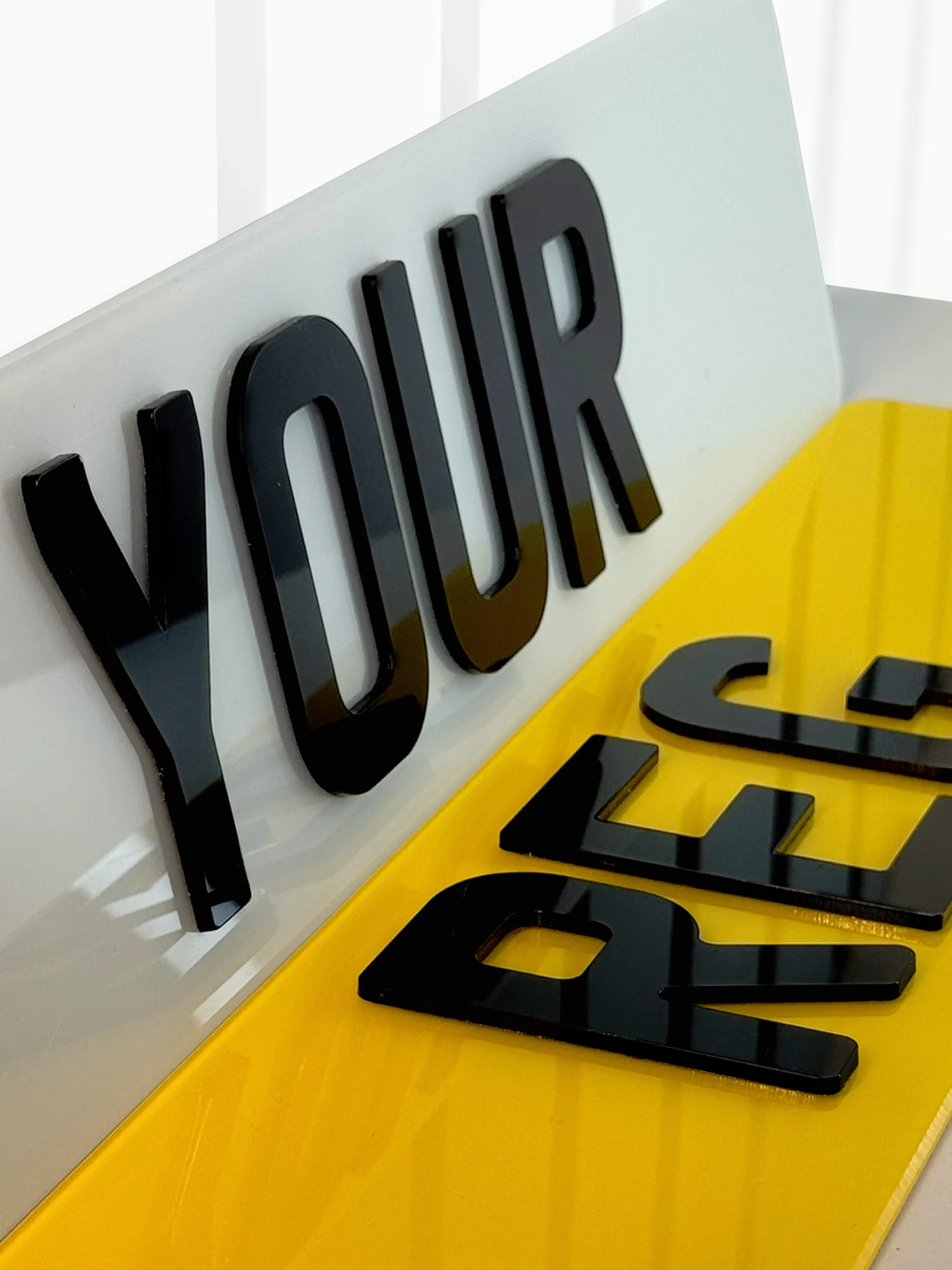 4D Plate
 5D Plate
 Ghost
Ghost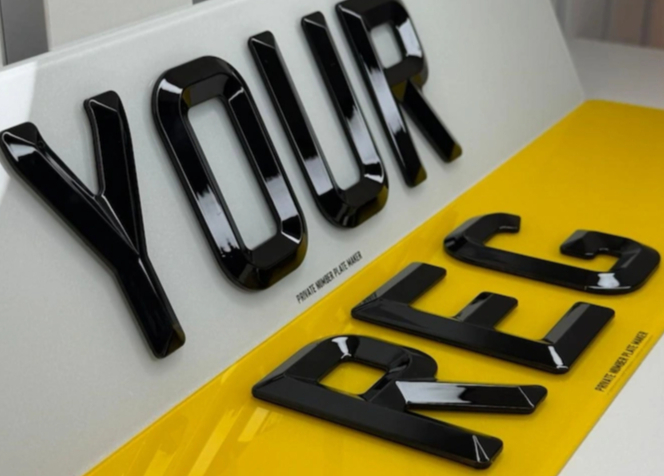 Bevel
Bevel4D vs 3D Plates: Complete Comparison Guide for UK Drivers
Summary
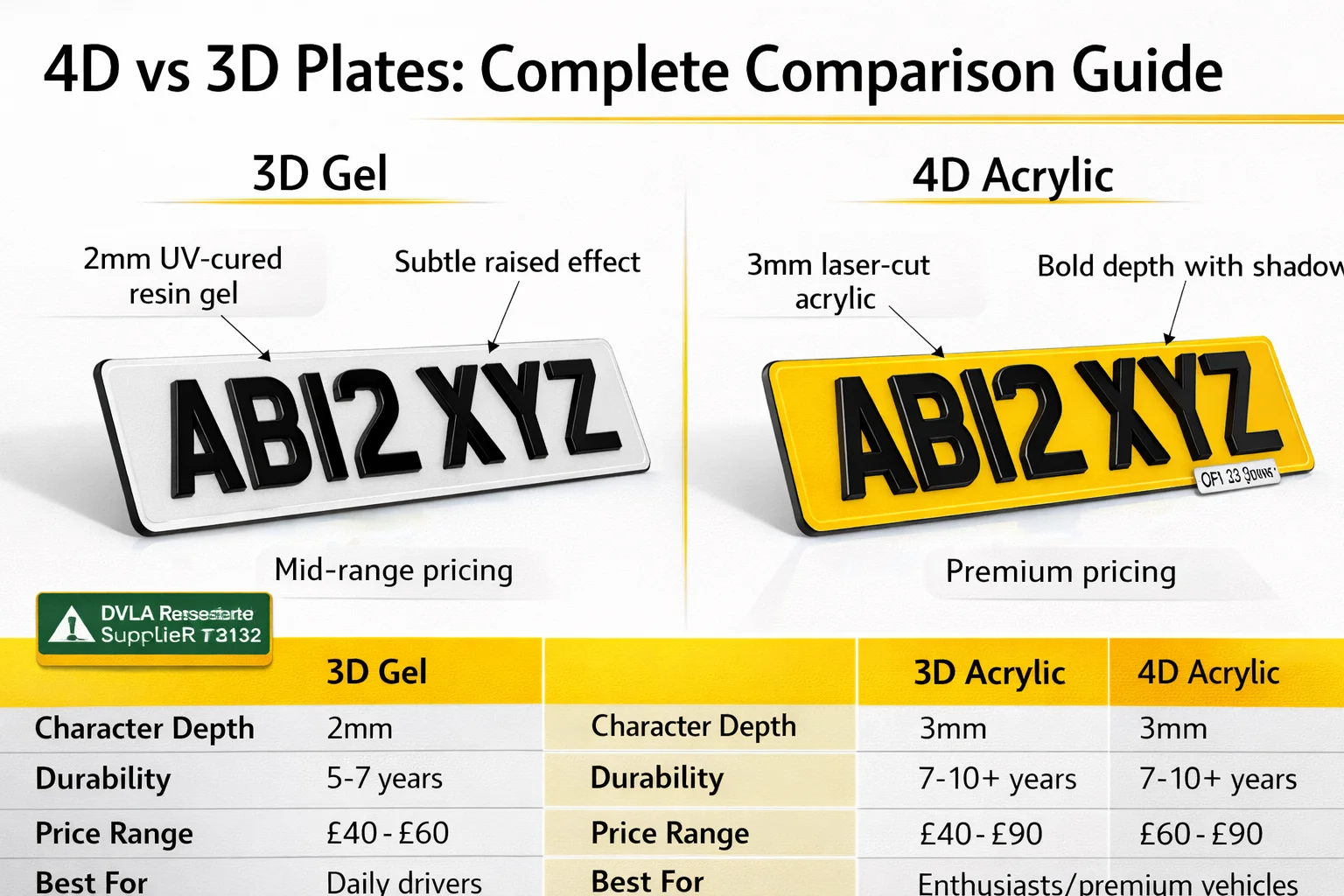
The main difference between 3D and 4D number plates is character construction and depth: 3D plates use UV-cured resin gel (approximately 2mm raised) over printed characters, while 4D plates use laser-cut acrylic characters (3mm thick) bonded to the plate base, creating more pronounced depth and a shadow effect in sunlight. Both plate types are fully legal in the UK when manufactured to BS AU 145e:2018 standards with the correct Charles Wright 2001 font, solid black characters, proper spacing, and supplier RNPS identification.
At Private Number Plate Maker Ltd, we manufacture both 3D gel and 4D laser-cut plates on-site at our Ilford workshop using BS AU 145e-certified materials and verify all required documents before production as a DVLA-registered supplier (RNPS ID: 75449). 3D gel plates typically cost £40-£60 per pair with 5-7 year lifespan, while 4D acrylic plates cost £60-£90 per pair with 7-10+ year lifespan, making 3D ideal for budget-conscious buyers wanting premium appearance and 4D better for maximum durability and depth.
Quick Comparison: 3D vs 4D Plates at a Glance
| Feature | 3D Gel Plates | 4D Laser-Cut Plates |
|---|---|---|
| Character Construction | UV-cured resin gel over black base | 3mm laser-cut acrylic bonded to substrate |
| Character Depth | 2mm raised (typical) | 3mm raised (typical) |
| Visual Effect | Subtle raised appearance | Bold depth with shadow effect |
| Edge Profile | Rounded gel edges | Sharp, flat acrylic edges |
| Durability Rating | High | Very High |
| Expected Lifespan | 5-7 years | 7-10+ years |
| Price Range (Pair) | £40-£60 | £60-£90 |
| Best For | Daily drivers, budget premium | Enthusiasts, premium vehicles |
| Legal Status | Fully legal when compliant | Fully legal when compliant |
| BS AU 145e Compliant | Yes | Yes |
| MOT Compatible | Yes | Yes |
| ANPR Readable | Yes | Yes |
Construction Methods: How 3D and 4D Plates Are Made
3D Gel Plate Manufacturing Process
3D gel plates use UV-cured resin applied over printed characters:
Step-by-Step Process:
- Reflective substrate cut to size with printed registration
- Black character base applied to substrate
- Clear UV-curable resin gel applied over characters
- Plate enters UV curing chamber (365-405nm wavelength)
- Gel hardens through photopolymerisation (approximately 8 minutes)
- Clear gel allows black base to show through (no highlighting)
- BS AU 145e mark and supplier RNPS ID added
- Quality inspection before dispatch
Key 3D Characteristics:
- Gel depth approximately 2mm raised
- Rounded edge profile where gel meets substrate
- Clear gel protects underlying black characters
- UV-stabilised formulation resists yellowing
4D Laser-Cut Plate Manufacturing Process
4D plates use precision laser-cut acrylic characters bonded to the base:
Step-by-Step Process:
- 3mm black acrylic sheet selected (UV-stabilised grade)
- CO2 laser cutter programmed with Charles Wright 2001 font
- Each character laser-cut individually with precision
- Acrylic characters cleaned and edges inspected
- BS AU 145e:2018 reflective substrate prepared
- Automotive-grade adhesive applied to character backs
- Characters positioned and bonded to substrate
- Curing time allowed for full bond strength (24-48 hours)
- BS AU 145e mark and supplier RNPS ID added
- Quality inspection before dispatch
Key 4D Characteristics:
- Acrylic thickness 3mm (standard)
- Sharp, flat edge profile
- Solid black acrylic (no gel overlay)
- Shadow effect created in sunlight
? Read 4D Number Plates Explained | View 4D Laser-Cut Number Plates
Appearance and Visual Differences
Character Depth Comparison
The most noticeable difference between 3D and 4D plates is character depth:
| Aspect | 3D Gel | 4D Acrylic |
|---|---|---|
| Raised height | 2mm typical | 3mm typical |
| Edge profile | Rounded, smooth | Sharp, defined |
| Shadow effect | Minimal | Pronounced in sunlight |
| Visual impact | Subtle premium | Bold, maximum depth |
| Distance appearance | Slightly raised | Clearly three-dimensional |
When Depth Matters:
- Close range (1-3 metres): Both show clear depth effect
- Distance (10+ metres): 4D more noticeable due to shadow
- Photography: 4D creates more dramatic images
- Sunlight: 4D shadow effect more pronounced
Finish and Texture Differences
| Finish Characteristic | 3D Gel | 4D Acrylic |
|---|---|---|
| Surface texture | Smooth gel surface | Solid acrylic face |
| Light reflection | Semi-gloss gel finish | Matte or semi-gloss acrylic |
| Edge visibility | Gel blends into substrate | Clear acrylic edge visible |
| Colour consistency | Clear gel over black | Solid black throughout |
Aesthetic Considerations:
- 3D gel offers more subtle, refined appearance
- 4D acrylic provides bolder, more aggressive look
- Both complement different vehicle styles
- Personal preference plays significant role
Durability and Lifespan Comparison
Expected Lifespan by Plate Type
| Ownership Period | 3D Gel Condition | 4D Acrylic Condition |
|---|---|---|
| 0-2 years | Excellent, like new | Excellent, like new |
| 2-5 years | Very good, minor wear | Excellent, minimal wear |
| 5-7 years | Good, some fading possible | Very good, slight fading |
| 7-10 years | Acceptable, replacement considered | Good, still serviceable |
| 10+ years | Replacement recommended | Acceptable, monitor condition |
Note: Lifespan varies significantly based on parking conditions, mileage, climate, and maintenance practices.
Durability Factor Comparison
| Durability Factor | 3D Gel | 4D Acrylic | Winner |
|---|---|---|---|
| UV Resistance | High (gel protects) | Very High (solid acrylic) | 4D |
| Impact Resistance | High | Very High | 4D |
| Chemical Resistance | Good | Excellent | 4D |
| Temperature Stability | Good | Excellent | 4D |
| Edge Durability | Good (gel can chip) | Excellent (solid acrylic) | 4D |
| Fade Resistance | Very Good | Excellent | 4D |
| Adhesion Longevity | High (gel bonded) | Very High (adhesive bonded) | 4D |
Why 4D Lasts Longer:
- Solid acrylic more UV-stable than gel
- No gel layer to potentially chip or peel
- Acrylic edges more resistant to damage
- Better chemical resistance to cleaners and road salts
Common Durability Concerns Addressed
Do 3D Gel Plates Yellow Over Time?
Quality 3D gel plates should not yellow significantly within first 3-5 years. UV-stabilised gel resists yellowing; proper UV curing during manufacturing is critical. Yellowing indicates poor manufacturing or extreme exposure. 4D acrylic is more resistant to yellowing long-term.
Do 4D Characters Fall Off?
Properly bonded 4D characters should not detach under normal conditions. Automotive-grade adhesive creates permanent bond; full curing takes 24-48 hours after manufacture. Temperature cycling is tested during manufacturing. Failure usually indicates manufacturing defect or impact damage.
Which Is Better for High Mileage?
4D plates are better suited for high-mileage drivers due to superior impact resistance for motorway driving, better stone chip resistance, and longer lifespan reducing replacement frequency. Worth the premium cost for 20,000+ miles annually.
Legal Compliance: Both Plate Types When Manufactured Correctly
DVLA Requirements Apply Equally
Both 3D and 4D plates must meet identical legal requirements:
| Requirement | 3D Gel | 4D Acrylic |
|---|---|---|
| Charles Wright 2001 font | Mandatory | Mandatory |
| Character height (cars) | 79mm | 79mm |
| Character spacing | 11mm | 11mm |
| Stroke thickness | 14mm | 14mm |
| BS AU 145e:2018 | Required | Required |
| Supplier RNPS ID | Required | Required |
| Solid black characters | Required | Required |
| Non-reflective characters | Required | Required |
Key Point: Plate type does not determine legality - compliance with regulations does.
? Are 4D Plates Legal in 2026?
What Makes Either Plate Type Illegal
Both 3D and 4D plates become illegal with these modifications:
| Illegal Feature | 3D Gel Violation | 4D Acrylic Violation |
|---|---|---|
| Tinted/coloured material | Coloured gel | Tinted acrylic |
| Highlighting effects | Shadow gel on characters | Paint/shadow on acrylic |
| Carbon fibre effect | Patterned gel | Carbon acrylic |
| Reflective characters | Reflective gel coating | Reflective acrylic |
| Wrong font | Non-Charles Wright gel | Non-Charles Wright acrylic |
| Missing BS AU 145e mark | No certification | No certification |
| Missing RNPS ID | No supplier mark | No supplier mark |
Penalties: Under Section 42 of the Vehicle Excise and Registration Act 1994, fines up to £1,000 (Level 3 standard scale) can apply for non-compliant plates.
MOT Compliance for 3D and 4D Plates
MOT Inspection Requirements
Both plate types pass MOT when manufactured correctly:
MOT Plate Checks (Apply to Both):
- Characters easily readable from reasonable distance
- Font matches Charles Wright 2001 specification
- No cracks, discolouration, or damage
- BS AU 145e mark present and visible
- Supplier identification visible
- Plate securely attached to vehicle
- Character depth does not cause failure (both 2mm and 3mm acceptable)
Common 3D Plate MOT Failures:
- Gel peeling from character base
- Significant gel yellowing affecting contrast
- Cracks through gel layer
- Missing or illegible BS AU 145e mark
Common 4D Plate MOT Failures:
- Characters detached or loose
- Significant acrylic fading
- Cracked acrylic characters
- Missing or illegible BS AU 145e mark
Long-Term MOT Considerations
| Plate Type | MOT Years 1-3 | MOT Years 4-6 | MOT Years 7+ |
|---|---|---|---|
| 3D Gel | Pass (excellent) | Pass (good) | Monitor condition |
| 4D Acrylic | Pass (excellent) | Pass (excellent) | Pass (good) |
Recommendation: 4D plates may require fewer replacements over vehicle ownership due to longer lifespan.
Pricing and Value Comparison
Typical Price Ranges (2026 UK Market)
| Plate Type | Typical Price (Pair) | Price Per Year (5 years) | Price Per Year (10 years) |
|---|---|---|---|
| Standard 2D | £25-£40 | £5-£8 | N/A (replace sooner) |
| 3D Gel | £40-£60 | £8-£12 | N/A (replace sooner) |
| 4D Acrylic | £60-£90 | £12-£18 | £6-£9 |
Note: Prices vary by supplier, location, and order volume. Our Ilford workshop pricing may differ.
Value Analysis by Ownership Duration
Short-Term Ownership (Under 3 Years):
- 3D gel offers best value
- Premium appearance without 4D cost
- Sufficient durability for short period
- Lower initial investment
Medium-Term Ownership (3-7 Years):
- 3D gel or 4D depending on budget
- 3D adequate with proper care
- 4D provides better longevity
- Consider annualised cost
Long-Term Ownership (7+ Years):
- 4D offers best long-term value
- One set may last entire ownership
- Lower annualised cost than 3D
- Better durability for high mileage
When Each Plate Type Represents Best Value
Choose 3D Gel If:
- Budget is primary concern
- Vehicle will be sold within 3-5 years
- You want premium look without maximum cost
- Daily driving with moderate mileage
- Subtle appearance preferred
Choose 4D Acrylic If:
- Maximum durability is priority
- Long-term vehicle ownership (5+ years)
- High annual mileage (15,000+ miles)
- Premium or enthusiast vehicle
- Maximum depth appearance desired
- Outdoor parking (better weather resistance)
ANPR Camera Compatibility
Both Plate Types Work with ANPR When Compliant
| ANPR Factor | 3D Gel | 4D Acrylic |
|---|---|---|
| Infrared readability | Excellent (clear gel) | Excellent (black acrylic) |
| Character contrast | High (black through clear gel) | Very High (solid black) |
| Camera recognition | Passes when compliant | Passes when compliant |
| Failure causes | Tinted gel, damage | Tinted acrylic, damage |
Key Point: Both plate types work perfectly with ANPR cameras when manufactured to BS AU 145e:2018 standards with solid black characters and clear materials.
Real-World ANPR Performance
Reported Success Scenarios (Both Types):
- Speed camera photos show clear registration
- Parking systems recognise plates correctly
- Congestion charge cameras capture accurately
- No fines from misread plates
- Fleet ANPR systems work properly
Reported Failure Scenarios (Non-Compliant Only):
- Tinted gel/acrylic causing recognition errors
- Damaged plates not read at barriers
- Dirty plates failing car park entry
- Wrong font rejecting at security gates
Vehicle Type Recommendations
Best Plate Type by Vehicle Category
| Vehicle Type | Recommended Plate | Reasoning |
|---|---|---|
| Premium Saloon (BMW 5 Series, Mercedes E-Class) | 4D Acrylic | Matches vehicle quality, maximum premium appearance |
| Premium Hatchback (BMW 1 Series, Audi A3) | 3D or 4D | Both work well, depends on budget |
| Family Hatchback (VW Golf, Ford Focus) | 3D Gel | Good value upgrade, sufficient durability |
| SUV/Crossover (Range Rover, BMW X5) | 4D Acrylic | Complements vehicle size and positioning |
| Sports Car (Porsche, Audi TT) | 4D Acrylic | Maximum appearance for performance vehicle |
| Electric Vehicle (Tesla Model 3, Nissan Leaf) | 3D or 4D | Modern look for modern cars, both suitable |
| Classic/Vintage | 3D Gel | Subtle upgrade maintains period aesthetic |
| High Mileage Fleet | 4D Acrylic | Durability reduces replacement frequency |
| Short-Term Ownership | 3D Gel | Lower cost for limited ownership period |
Colour Matching Considerations
| Vehicle Colour | 3D Gel Effect | 4D Acrylic Effect | Recommendation |
|---|---|---|---|
| White | High contrast, gel very visible | High contrast, sharp edges | Both excellent |
| Black | Subtle, sophisticated | Bold, defined | 4D for more visibility |
| Silver | Good contrast, clean | Good contrast, defined | Both work well |
| Grey | Subtle, executive | Defined, premium | 3D for subtle, 4D for bold |
| Blue | Premium combination | Premium combination | Both highly recommended |
| Red | Bold, stands out | Bold, maximum impact | 4D for maximum effect |
Maintenance Requirements
Cleaning Comparison
Both plate types require similar maintenance:
| Maintenance Task | 3D Gel | 4D Acrylic |
|---|---|---|
| Cleaning frequency | Monthly | Monthly |
| Cleaning method | Mild soap, soft cloth | Mild soap, soft cloth |
| Avoid | Pressure washer direct, abrasives | Pressure washer direct, abrasives |
| Wax/sealant | Optional (protects gel) | Recommended (protects acrylic) |
| Inspection points | Gel integrity, adhesion | Acrylic edges, bonding |
Maintenance Effort: Equal for both plate types
Long-Term Care Differences
| Care Factor | 3D Gel | 4D Acrylic |
|---|---|---|
| Gel yellowing risk | Moderate (quality dependent) | None (solid acrylic) |
| Edge damage risk | Moderate (gel can chip) | Low (solid acrylic) |
| Adhesion concerns | Gel bonded during manufacture | Adhesive bond (quality dependent) |
| Replacement frequency | 5-7 years typical | 7-10+ years typical |
Care Recommendation: 4D requires less long-term maintenance due to superior material stability.
Common Questions: 3D vs 4D
Depends on your circumstances. 4D Worth It If: Keeping vehicle 5+ years, high annual mileage, premium vehicle, maximum durability desired, outdoor parking regular. 3D Sufficient If: Selling within 3-5 years, moderate mileage, budget conscious, subtle appearance preferred, garage parking regular.
Technically yes, but not recommended. Both must be BS AU 145e compliant, different appearance may look inconsistent, both subject to same legal requirements. Better to match for consistent appearance.
Generally no. Plate type does not affect insurance. Both 3D and 4D legal when compliant. Non-compliant modifications could affect claims. Always declare any vehicle modifications if uncertain.
Subjective, but general consensus: 4D creates more dramatic images (shadow effect), 3D offers more refined, subtle appearance. Depends on vehicle colour and lighting. Both photograph well when clean.
Our Manufacturing Standards for Both Plate Types
Quality Control at Our Ilford Workshop
At Private Number Plate Maker Ltd, we manufacture both 3D and 4D plates on-site at our Ilford workshop:
3D Gel Manufacturing:
- BS AU 145e-certified reflective substrate
- Premium UV-cured resin gel (clear, no tint)
- Precise 2mm gel application for consistent depth
- UV curing process ensures gel hardness and durability
- Quality inspection for gel consistency across all characters
4D Acrylic Manufacturing:
- 3mm black acrylic precision laser-cut
- Charles Wright 2001 font accuracy verified
- Professional bonding to reflective substrate
- Edge finishing for clean appearance
- Automotive-grade adhesive for long-term bonding
Common Standards (Both Types):
- Document verification before production
- RNPS ID: 75449 on all plates
- BS AU 145e:2018 certification mark
- Quality inspection on every plate
- Production records maintained
? Same Day Number Plates Ilford Guide
Why On-Site Manufacturing Matters
Our Ilford workshop manufactures all plates on-site rather than outsourcing:
Quality Benefits:
- Direct oversight of every manufacturing step
- Immediate correction of any issues
- Consistent standards across 3D and 4D production
- Complete traceability for every plate
Customer Benefits:
- Same-day collection available for both types
- Quick turnaround for urgent orders
- Direct communication with manufacturers
- Physical workshop for verification visits
Compliance Benefits:
- Document verification before production
- RNPS registration maintained properly
- BS AU 145e standards followed throughout
- Records available for compliance audits
Making Your Decision: 3D or 4D?
Decision Framework
Use this framework to choose between 3D and 4D:
Budget Priority:
- Tight budget: 3D gel (£40-£60)
- Flexible budget: 4D acrylic (£60-£90)
Ownership Duration:
- Under 3 years: 3D gel
- 3-7 years: Either (depends on budget)
- 7+ years: 4D acrylic
Annual Mileage:
- Under 10,000 miles: 3D gel sufficient
- 10,000-20,000 miles: Either suitable
- Over 20,000 miles: 4D acrylic recommended
Vehicle Type:
- Family/standard vehicles: 3D gel
- Premium/executive vehicles: 4D acrylic
- Enthusiast/performance vehicles: 4D acrylic
Appearance Preference:
- Subtle premium: 3D gel
- Maximum depth: 4D acrylic
Summary Recommendation Table
| Driver Profile | Recommended Plate | Annualised Cost (5 years) | Reasoning |
|---|---|---|---|
| Budget-conscious, 3-year ownership | 3D Gel | £8-£12/year | Lower initial cost sufficient |
| Family car, moderate mileage | 3D Gel | £8-£12/year | Good balance of cost and quality |
| Premium vehicle, 5+ years | 4D Acrylic | £12-£18/year | Matches vehicle quality |
| High mileage (20k+ annually) | 4D Acrylic | £12-£18/year | Durability justifies cost |
| Enthusiast, maximum appearance | 4D Acrylic | £12-£18/year | Maximum depth effect |
| Classic car, subtle upgrade | 3D Gel | £8-£12/year | Refined appearance |
| Fleet/commercial | 3D Gel | £8-£12/year | Cost-effective for multiple vehicles |
| Outdoor parking, all weather | 4D Acrylic | £12-£18/year | Superior weather resistance |
This guide references the following official and verified sources:
DVLA Official Guidance - Displaying Number Plates Rules
Road Vehicles (Display of Registration Marks) Regulations 2001
Statutory instrument governing registration mark display
www.legislation.gov.ukBritish Standards Institution - BS AU 145e:2018
Specification for Retroreflecting Number Plates
knowledge.bsigroup.comBritish Number Plate Manufacturers Association (BNMA)
Industry guidance and best practices
www.bnma.orgVehicle Excise and Registration Act 1994
Enforcement powers and penalty provisions
www.legislation.gov.ukDVLA INF104 Vehicle Registration Numbers and Number Plates
www.gov.uk