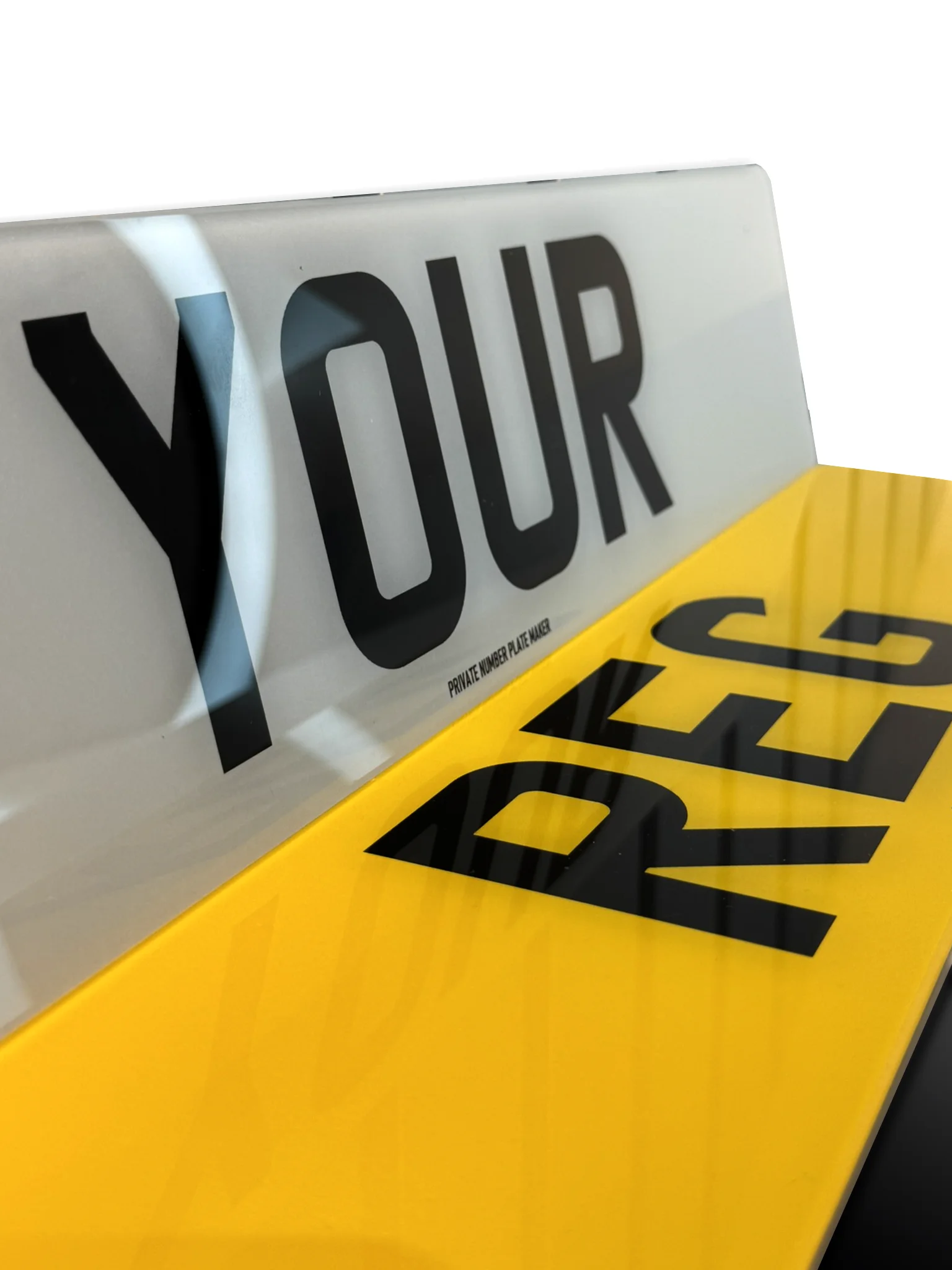
 Printed
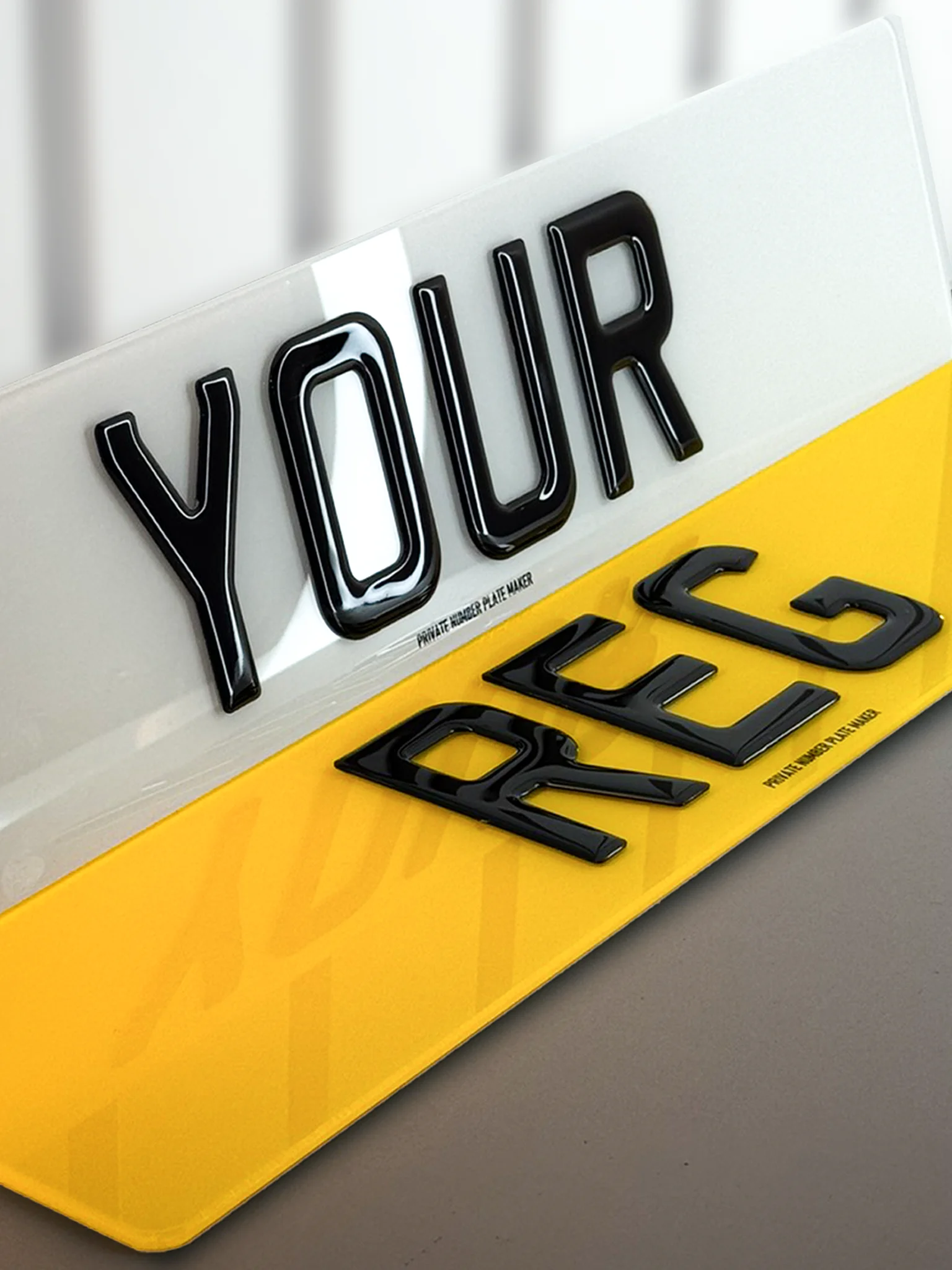 3D Plate
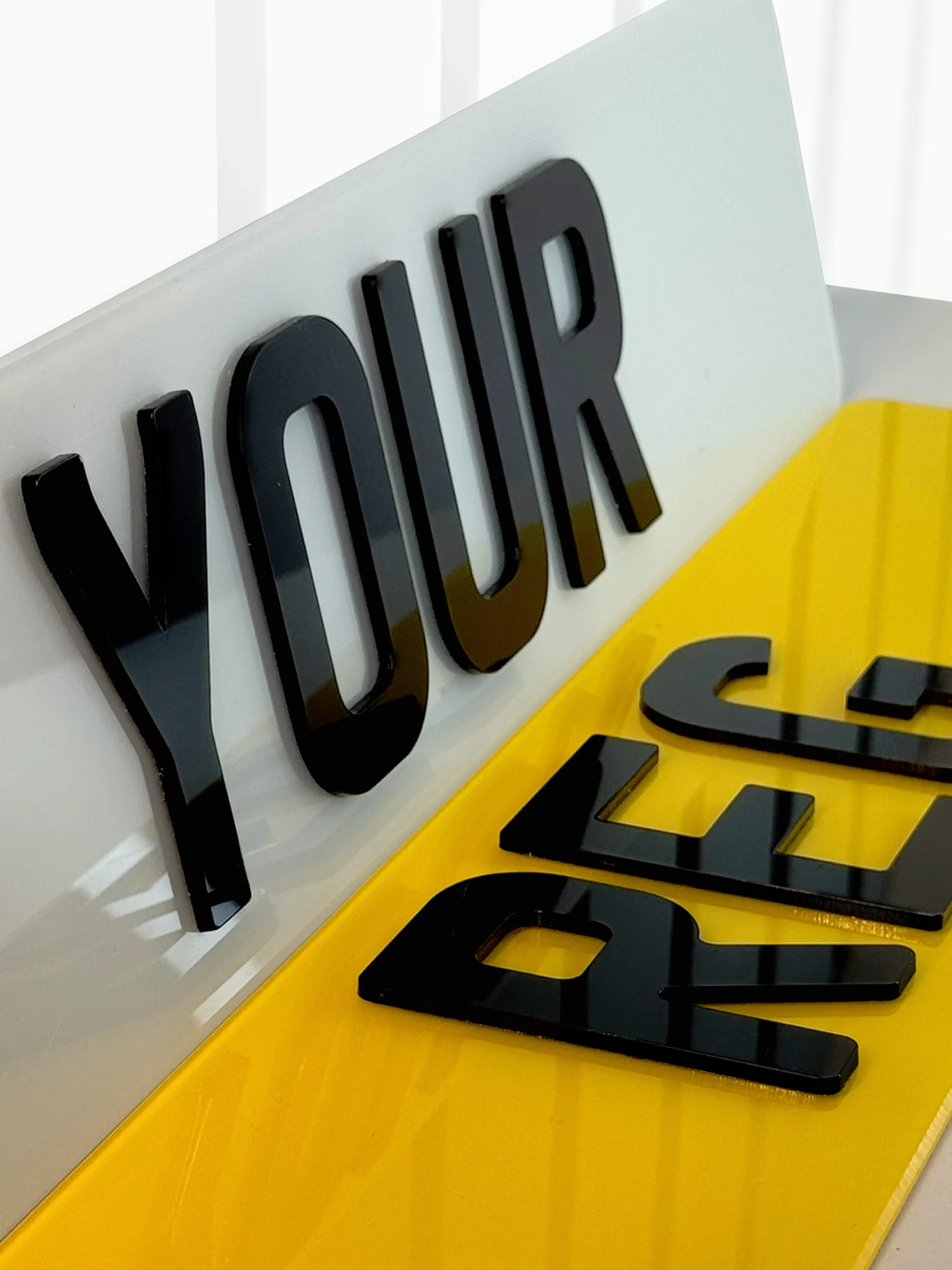 4D Plate
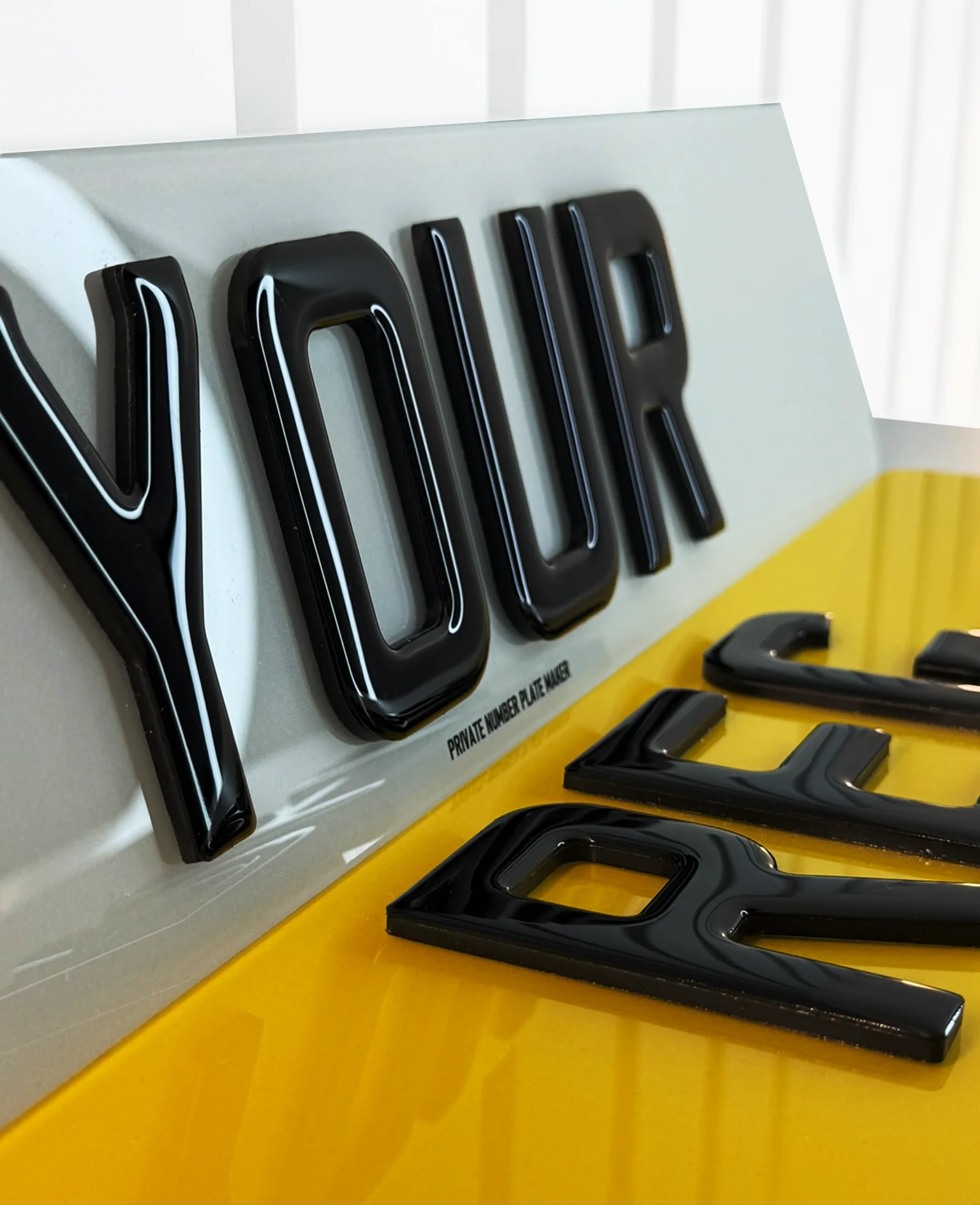 5D Plate
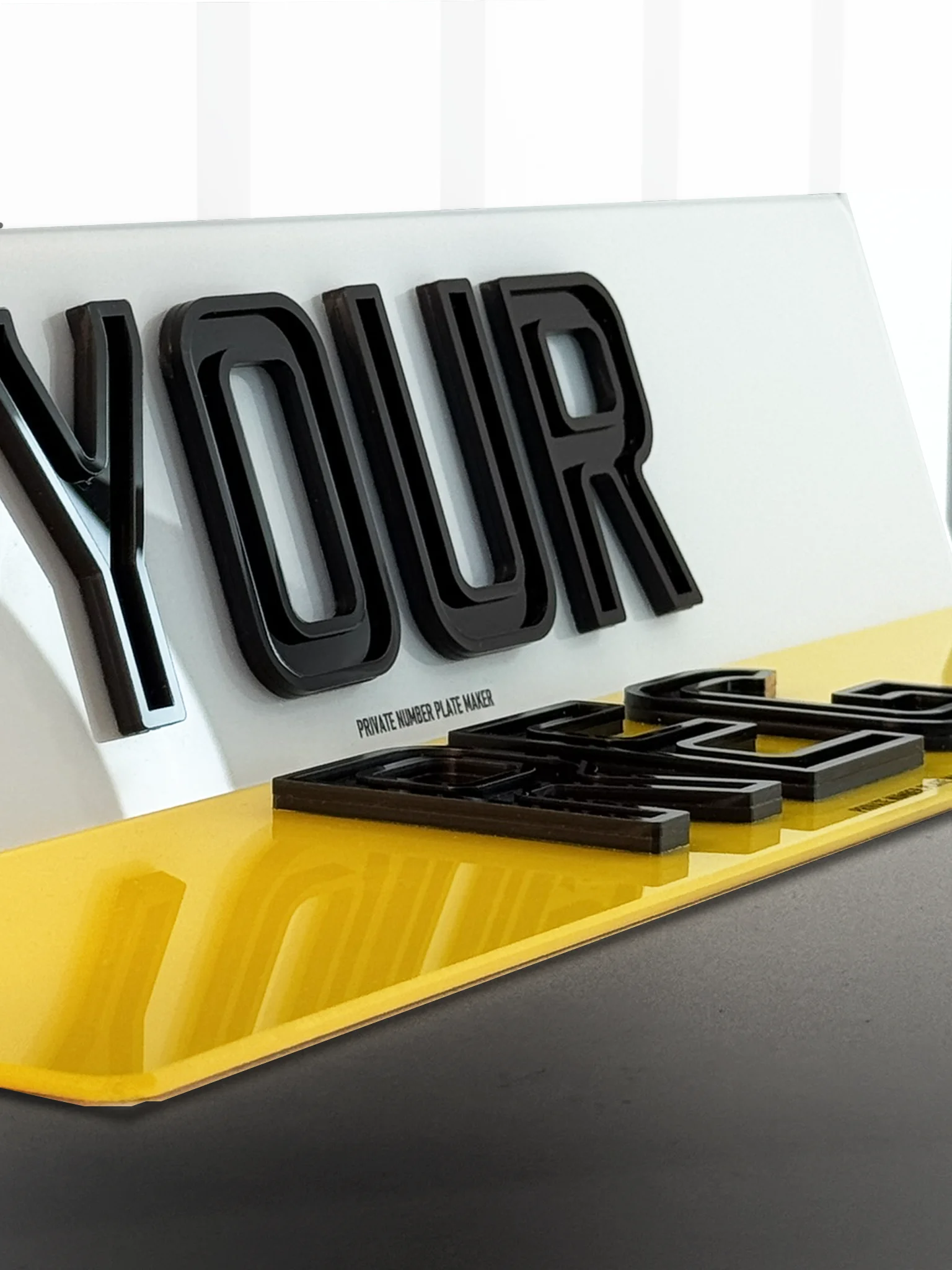 Ghost
Ghost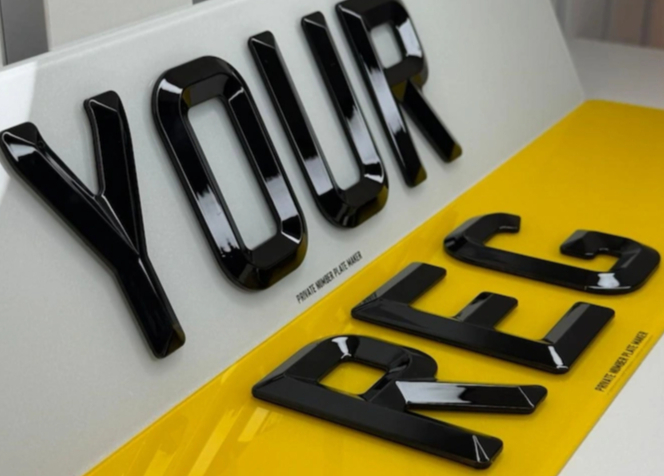 Bevel
Bevel5D Number Plates Explained: Complete Guide to Dual-Layer Plates
Summary
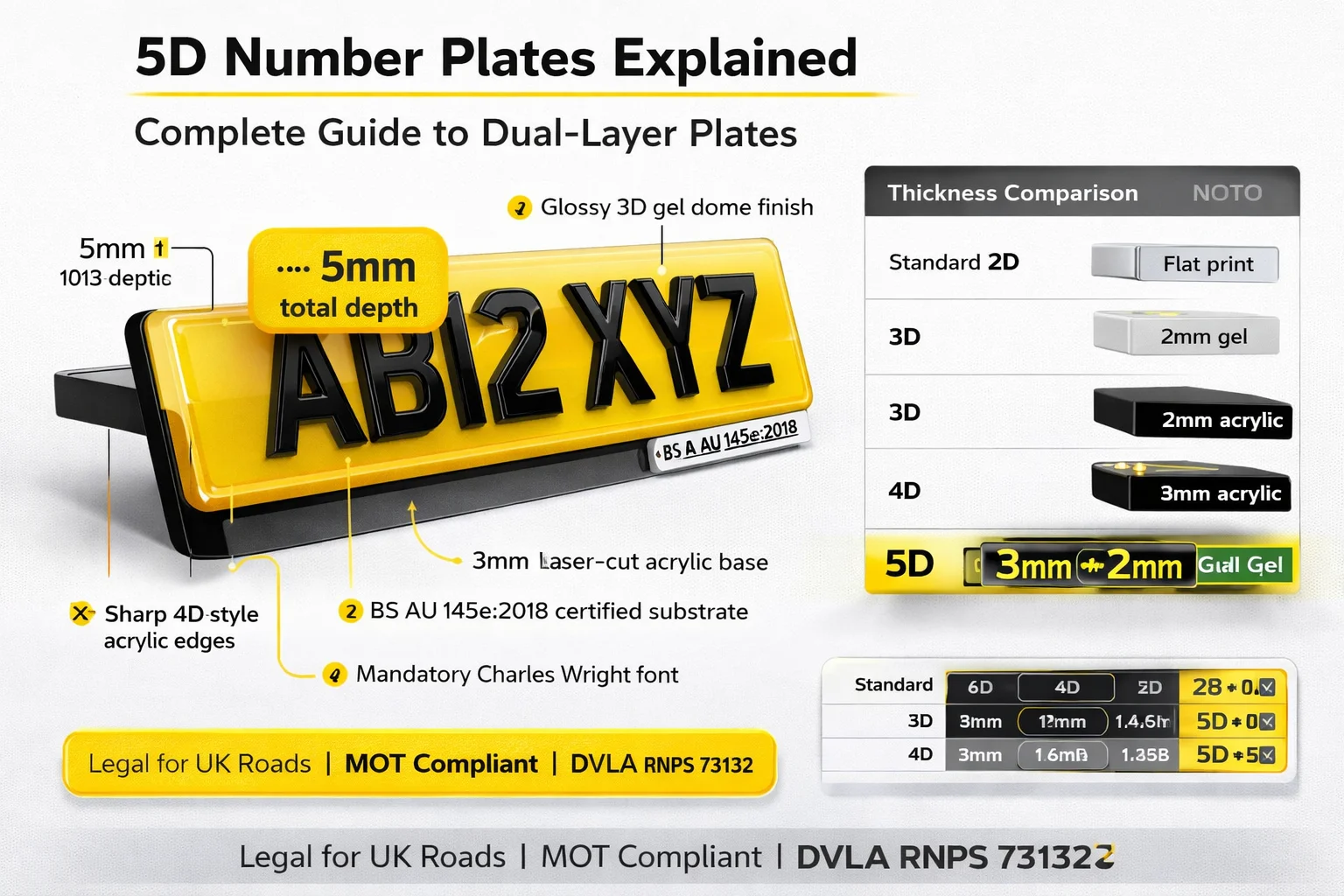
5D number plates feature a dual-layer construction combining a 3mm laser-cut acrylic base with a 2mm UV-cured gel overlay, creating a total character depth of 5mm. This design merges the sharp, defined edges of 4D plates with the glossy, domed finish of 3D gel plates, delivering a premium aesthetic with enhanced visual impact.
BS AU 145e:2018 explained | Charles Wright font guide | Are 5D plates legal?
All 5D number plates manufactured for UK road use must comply with the Road Vehicles (Display of Registration Marks) Regulations 2001 and use BS AU 145e:2018 certified materials. This means characters must use the mandatory Charles Wright font, maintain standard dimensions (79mm height, 50mm width, 11mm spacing), and preserve full retroreflective performance for ANPR readability. As a DVLA-registered manufacturer (RNPS ID: 75449) based in Ilford, we manufacture compliant 5D plates on-site using certified substrates and controlled processes.
What Are 5D Number Plates?
5D number plates represent the latest evolution in premium number plate aesthetics, featuring a dual-layer character construction that combines two distinct manufacturing techniques into a single, sophisticated finish.
The Dual-Layer Construction
Base Layer: 3mm Laser-Cut Acrylic
The foundation of 5D characters is a 3mm thick acrylic sheet, precision laser-cut to form the registration characters. This layer provides:
- Sharp, defined edges characteristic of 4D plates
- Structural rigidity and impact resistance
- Clean geometric profiles that catch light effectively
- A modern, architectural appearance
Overlay Layer: 2mm UV-Cured Gel
Applied over the acrylic base is a 2mm layer of UV-cured resin gel, creating:
- A glossy, domed finish typical of 3D gel plates
- Enhanced light reflection and visual depth
- A smooth, tactile surface resistant to minor abrasion
- Additional protection for the underlying acrylic
Combined Effect: 5mm Total Depth
Together, these layers create characters with 5mm of total raised depth, delivering maximum visual prominence without exceeding practical limits, a distinctive appearance that stands out from standard, 3D, or single-layer 4D plates, and enhanced shadow and light interaction for dynamic visual appeal.
5D vs 4D vs 3D comparison | Dual-layer construction explained
Why "5D"? Understanding the Terminology
The "5D" designation is a marketing term, not a regulatory classification. It describes the combination of:
- 4D characteristics: Sharp, laser-cut acrylic edges
- 3D characteristics: Glossy, domed gel overlay
- Added dimension: The visual complexity created by layering both techniques
Some suppliers may list the same specification as:
- "4D 5mm number plates"
- "4D with gel number plates"
- "Dual-layer 4D plates"
- "5mm raised gel and acrylic plates"
These terms generally refer to the same dual-layer construction. The key specification to confirm is the total character depth (5mm) and the materials used (acrylic base + gel overlay).
Understanding Market Terminology: 5D vs 4D 5mm Confusion
The number plate market includes varied terminology that can confuse buyers. Clarifying these terms helps ensure you receive the product you expect.
Common Terms and What They Mean
"5D Number Plates"
- Typically: 3mm acrylic base + 2mm gel overlay = 5mm total depth
- Marketing emphasis: Combines 4D sharpness with 3D gloss
- Visual result: Maximum raised depth with dual-texture finish
"4D 5mm Number Plates"
- Often the same specification as "5D": 3mm acrylic + 2mm gel
- Marketing emphasis: Highlights the 4D-style acrylic with 5mm total depth
- May omit mention of gel overlay in product title
"4D with Gel Number Plates"
- Explicitly describes the dual-layer construction
- Clear indication of both acrylic base and gel overlay
- Helpful for buyers seeking transparency about materials
What Matters Most: Specification Over Name
Regardless of terminology, confirm these key specifications before purchasing:
- Yes Total character depth: 5mm (3mm acrylic + 2mm gel)
- Yes Base material: Laser-cut acrylic, not printed or moulded plastic
- Yes Overlay material: UV-cured resin gel, not standard paint or coating
- Yes Substrate: BS AU 145e:2018 certified reflective material
- Yes Font: Mandatory Charles Wright typeface
- Yes Dimensions: Standard character height (79mm), width (50mm), spacing (11mm)
If a supplier cannot confirm these details, consider purchasing elsewhere.
The Manufacturing Process: How 5D Plates Are Made
Understanding how 5D plates are manufactured helps explain their premium appearance and ensures you recognise quality production.
Step 1: Substrate Preparation
BS AU 145e:2018 Certified Base
Every legal number plate begins with a substrate certified to BS AU 145e:2018. This material provides:
- Retroreflective performance for ANPR and driver visibility
- Impact resistance to withstand road debris
- Weathering durability for years of outdoor exposure
- NIR compatibility for camera detection
BS AU 145e:2018 explained | How ANPR cameras work
Step 2: Acrylic Character Cutting
Laser-Cutting Precision
The 3mm acrylic base layer is cut using CNC laser equipment that:
- Follows digital templates of the Charles Wright font
- Ensures precise character dimensions (79mm height, 50mm width)
- Creates clean, sharp edges without burrs or roughness
- Maintains consistent spacing (11mm between characters)
Quality Control
Each cut acrylic character is inspected for edge quality and consistency, dimensional accuracy against specifications, surface clarity without scratches or defects, and proper alignment for subsequent gel application.
Charles Wright font guide | 4D plates explained
Step 3: Gel Overlay Application
UV-Cured Resin Process
The 2mm gel overlay is applied using controlled dispensing equipment that:
- Deposits precise volumes of UV-curable resin onto each acrylic character
- Creates a consistent dome profile across all characters
- Avoids bubbles, uneven thickness, or overflow onto the substrate
- Maintains the underlying character shape while adding gloss
Curing Process
Applied gel is cured using UV light systems that harden the resin to a durable, glossy finish, bond the gel securely to the acrylic base, preserve optical clarity and light reflection properties, and ensure the finished surface resists yellowing or cracking.
UV curing process for gel plates | 3D gel plates explained
Step 4: Assembly and Bonding
Secure Attachment to Substrate
The completed dual-layer characters are bonded to the BS AU 145e:2018 substrate using automotive-grade adhesives compatible with reflective materials, precise positioning to maintain standard character spacing, pressure application ensuring full contact without air pockets, and curing time allowing full bond strength before further handling.
Reflectivity Preservation
Critical to legal compliance, the assembly process ensures gel and acrylic elements do not obscure the reflective substrate between characters, character spacing (11mm) remains clear and unobstructed, BS AU 145e:2018 marking remains visible and legible, and overall plate reflectivity meets required thresholds.
Step 5: Final Inspection and Testing
Comprehensive Quality Checks
Every 5D plate undergoes inspection for character dimensions and spacing accuracy, gel dome consistency and finish quality, adhesion strength between layers and to substrate, reflectivity performance under controlled lighting, and ANPR readability testing where equipment is available.
Compliance Verification
Before dispatch, plates are confirmed to display BS AU 145e:2018 standard marking, supplier name, postcode, and RNPS ID (75449 for our plates), correct Charles Wright font throughout, and proper front (white) or rear (yellow) background colour.
Material Science: Why Acrylic and Gel Work Together
The dual-layer construction of 5D plates is not arbitrary - it leverages the complementary properties of two distinct materials.
Acrylic Base: Structural Excellence
Polymethyl Methacrylate (PMMA) Properties
The 3mm acrylic layer uses PMMA, chosen for high optical clarity allowing light transmission, excellent impact resistance compared to standard plastics, UV stability reducing yellowing over time, and precision machinability for sharp, consistent edges.
Functional Benefits
- Provides structural foundation for the gel overlay
- Creates the sharp geometric profile associated with 4D plates
- Resists cracking under temperature fluctuations
- Maintains dimensional stability in varying weather conditions
Gel Overlay: Aesthetic Enhancement
UV-Cured Polyurethane Resin Properties
The 2mm gel layer uses specialised polyurethane resin formulated for high-gloss finish that enhances light reflection, flexibility to absorb minor impacts without cracking, adhesion compatibility with acrylic substrates, and resistance to environmental degradation (UV, moisture, temperature).
Functional Benefits
- Adds visual depth through light refraction in the domed surface
- Creates a smooth, tactile finish pleasant to touch
- Protects the underlying acrylic from surface abrasion
- Enhances the premium appearance without compromising compliance
Combined Performance
Durability Synergy
Together, acrylic and gel provide greater impact resistance than either material alone, enhanced weathering performance through layered protection, reduced risk of gel delamination due to acrylic's stable base, and long-term appearance retention with minimal maintenance.
Compliance Compatibility
The dual-layer design maintains legal compliance because materials are applied only to character areas, preserving reflective substrate between characters; gel transparency allows underlying reflectivity to function; character dimensions remain within regulatory limits despite added depth; and no coatings or treatments reduce overall plate reflectivity below BS AU 145e:2018 thresholds.
Visual Effect: What 5D Plates Look Like in Practice
Understanding the aesthetic impact of 5D plates helps set expectations and appreciate their distinctive appearance.
Light Interaction and Depth Perception
Multi-Angle Reflection
The dual-layer construction creates complex light interactions:
- Acrylic edges catch and reflect light from side angles
- Gel domes refract light, creating highlights and subtle colour shifts
- Combined effect produces dynamic appearance that changes with viewing angle
- Enhanced shadow definition adds perceived depth beyond the physical 5mm
Daytime Appearance
In natural daylight, 5D plates display sharp character definition from the acrylic base, glossy highlights from the gel overlay, subtle colour variation as light moves across domed surfaces, and premium appearance that stands out from flat or single-layer plates.
Nighttime and Low-Light Performance
Under artificial lighting or at night, retroreflective substrate remains fully functional between characters, raised elements catch headlights enhancing plate visibility, gel surface reflects ambient light without obscuring characters, and ANPR cameras detect plates reliably due to maintained NIR compatibility.
How ANPR cameras work | 3D plates on popular UK cars
Comparison to Other Plate Types
vs Standard 2D Plates
- 2D: Flat printed characters, no raised elements
- 5D: 5mm raised dual-layer characters with glossy finish
- Visual impact: 5D offers significantly enhanced prominence and premium appearance
vs 3D Gel Plates
- 3D: 2mm gel characters on reflective substrate
- 5D: 3mm acrylic base + 2mm gel = 5mm total depth
- Visual impact: 5D adds sharper edge definition and greater dimensional presence
vs 4D Acrylic Plates
- 4D: 3mm laser-cut acrylic characters, matte or semi-gloss finish
- 5D: Same acrylic base plus 2mm gel overlay for glossy dome effect
- Visual impact: 5D combines 4D sharpness with 3D gloss for maximum aesthetic appeal
5D plates for car shows | Are 5D plates worth the investment?
Legal Compliance: Ensuring 5D Plates Meet UK Regulations
Premium aesthetics must never compromise legal compliance. All 5D plates for UK road use must meet specific regulatory requirements.
Road Vehicles (Display of Registration Marks) Regulations 2001
Character Requirements (Regulation 13)
- Font: Mandatory Charles Wright typeface (introduced 2001)
- Height: 79mm for cars, 64mm for motorcycles
- Width: 50mm (excluding 'I' and '1')
- Stroke thickness: 14mm
- Character spacing: 11mm between characters
- Margins: 11mm minimum around plate edges
Material Requirements (Regulation 16)
- Plates must be made of reflective material
- Must meet performance standards for retroreflection
- Must not be treated with substances that reduce reflectivity
- Must comply with applicable British Standard specifications
BS AU 145e:2018 British Standard
All 5D plates must use substrates certified to BS AU 145e:2018, which mandates:
- Retroreflectivity - Adequate light reflection for camera and driver visibility
- Impact Resistance - Ability to withstand stone chips and minor impacts
- Weathering - Resistance to UV, rain, snow, and temperature extremes
- NIR Compatibility - Detectability by near-infrared wavelengths used by ANPR
How 5D Construction Maintains Compliance
Character Dimensions
Raised elements do not alter the fundamental character dimensions. Charles Wright font is maintained in the acrylic base layer. Spacing and margins remain unobstructed by gel application.
Reflectivity Preservation
Gel is applied only to character areas, not the reflective substrate between characters. Transparent gel allows underlying reflectivity to function. No coatings or treatments reduce overall plate reflectivity below required thresholds.
ANPR Readability
Dual-layer construction does not interfere with NIR detection. Character shapes remain clearly defined for pattern recognition. Reflective substrate between characters ensures reliable camera reads.
Required Markings
BS AU 145e:2018 marking remains visible and legible. Supplier name, postcode, and RNPS ID are displayed per regulations. Markings are permanent and embedded, not applied as stickers.
5D vs 4D vs 3D: Choosing the Right Premium Option
Understanding the differences between premium plate types helps you select the option that best matches your preferences and budget.
Construction Comparison
| Feature | 3D Gel | 4D Acrylic | 5D Dual-Layer |
|---|---|---|---|
| Character Depth | 2mm | 3mm | 5mm (3mm + 2mm) |
| Base Material | Reflective substrate | 3mm laser-cut acrylic | 3mm laser-cut acrylic |
| Overlay | 2mm UV-cured gel | None (matte/semi-gloss) | 2mm UV-cured gel |
| Edge Profile | Soft, domed | Sharp, geometric | Sharp base + glossy dome |
| Visual Effect | Glossy, subtle depth | Defined, architectural | Maximum prominence + gloss |
| Price Range | Mid-premium | Premium | Highest premium |
Aesthetic Considerations
Choose 3D Gel If:
- You prefer a subtle, glossy finish
- You want raised characters without sharp edges
- Budget is a consideration within premium options
- You value a classic premium appearance
Choose 4D Acrylic If:
- You prefer sharp, defined character edges
- You like a modern, architectural aesthetic
- You want raised characters without glossy overlay
- You prefer matte or semi-gloss finishes
Choose 5D Dual-Layer If:
- You want maximum visual impact and character depth
- You appreciate both sharp edges and glossy finish
- Budget allows for the highest premium option
- You seek the most distinctive appearance available
Practical Considerations
Durability
All three types use BS AU 145e:2018 certified substrates and quality materials. The 5D dual-layer construction may offer slightly enhanced impact resistance due to the combined acrylic and gel protection.
Maintenance
- 3D Gel: Simple cleaning with mild soap and water; avoid abrasive cleaners
- 4D Acrylic: Similar care; acrylic edges may benefit from occasional polishing
- 5D Dual-Layer: Same as above; gel surface resists minor abrasion well
Legal Compliance
All three types can be fully compliant when manufactured correctly using certified materials, correct fonts, and proper dimensions. Compliance depends on manufacturing quality, not the plate type designation.
5D vs 4D vs 3D comparison | Bevel vs 4D vs 5D vs 3D comparison
Maintenance and Care for 5D Number Plates
Proper care ensures your 5D plates maintain their premium appearance and legal compliance for years.
Routine Cleaning
Recommended Method
- Use mild car shampoo or soap diluted in warm water
- Apply with a soft microfiber cloth or sponge
- Gently wipe character surfaces and substrate
- Rinse thoroughly with clean water
- Dry with a clean, soft microfiber towel
What to Avoid
- Abrasive cleaners, scouring pads, or stiff brushes
- Solvent-based cleaners (acetone, thinners, strong degreasers)
- High-pressure washers directed at close range at character edges
- Automatic car wash brushes that may catch on raised elements
Protecting the Gel Overlay
UV Exposure
While UV-cured gel is formulated for outdoor use, prolonged direct sunlight can gradually affect gloss over many years. Parking in shade when possible helps preserve appearance.
Temperature Extremes
The gel and acrylic materials are designed for UK climate conditions. However, extreme temperature fluctuations (e.g., very hot car washes followed by cold water) should be avoided to minimise stress on material bonds.
Impact Protection
While 5D construction offers good impact resistance, avoid scraping plates against walls or obstacles, using plates as handles or leverage points, and allowing gravel or debris to strike plates at high speed.
Inspection and Early Issue Detection
Regular Checks
Periodically inspect your plates for gel lifting or separation from acrylic base, cracks or chips in acrylic edges, fading or yellowing of materials, damage to reflective substrate between characters, and legibility of BS AU 145e:2018 marking and supplier details.
When to Seek Replacement
Contact a DVLA-registered supplier if you notice gel delamination or significant cracking, acrylic edges chipped to the point of character distortion, reflectivity visibly reduced or substrate damaged, markings worn away or illegible, or any damage that could affect ANPR readability.
Number plate maintenance guide | Emergency replacement plates
Our Manufacturing Approach: Quality and Compliance at Our Ilford Workshop
At Private Number Plate Maker Ltd (RNPS ID: 75449), we manufacture 5D number plates on-site at our Castleview Gardens, Ilford workshop, ensuring full control over quality and compliance.
On-Site Production Advantages
Quality Control
Every manufacturing step occurs under our direct supervision:
- Substrate verification against BS AU 145e:2018 certification
- Laser-cutting precision calibrated and monitored
- Gel application volumes and profiles controlled
- Final inspection against dimensional and reflectivity standards
Document Verification
Under Schedule 2 of the Road Vehicles Regulations 2001, we verify your identity and entitlement before manufacturing:
- Accepted documents: V5C, V750, V778, V948, plus driving licence or passport
- Verification conducted in-person for collection or via secure encrypted upload for delivery
- Records retained as required by DVLA RNPS requirements
Material Traceability
We maintain documentation for substrate batch certifications from approved suppliers, acrylic and gel material specifications, production records linking each plate to verification documentation, and quality control checks performed at each stage.
Same-Day Collection and Next-Day Delivery
Ilford Workshop Collection
Visit our Castleview Gardens, Ilford location for face-to-face document verification, watch your plates being manufactured, immediate collection once production is complete, and expert advice on fitting and maintenance.
UK-Wide Delivery
For customers outside East London: secure encrypted document upload for remote verification, plates manufactured to order and quality-checked, dispatched via tracked next-day delivery service, and packaging designed to protect raised elements during transit.
Frequently Asked Questions
5D number plates feature a dual-layer construction combining a 3mm laser-cut acrylic base with a 2mm UV-cured gel overlay, creating 5mm total character depth. This design merges the sharp, defined edges of 4D plates with the glossy, domed finish of 3D gel plates. The acrylic base provides structural rigidity and clean geometric profiles, while the UV-cured gel overlay adds visual depth and a premium glossy finish. All materials must be mounted on BS AU 145e:2018 certified reflective substrate.
5D vs 4D vs 3D comparison | Dual-layer construction explained
Yes, 5D number plates are fully legal when manufactured to comply with the Road Vehicles (Display of Registration Marks) Regulations 2001 and use BS AU 145e:2018 certified materials. The dual-layer construction itself doesn't affect legality; compliance depends on using the mandatory Charles Wright font, maintaining standard character dimensions (79mm height, 50mm width, 11mm spacing), and preserving full retroreflective performance. The raised gel and acrylic elements must not obscure characters or interfere with ANPR readability. Always purchase from a DVLA-registered manufacturer like ourselves (RNPS ID: 75449).
These terms typically refer to the same specification: 3mm laser-cut acrylic base plus 2mm UV-cured gel overlay equals 5mm total character depth. "5D" emphasises the dual-layer combination of 4D sharpness and 3D gloss, while "4D 5mm" highlights the dimensional specification. Some suppliers use "4D with gel" or "dual-layer 4D plates" for the same product. The key is confirming exact construction details rather than relying on marketing terminology. Always verify the plate uses acrylic base, gel overlay, BS AU 145e:2018 substrate, and Charles Wright font.
Yes, compliant 5D number plates maintain full ANPR readability and pass MOT inspection. The gel and acrylic elements are applied only to character areas, preserving the reflective BS AU 145e:2018 substrate between characters. This ensures NIR (near-infrared) compatibility required for automatic number plate recognition systems. MOT testers check that plates are reflective, characters are correctly formed using Charles Wright font, properly spaced, and display required markings - all of which legal 5D plates satisfy. The dual-layer construction doesn't interfere with camera detection when manufactured correctly by a DVLA-registered supplier.
5D plates offer maximum visual impact with 5mm total depth (3mm acrylic + 2mm gel), compared to 3D gel plates (2mm depth) and 4D acrylic plates (3mm depth). While 3D plates provide subtle glossy domes and 4D plates deliver sharp architectural edges, 5D combines both characteristics for enhanced prominence. All three types can be fully BS AU 145e:2018 compliant when manufactured correctly. The 5D dual-layer construction may offer slightly enhanced impact resistance due to combined material protection, though pricing is typically higher due to additional materials and manufacturing steps.
This guide references the following official and verified sources:
Road Vehicles (Display of Registration Marks) Regulations 2001
legislation.gov.ukBritish Standards Institution: BS AU 145e:2018
knowledge.bsigroup.comDVLA Registered Number Plate Supplier (RNPS) requirements
gov.ukMOT Inspection Manual
gov.ukManufacturer technical specifications for acrylic and UV-cured resin materials
Industry datasheetsRelated Guides:
5D plates explained |
5D vs 4D vs 3D comparison |
5D gel vs standard 4D |
5D plates for car shows |
5D plates for EVs