
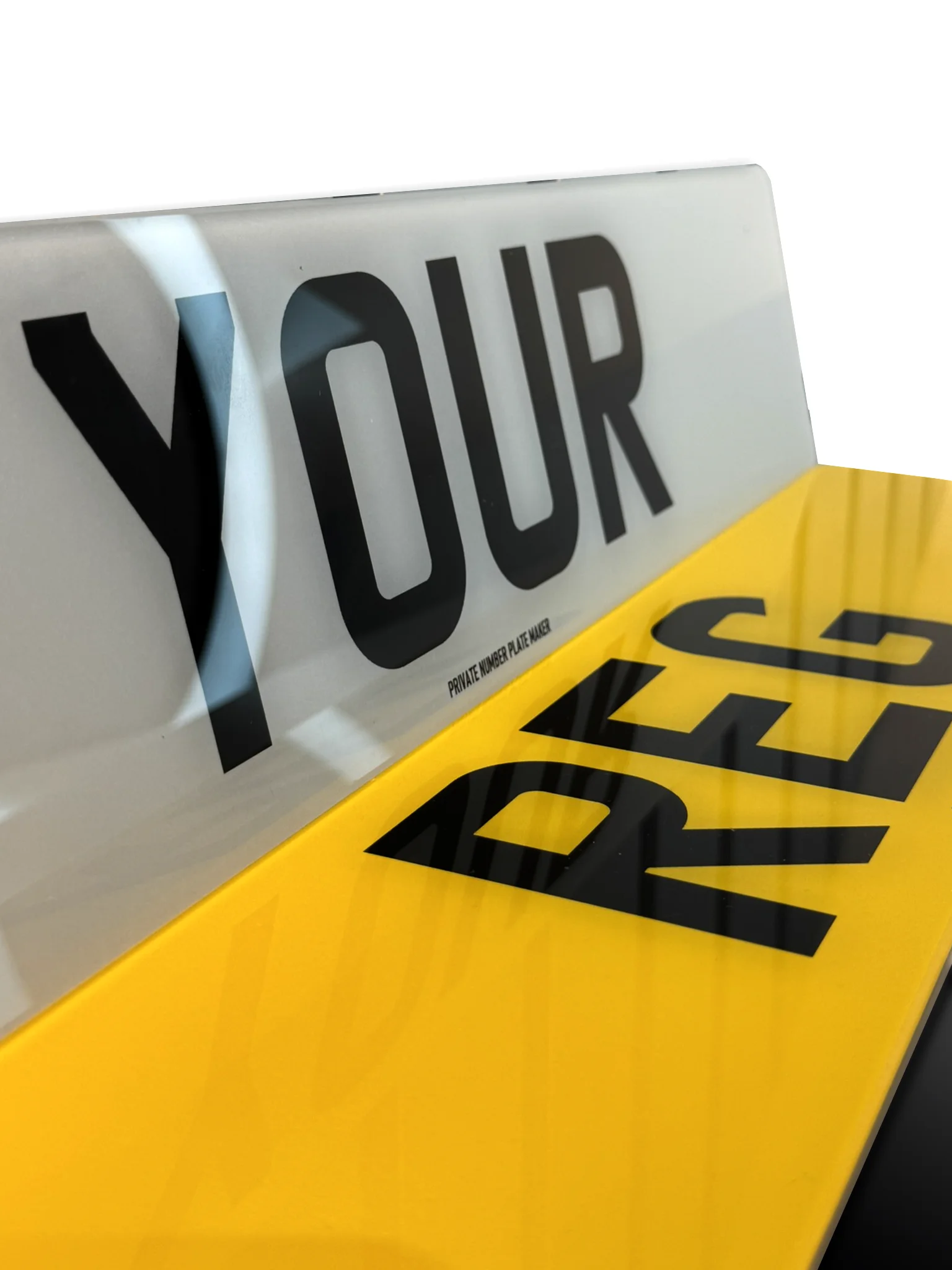
 Printed
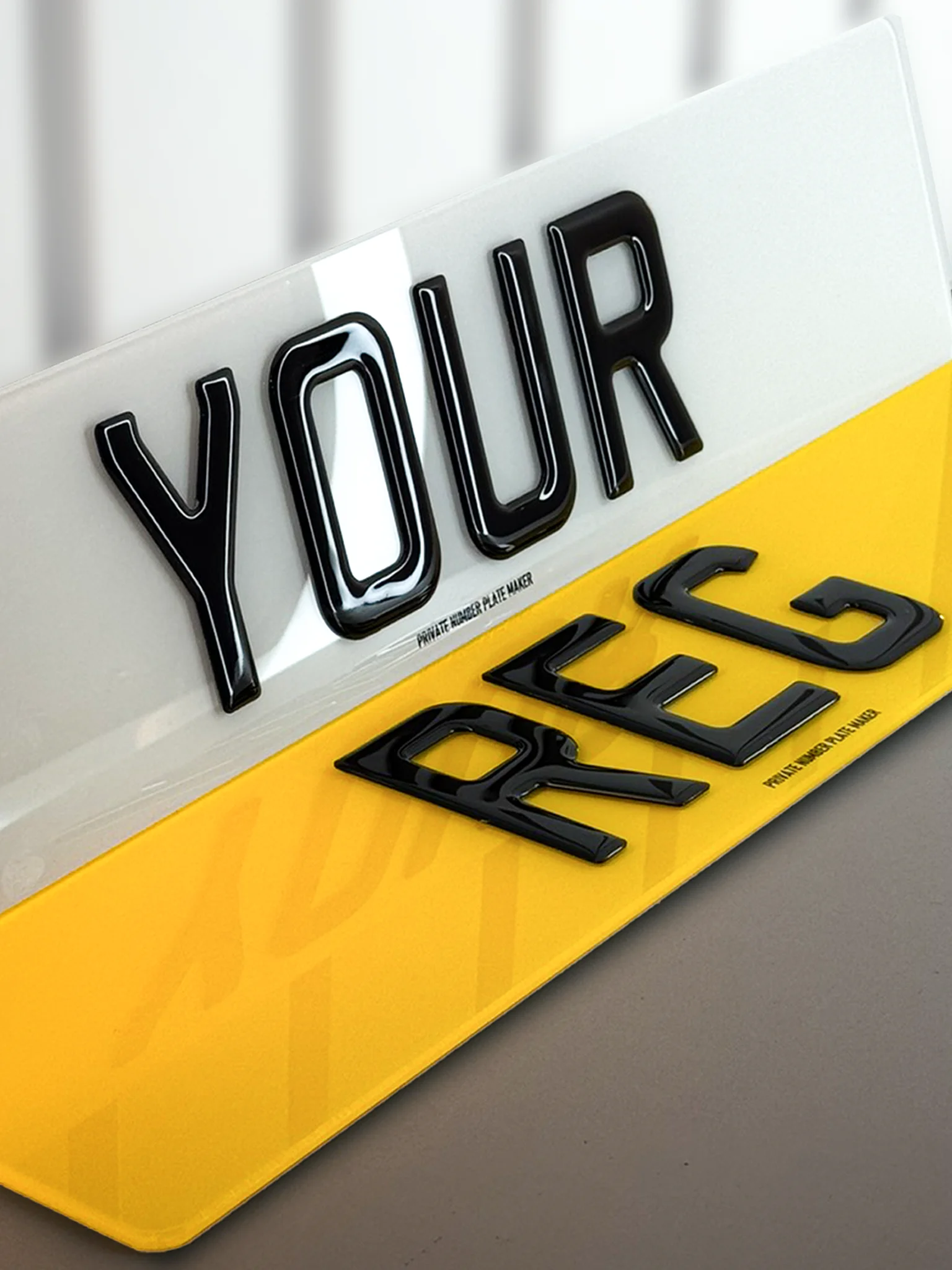 3D Plate
 4D Plate
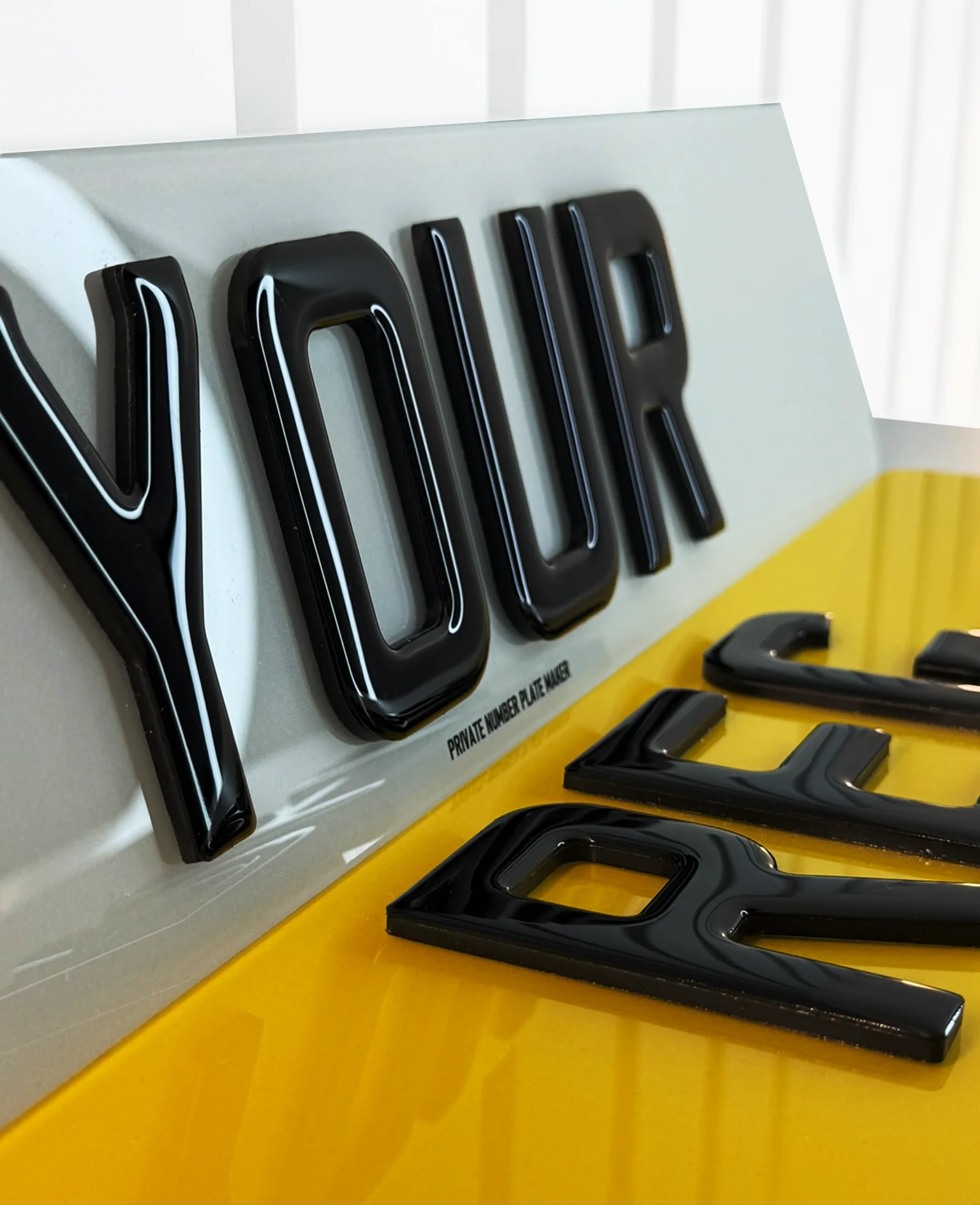 5D Plate
 Ghost
Ghost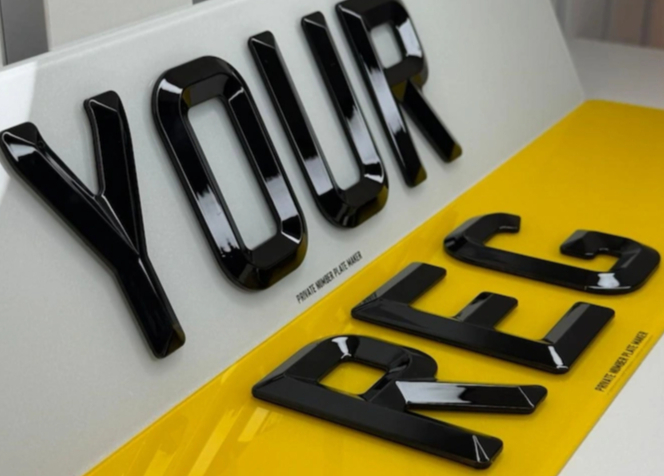 Bevel
BevelBS AU 145e Explained: The British Standard for Number Plates
Summary
BS AU 145e is the current British Standard for retroreflective number plates used on UK vehicles, which became mandatory for all plates supplied from 1 September 2021. This standard replaced the previous BS AU 145d specification and introduced stricter requirements to ensure number plates remain durable, readable, and compatible with Automatic Number Plate Recognition (ANPR) cameras used by police and enforcement agencies.
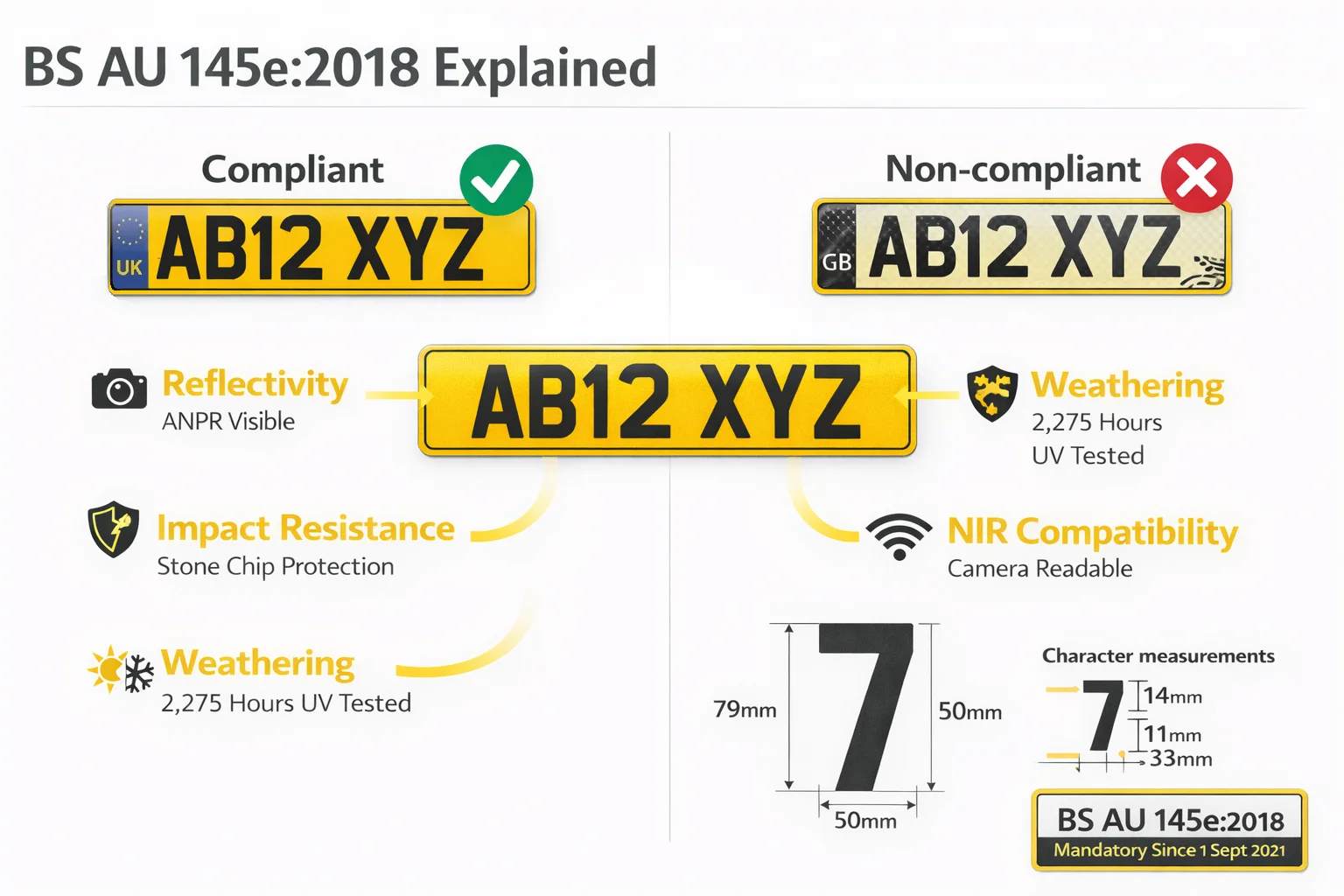
The standard mandates four core technical requirements: reflectivity, impact resistance, weathering, and Near Infrared (NIR) compatibility. Plates manufactured to BS AU 145e must also display solid black characters on a white background (front) or yellow background (rear), with the supplier's details and the BS AU 145e mark clearly visible. Understanding BS AU 145e matters because non-compliant plates can result in fines up to £1,000, MOT failure, and potential vehicle seizure.
What Is BS AU 145e?
BS AU 145e:2018 is the British Standard specification for retroreflecting number plates, published by the British Standards Institution (BSI) and currently enforced across the United Kingdom. This standard defines the technical requirements that all replacement and newly manufactured number plates must meet to be considered legal for road use.
The "BS" prefix indicates British Standard, "AU" denotes the automotive category, and "145e" represents the specific standard number with "e" indicating the current revision. The 2018 designation refers to when the standard was originally published, though it became mandatory for use from 1 September 2021 following a transition period.
Why Was BS AU 145e Introduced?
Key Drivers for the Update
ANPR Technology Advancement
Police and enforcement agencies increasingly rely on Automatic Number Plate Recognition cameras, which require plates to maintain specific contrast levels in the Near Infrared spectrum.
Durability Concerns
Previous standards did not adequately address plate longevity under UK weather conditions and road environments.
Security Requirements
Enhanced specifications help prevent plate tampering, cloning, and fraudulent alterations.
European Harmonisation
While maintaining UK-specific requirements, the standard aligns with broader European vehicle identification standards.
The Four BS AU 145e Requirements Explained
1. Reflectivity (Retroreflection)
What it means: The plate material must be retroreflective, meaning it reflects light back toward its source rather than scattering it in multiple directions.
Technical specifications:
- Black characters must not exceed 0.5 retroreflective units (cd/lx)
- White or yellow background must not exceed 150 retroreflective units (cd/lx)
Why it matters: ANPR cameras use light reflection to capture registration numbers. If the background and characters have similar reflectivity levels, the camera cannot create sufficient contrast to read the plate accurately.
2. Impact Resistance
What it means: The plate must withstand physical impacts from road debris, stone chips, and minor parking collisions without cracking, delaminating, or becoming illegible.
Why it matters: UK roads expose number plates to constant hazards. A plate that cracks or delaminates quickly becomes difficult to read, potentially causing MOT failure or enforcement issues.
Number Plate Maintenance Guide
3. Weathering (Environmental Resistance)
What it means: The plate must resist degradation from UV exposure, temperature changes, moisture, and environmental contaminants over extended periods.
Technical specifications:
- Weathering test replicates 2,275 hours of UV exposure (2.5 times more than some European standards)
- Thermal cycling tests ensure plates maintain shape and size through heat and cold
- Salt-spray tests verify corrosion resistance
Number Plate Maintenance Guide
4. Near Infrared (NIR) Compatibility
What it means: The plate must maintain adequate contrast between characters and background when viewed in the Near Infrared spectrum, which is how ANPR cameras capture images.
Why it matters: ANPR cameras operate in the NIR spectrum, not visible light. A plate that looks clear to the human eye may be unreadable to cameras if NIR contrast is insufficient.
Legal Framework and Regulations
Primary Legislation
Road Vehicles (Display of Registration Marks) Regulations 2001
This statutory instrument (SI 2001/561) sets out the fundamental requirements for displaying registration marks on UK vehicles. Regulation 14 specifies character dimensions, while Regulation 16 addresses plate construction requirements.
Vehicle Excise and Registration Act 1994
Section 42 of this Act provides enforcement powers and penalty provisions for number plate offences. Fines can reach up to level 3 on the standard scale (currently £1,000) for non-compliant plates.
When BS AU 145e Became Mandatory
- January 2021: BS AU 145e became optional during a transition period.
- 1 September 2021: BS AU 145e became mandatory for all plates supplied.
- Plates fitted before 1 September 2021: BS AU 145d plates remain legal if fitted before the mandatory date.
Technical Specifications and Dimensions
BS AU 145e works alongside the dimensional requirements set out in the Road Vehicles Regulations 2001. Both must be satisfied for a plate to be fully compliant.
| Specification | Measurement |
|---|---|
| Character height | 79mm |
| Character width | 50mm (except 'I' and '1') |
| Stroke thickness | 14mm |
| Character spacing | 11mm |
| Age identifier gap | 33mm |
| Minimum margins | 11mm |
Font Requirements
The Charles Wright font has been mandatory for all UK number plates since 1 September 2001. This specific typeface was chosen for its ANPR readability characteristics and must be used without modification.
Prohibited font variations:
- Two-tone or gradient characters
- Italicised or stylised fonts
- Characters with decorative elements
- Non-standard spacing or sizing
Compliance and Enforcement
Who Enforces BS AU 145e?
- Police Forces: Use ANPR cameras and visual inspections during traffic stops.
- DVLA: Conducts compliance checks and can issue fines for non-compliant plates.
- Trading Standards: Investigates suppliers selling non-compliant plates and can prosecute businesses.
- MOT Testers: Must check number plate condition and legibility during annual tests.
Penalties for Non-Compliance
For Vehicle Owners:
- Fine up to £1,000 per offence
- MOT failure if plates are illegible or non-compliant
- Potential vehicle seizure in serious cases
For Suppliers:
- Unlimited fines for businesses selling non-compliant plates
- Removal from the DVLA Registered Number Plate Supplier (RNPS) register
- Criminal prosecution for repeated offences
How to Check If Your Plate Is BS AU 145e Compliant
Visual Inspection Checklist
-
Yes
Check for BS AU 145e marking:
Look at the bottom right corner of the plate. The text "BS AU 145e" should be clearly visible.
-
Yes
Check supplier details:
Business name and postcode should appear at centre-bottom.
-
Yes
Check character appearance:
Characters must be solid black (single shade). No gradients, two-tone effects, or reflective coatings.
-
Yes
Check plate condition:
No cracks, delamination, or significant fading.
BS AU 145e and Different Plate Types
3D Gel Plates
3D gel plates can be BS AU 145e compliant if the gel overlay does not interfere with NIR contrast and characters remain solid black.
3D Gel Number Plates Explained Guide
4D Laser-Cut Plates
4D plates use laser-cut acrylic characters and can comply when acrylic thickness does not exceed permitted dimensions and characters are solid black.
4D Number Plates Explained Guide
Are 4D Plates Legal 2026 Guide
Ghost Plates
Legal ghost plates must have no reflective coating that interferes with ANPR and maintain NIR contrast despite subtle gradient effects.
Are Ghost Plates Legal 2026 Guide
Green Flash Plates (EV)
Electric vehicle plates with the green flash must still meet all BS AU 145e requirements. The green flash is an additional element that does not affect the core standard compliance.
Our Manufacturing Process at Private Number Plate Maker Ltd
As a DVLA-registered number plate manufacturer (RNPS ID: 75449), we manufacture every plate on-site at our Ilford workshop in Ilford, East London.
Document Verification
Before manufacturing any plate, we verify customer documentation according to Schedule 2 of the Road Vehicles Regulations 2001 and current DVLA guidance. Accepted documents include:
- Driving licence
- Passport
- V5C registration certificate
- V750 certificate of entitlement
- V778 retention document
Quality Control
Each plate undergoes visual inspection before leaving our workshop: BS AU 145e marking verification, supplier details confirmation, character font and spacing check, and overall condition assessment.
Common Misconceptions About BS AU 145e
Myth: "BS AU 145e Only Applies to New Vehicles"
Fact: BS AU 145e applies to all replacement plates supplied from 1 September 2021, regardless of vehicle age.
Myth: "3D and 4D Plates Are Automatically Illegal"
Fact: 3D and 4D plates can be BS AU 145e compliant if manufactured correctly with proper materials and documentation.
Myth: "BS AU 145e Is Just a Recommendation"
Fact: BS AU 145e is mandatory for all plates supplied from 1 September 2021. Non-compliant plates can result in fines, MOT failure, and enforcement action.
Frequently Asked Questions
BS AU 145e:2018 is the current British Standard for retroreflective number plates, published by BSI and mandatory for all plates supplied from 1 September 2021. It replaced BS AU 145d with stricter requirements for reflectivity, impact resistance, weathering, and Near Infrared (NIR) compatibility.
BS AU 145e mandates four core tests: 1) Reflectivity, 2) Impact Resistance, 3) Weathering (2,275 hours UV), and 4) NIR Compatibility. All four are mandatory.
Yes, provided they are manufactured correctly. Characters must remain solid black, overlays must not interfere with NIR contrast, and all dimensional specs must be met.
Vehicle owners face fines up to £1,000 per offence, MOT failure, and potential vehicle seizure. Suppliers risk unlimited fines and removal from the DVLA RNPS register.
This guide references the following official and verified sources:
British Standards Institution - BS AU 145e:2018
Specification for Retroreflecting Number Plates
knowledge.bsigroup.comRoad Vehicles (Display of Registration Marks) Regulations 2001 (SI 2001/561)
Statutory instrument governing registration mark display
www.legislation.gov.ukVehicle Excise and Registration Act 1994 - Section 42
Enforcement powers and penalty provisions
www.birminghammail.co.ukBritish Number Plate Manufacturers Association (BNMA) - BS AU 145e Guidance
Industry guidance and best practices
www.bnma.orgGovernment announcements via gov.uk news section
www.gbnews.comTrading Standards and police enforcement reports
www.bnma.org
Related Internal Guides:
Charles Wright Font Guide |
How ANPR Cameras Work Guide |
3D vs 4D vs Standard Comparison Guide |
Number Plate Fines UK Guide