 Printed
 3D Plate
 4D Plate
 5D Plate
 Ghost
Ghost Bevel
BevelNumber Plate Fitting Guide: How to Fit Your New Plates

Summary
Fitting number plates yourself is legal in the UK provided you follow specific positioning and mounting requirements set out in the Road Vehicles (Display of Registration Marks) Regulations 2001. Plates must be mounted vertically or at a slight angle not exceeding 30 degrees from vertical, with characters clearly visible and unobscured.
The installation process requires basic tools including screwdrivers or a drill, appropriate fixings (screws, bolts, or adhesive pads), and careful attention to plate positioning. Incorrect fitting can result in MOT failure, fines up to £1,000, and enforcement action if plates are not securely attached or are difficult to read.
Number Plate Fitting Guide | Number Plate Maintenance Guide | BS AU 145e Explained Guide
Legal Requirements for Number Plate Fitting
Before fitting your number plates, understanding the legal requirements prevents costly mistakes and enforcement issues.
Positioning Requirements
Front Plate:
- Must be fitted to the front of the vehicle
- Positioned vertically or within 30 degrees of vertical
- Clearly visible from the front of the vehicle
- Not obscured by any part of the vehicle
Rear Plate:
- Must be fitted to the rear of the vehicle
- Positioned vertically or within 30 degrees of vertical
- Clearly visible from the rear of the vehicle
- Not obscured by tow bars, bike racks, or other accessories
Mounting Requirements
Secure Attachment:
- Plates must be firmly fixed to prevent movement
- Fixings must not obscure characters or markings
- Minimum two fixings per plate recommended
- Adhesive pads must be automotive-grade and weather-resistant
Character Visibility:
- All characters must be clearly legible
- No frames or surrounds that obscure characters
- BS AU 145e marking must remain visible
- Supplier details must not be covered
Tools and Materials Needed for Fitting
Having the right tools before starting makes the fitting process smoother and more professional.
Essential Tools
| Tool | Purpose | Notes |
|---|---|---|
| Screwdriver (Phillips/Flat) | Removing old plates, fitting screws | Match screw head type |
| Power Drill | Creating new mounting holes | Use appropriate drill bit size |
| Spirit Level | Ensuring vertical alignment | Critical for compliance |
| Measuring Tape | Positioning accuracy | Check symmetry |
| Cleaning Cloth | Surface preparation | Remove dirt and grease |
| Isopropyl Alcohol | Surface cleaning for adhesive | Ensures proper adhesion |
Fixing Options
Screw Fixings:
- Most secure and permanent option
- Requires drilling into vehicle bodywork
- Stainless steel screws recommended to prevent rust
- Rubber washers prevent water ingress
Bolt Fixings:
- Used for existing mounting points
- No drilling required if holes exist
- Nyloc nuts prevent loosening
- More secure than screws in some applications
Adhesive Pads:
- No drilling required
- Must be automotive-grade double-sided tape
- 3M VHB or equivalent recommended
- Not suitable for all vehicle types or plate weights
Combination Approach:
- Screws at top, adhesive at bottom
- Provides security without excessive drilling
- Popular for premium plates (3D, 4D, 5D)
3D Gel Number Plates Explained Guide | 4D Number Plates Explained Guide | 5D Number Plates Explained Guide
Step-by-Step Number Plate Fitting Instructions
Follow these detailed steps for compliant and secure number plate installation.
Step 1: Remove Old Plates (If Applicable)
Preparation:
- Park vehicle on level ground
- Ensure good lighting conditions
- Gather all tools before starting
Removal Process:
- Unscrew existing fixings carefully
- If adhesive-mounted, use plastic trim tool to gently pry
- Clean mounting surface thoroughly
- Remove any old adhesive residue
Surface Cleaning:
- Wipe with cleaning cloth to remove loose dirt
- Apply isopropyl alcohol to remove grease
- Allow surface to dry completely
- Inspect for rust or damage
Step 2: Position New Plates
Front Plate Positioning:
- Hold plate against intended mounting location
- Use spirit level to check vertical alignment
- Mark fixing hole positions lightly with pencil
- Step back and verify visual alignment
Rear Plate Positioning:
- Ensure plate does not obscure lights or reflectors
- Check tow bar or accessory clearance
- Verify BS AU 145e marking will be visible
- Confirm supplier details not obscured
Alignment Checks:
- Plate should be centred on vehicle where possible
- Characters must be horizontal (not tilted)
- Minimum 11mm margins must remain visible
- No part of vehicle should obscure characters
Step 3: Create Mounting Points (If Required)
Drilling New Holes:
- Select appropriate drill bit size for screws
- Use centre punch to mark hole locations
- Drill slowly to prevent paint damage
- Apply touch-up paint to prevent rust
Using Existing Holes:
- Check hole condition and thread integrity
- Clean holes of any debris or rust
- Test fit screws before final installation
- Replace damaged fixings as needed
Adhesive Application:
- Clean both plate and vehicle surfaces
- Apply adhesive pads to plate corners
- Remove backing and position carefully
- Apply firm pressure for 30 seconds
Step 4: Secure the Plates
Screw Installation:
- Insert screws through plate mounting holes
- Hand-tighten initially to allow adjustment
- Check alignment before final tightening
- Tighten securely but do not overtighten
Bolt Installation:
- Insert bolts from outside through plate
- Secure with nuts on inside of bodywork
- Use washers to distribute load
- Tighten with appropriate spanner
Adhesive Setting:
- Hold plate in position for 30-60 seconds
- Do not disturb for minimum 24 hours
- Avoid washing vehicle during setting period
- Check adhesion after 48 hours
Step 5: Final Compliance Check
Visual Inspection:
- All characters clearly visible and legible
- No frames obscuring characters or markings
- Plate mounted vertically (within 30 degrees)
- BS AU 145e marking visible
Security Check:
- Plate does not move when gently pushed
- All fixings are tight and secure
- No rattling when vehicle is driven
- Adhesive edges are sealed properly
Documentation:
- Keep receipt from plate supplier
- Note fitting date for future reference
- Photograph installed plates for records
- Store supplier details for verification
Special Considerations for Different Plate Types
Different number plate styles may require specific fitting approaches.
Standard 2D Plates
Characteristics:
- Flat printed characters on reflective substrate
- Lightweight construction
- Standard fixing requirements apply
Fitting Notes:
- Any fixing method suitable
- Adhesive pads work well
- Minimal risk of damage during fitting
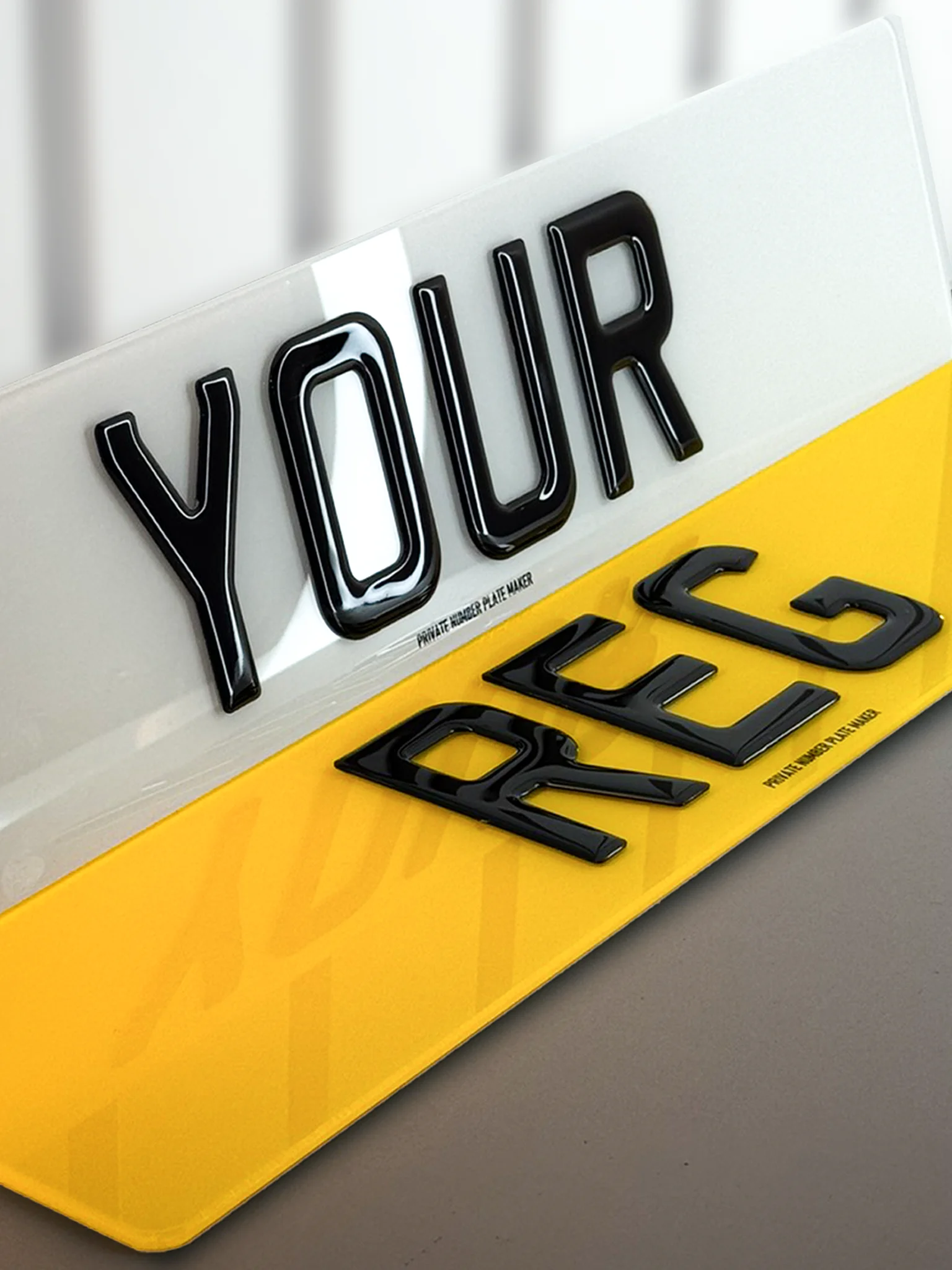
3D Gel Plates
Characteristics:
- Raised gel resin characters (approximately 2mm)
- Slightly heavier than standard plates
- Gel overlay requires care during handling
Fitting Notes:
- Avoid pressing directly on gel characters
- Use combination of screws and adhesive
- Check gel adhesion after fitting
3D Gel Number Plates Explained Guide
4D Laser-Cut Plates
Characteristics:
- Laser-cut acrylic characters (3mm or 5mm)
- Heavier than standard plates
- Acrylic may crack if overtightened
Fitting Notes:
- Do not overtighten screws near acrylic
- Consider additional fixing points for security
- Handle characters carefully during installation
4D Number Plates Explained Guide
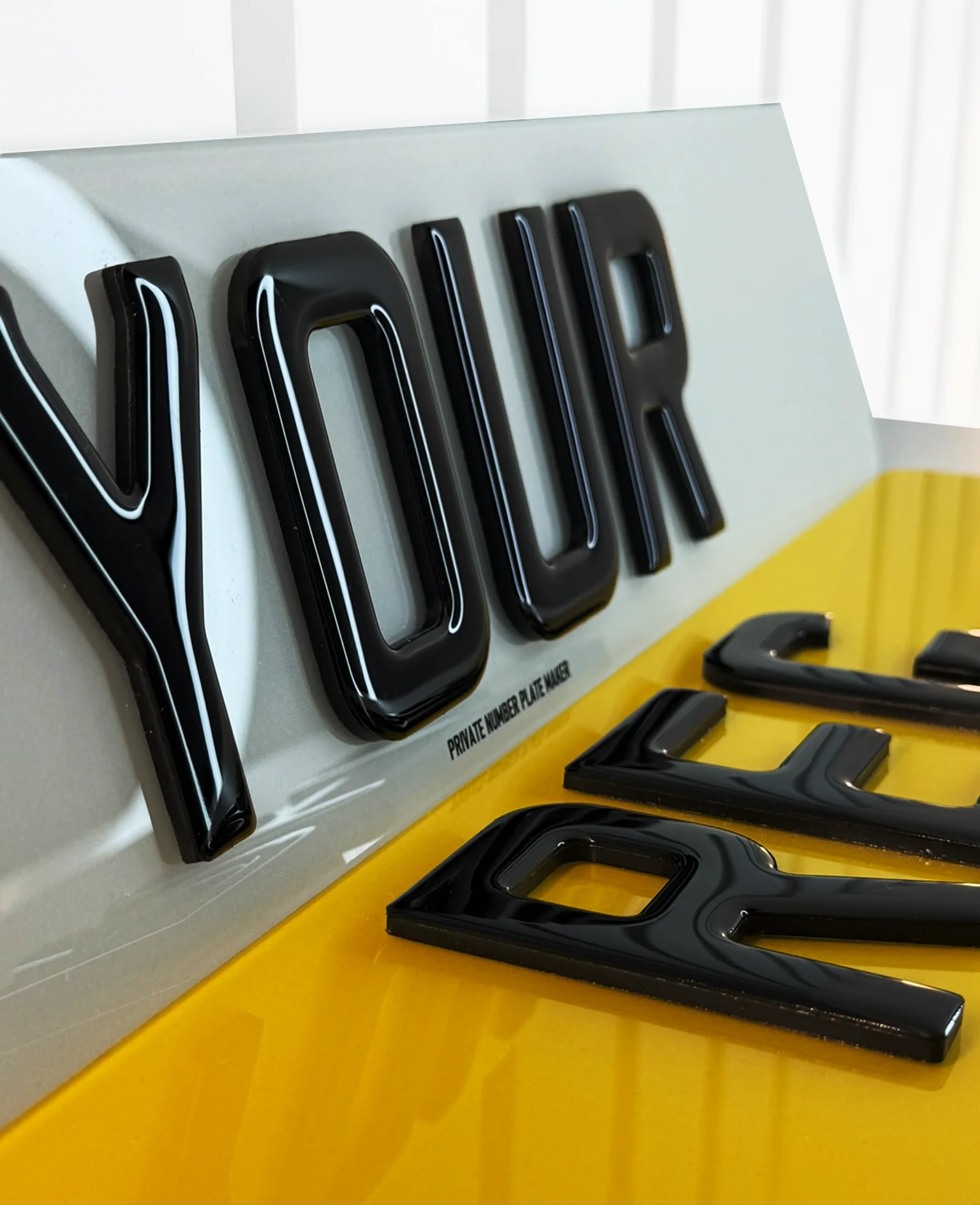
5D Plates
Characteristics:
- Combination of 3mm acrylic + 2mm gel (5mm total)
- Heaviest premium plate option
- Dual-layer construction requires care
Fitting Notes:
- Use secure fixing method (screws recommended)
- Additional fixing points may be needed
- Check both layers remain secure
5D Number Plates Explained Guide
Green Flash Plates (EV)
Characteristics:
- Standard plate with integrated green flash
- Same weight as equivalent plate type
- Green flash positioning must remain visible
Fitting Notes:
- Ensure green flash not obscured by frames
- Same fitting requirements as standard plates
- Check flash visibility after installation
Green Number Plates UK Guide | 5D Plates Electric Vehicles Guide
Common Fitting Mistakes and How to Avoid Them
Understanding common errors helps ensure your installation is compliant and secure.
Mistake 1: Incorrect Plate Angle
Problem: Plate mounted at angle exceeding 30 degrees from vertical.
Consequences: MOT failure likely, ANPR cameras may not read correctly, potential fine up to £1,000.
Solution: Use spirit level during installation, check angle from multiple viewpoints, adjust before final tightening.
Mistake 2: Obscuring Characters with Frames
Problem: Number plate frames cover characters or markings.
Consequences: Illegal under Road Vehicles Regulations 2001, MOT failure guaranteed, enforcement action possible.
Solution: Use frames specifically designed for UK plates, ensure all characters fully visible, check BS AU 145e marking not covered.
Mistake 3: Insufficient Fixings
Problem: Plate secured with only one fixing or weak adhesive.
Consequences: Plate may detach while driving, safety hazard to other road users, potential liability if plate causes accident.
Solution: Use minimum two fixings per plate, choose appropriate fixing for plate weight, check security regularly.
Mistake 4: Damaging Characters During Fitting
Problem: Gel or acrylic characters damaged during installation.
Consequences: Plate appearance compromised, may affect ANPR readability, replacement required.
Solution: Handle plates by edges only, do not press on raised characters, use protective gloves if needed.
Mistake 5: Poor Surface Preparation
Problem: Dirt, grease, or rust prevents proper adhesion.
Consequences: Adhesive failure over time, plate may detach in adverse conditions, water ingress causes corrosion.
Solution: Clean surface thoroughly before fitting, use isopropyl alcohol for final clean, allow surface to dry completely.
Replacement Number Plates UK Complete Buying Guide | Number Plate Fines UK Guide
MOT Requirements for Number Plate Fitting
MOT testers check number plate fitting as part of every vehicle test. Understanding these requirements prevents test failures.
MOT Inspection Criteria
Visibility Check:
- Plates must be clearly visible from front and rear
- No obstructions including frames, covers, or dirt
- Characters must be legible from reasonable distance
Security Check:
- Plates must be securely attached
- No excessive movement when tested
- Fixings must not be corroded or damaged
Condition Check:
- No cracks affecting readability
- No significant fading or discolouration
- Characters must not be peeling or detached
Common MOT Failures Related to Fitting
| Issue | Result | Fix Required |
|---|---|---|
| Plate loose or moving | FAIL | Re-secure with appropriate fixings |
| Characters obscured | FAIL | Remove obscuring frames or covers |
| Plate angle incorrect | FAIL | Re-mount within 30 degrees of vertical |
| BS AU 145e marking hidden | FAIL | Reposition to show marking |
| Damaged mounting points | FAIL | Repair or create new mounting points |
Pre-MOT Checklist
Before your MOT test, verify:
- Both plates securely attached
- All characters clearly visible
- No obscuring frames or covers
- Plates clean and legible
- BS AU 145e marking visible (post-2021 plates)
- No cracks or significant damage
Maintenance and Long-Term Care
Proper maintenance extends plate life and maintains compliance over time.
Regular Inspection Schedule
Monthly Checks:
- Visual inspection of plate condition
- Check fixings remain tight
- Verify characters still legible
Seasonal Checks:
- After winter, check for salt damage
- Before MOT, verify security
- After long journeys, inspect condition
Annual Deep Clean:
- Remove plates if possible
- Clean mounting surface
- Check for corrosion under plate
- Re-secure with fresh fixings if needed
Cleaning Guidelines
Safe Cleaning Methods:
- Use mild car shampoo and soft cloth
- Avoid abrasive cleaners or brushes
- Rinse thoroughly after cleaning
- Dry with soft microfiber cloth
What to Avoid:
- Pressure washers at close range
- Solvent-based cleaners
- Stiff brushes or scouring pads
- Ice scrapers on plate surface
Character Care:
- 3D/4D/5D gel and acrylic needs gentle cleaning
- Do not pick at raised characters
- Avoid parking under trees (sap damage)
- Remove bird droppings promptly
When to Seek Professional Fitting Help
Some situations warrant professional installation rather than DIY fitting.
Situations Requiring Professional Help
Complex Mounting:
- Vehicles with non-standard mounting points
- Classic cars requiring careful handling
- Commercial vehicles with special requirements
Premium Plates:
- Expensive 4D or 5D plates
- Custom plates with high value
- Plates requiring special handling
Damage Concerns:
- Risk of paint damage during drilling
- Existing corrosion at mounting points
- Previous fitting attempts failed
Our Ilford Workshop Services
Same-Day Collection
Castleview Gardens, Ilford, East London. Collect and fit while you wait. Professional fitting advice included.
Fitting Assistance
Staff can advise on best fixing methods, demonstrate proper fitting techniques, and answer compliance questions.
Local Coverage
Service across East London including Barking, Romford, Dagenham areas. Next-day UK delivery for remote customers.
Same Day Number Plates Ilford Guide | Number Plate Delivery Times Guide
Frequently Asked Questions
Yes, you can legally fit number plates yourself provided the plates were manufactured by a DVLA-registered supplier (RNPS) and you have proper documentation proving entitlement to the registration mark. Plates must be mounted vertically or within 30 degrees of vertical, with all characters clearly visible and unobscured.
Essential tools include a screwdriver or power drill for fixings, a spirit level to ensure vertical alignment (critical for compliance), measuring tape for positioning accuracy, and cleaning materials like isopropyl alcohol for surface preparation. For adhesive fitting, use automotive-grade double-sided tape such as 3M VHB.
Yes, adhesive pads are acceptable if automotive-grade double-sided tape (like 3M VHB) is used, the mounting surface is thoroughly cleaned and dried, and the plate weight is suitable for adhesive fixing. However, screws provide more secure attachment, especially for heavier premium plates like 4D or 5D styles.
Common MOT failures include: plates mounted at angles exceeding 30 degrees from vertical, frames obscuring characters or BS AU 145e markings, insufficient fixings causing plate movement, and damaged mounting points. Testers also fail plates with obscured characters, incorrect font, or missing supplier details.
Screws should be tightened securely enough to prevent plate movement but not so tight that they crack the plate material or strip threads - particularly important for premium plates with gel or acrylic characters. Hand-tighten initially to allow alignment adjustments, then final-tighten with moderate pressure.
This guide references the following official and verified sources:
Road Vehicles (Display of Registration Marks) Regulations 2001 (SI 2001/561)
www.legislation.gov.ukBritish Standards Institution - BS AU 145e:2018 Specification
knowledge.bsigroup.comMOT Inspection Manual - DVSA
www.gov.ukVehicle Excise and Registration Act 1994 - Section 42
www.legislation.gov.ukBritish Number Plate Manufacturers Association (BNMA) - Fitting Guidance
www.bnma.orgRelated Number Plate Guides
Explore our comprehensive guides on UK number plate regulations, styles, and compliance:
Number Plate Fitting Guide | Number Plate Maintenance Guide
Replacement Number Plates UK Complete Buying Guide | Emergency Replacement Plates Guide
3D Gel Number Plates Explained Guide | 4D Number Plates Explained Guide
5D Number Plates Explained Guide | BS AU 145e Explained Guide
Charles Wright Font Guide | Green Number Plates UK Guide
DVLA Document Requirements Guide | V5C vs V750 vs V778 Guide
Same Day Number Plates Ilford Guide | Number Plate Delivery Times Guide
Number Plate Fines UK Guide | Cheap Number Plates Online Guide