 Printed
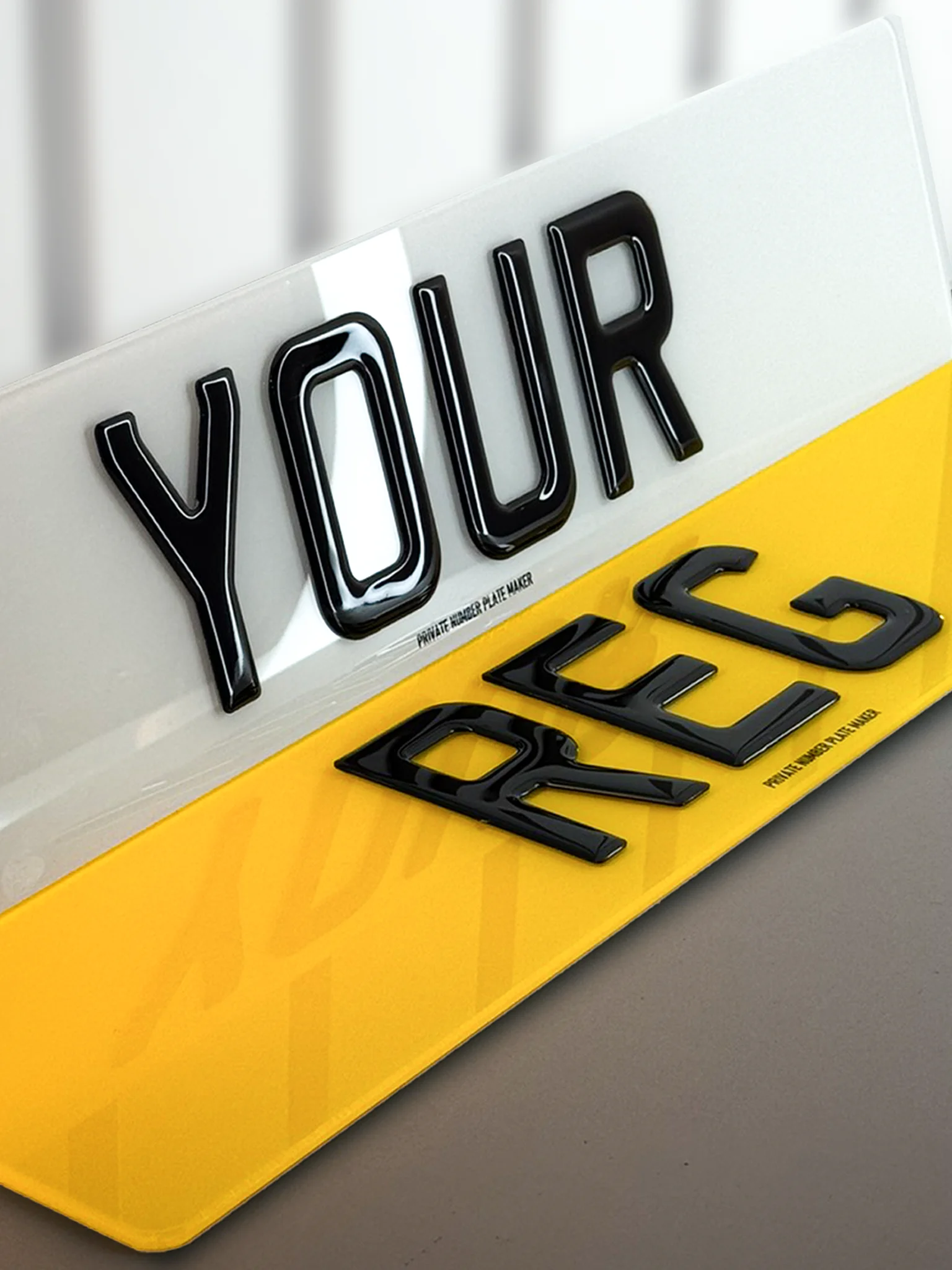 3D Plate
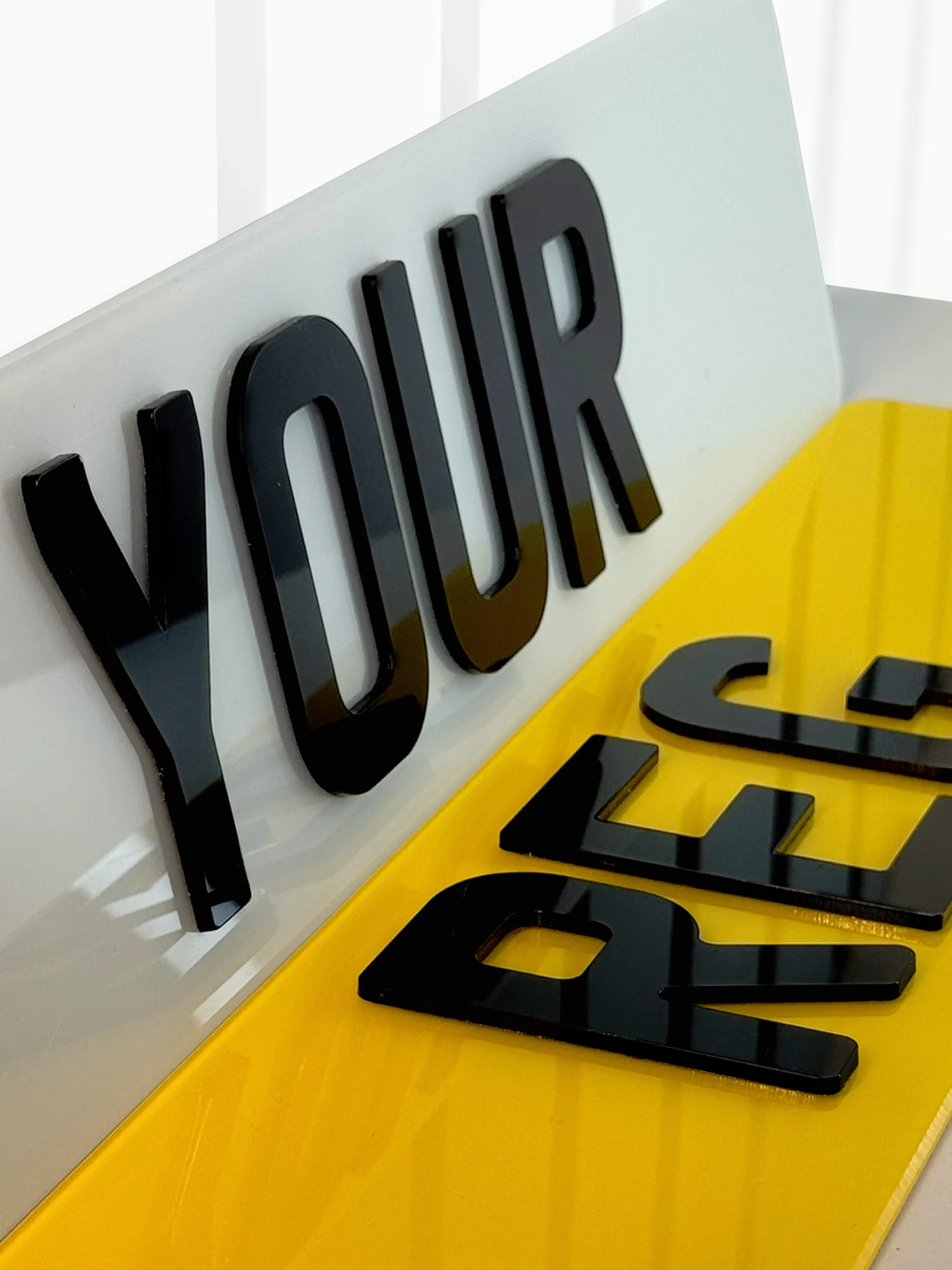 4D Plate
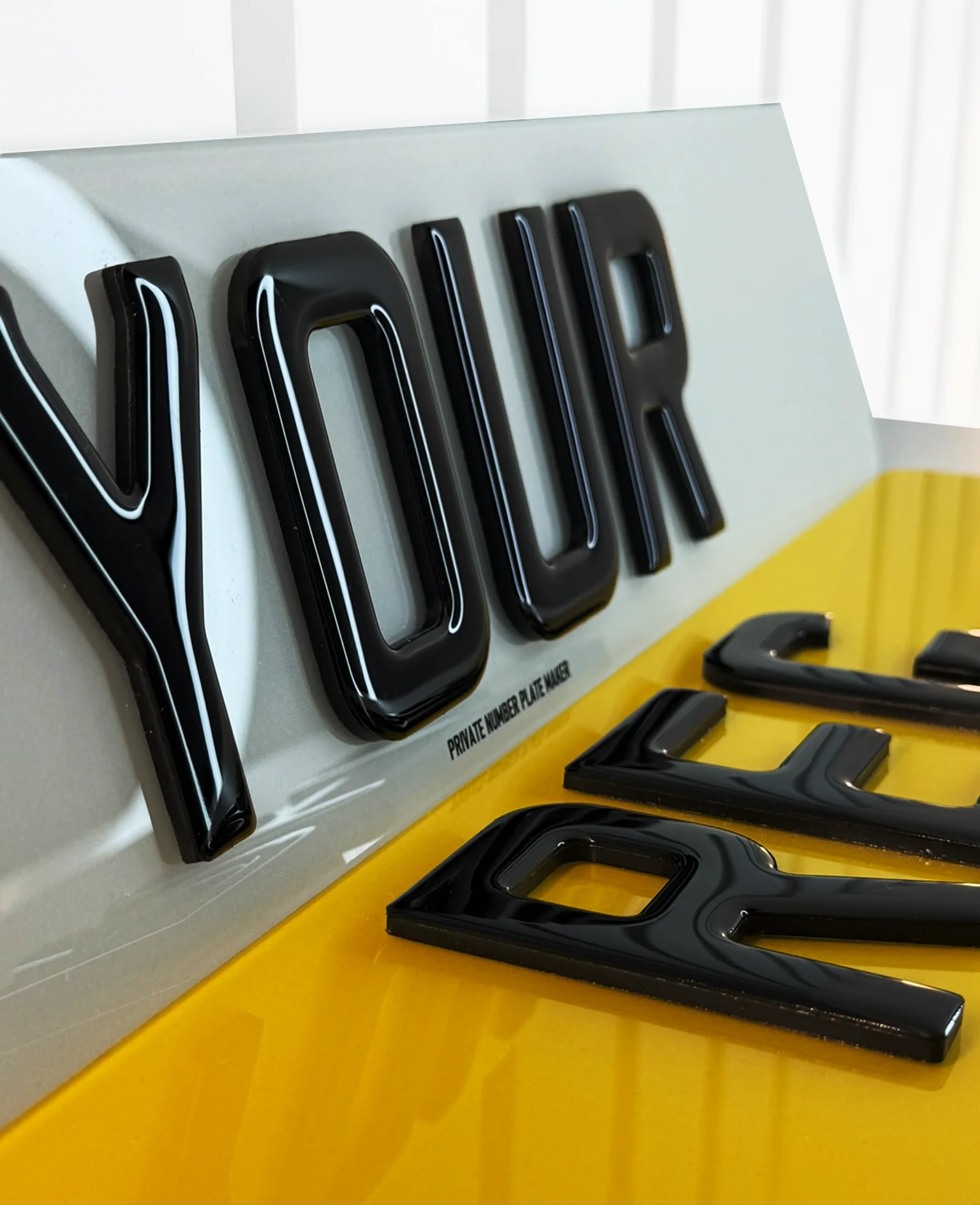 5D Plate
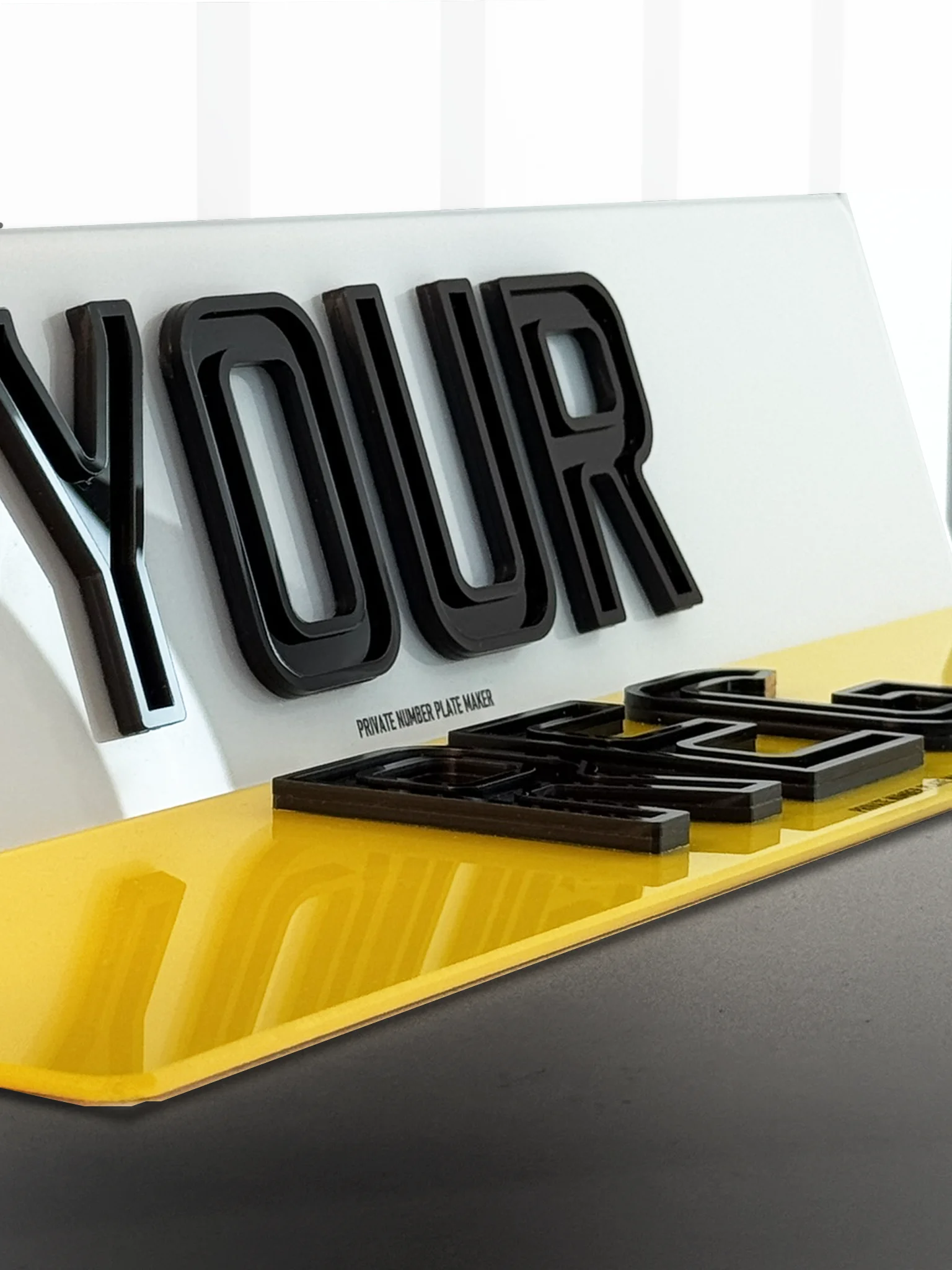 Ghost
Ghost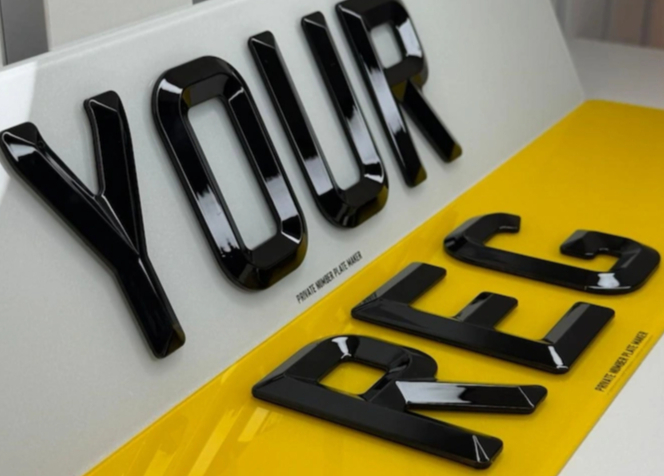 Bevel
Bevel3D Gel Plates for Motorcycles: Complete Guide
Summary
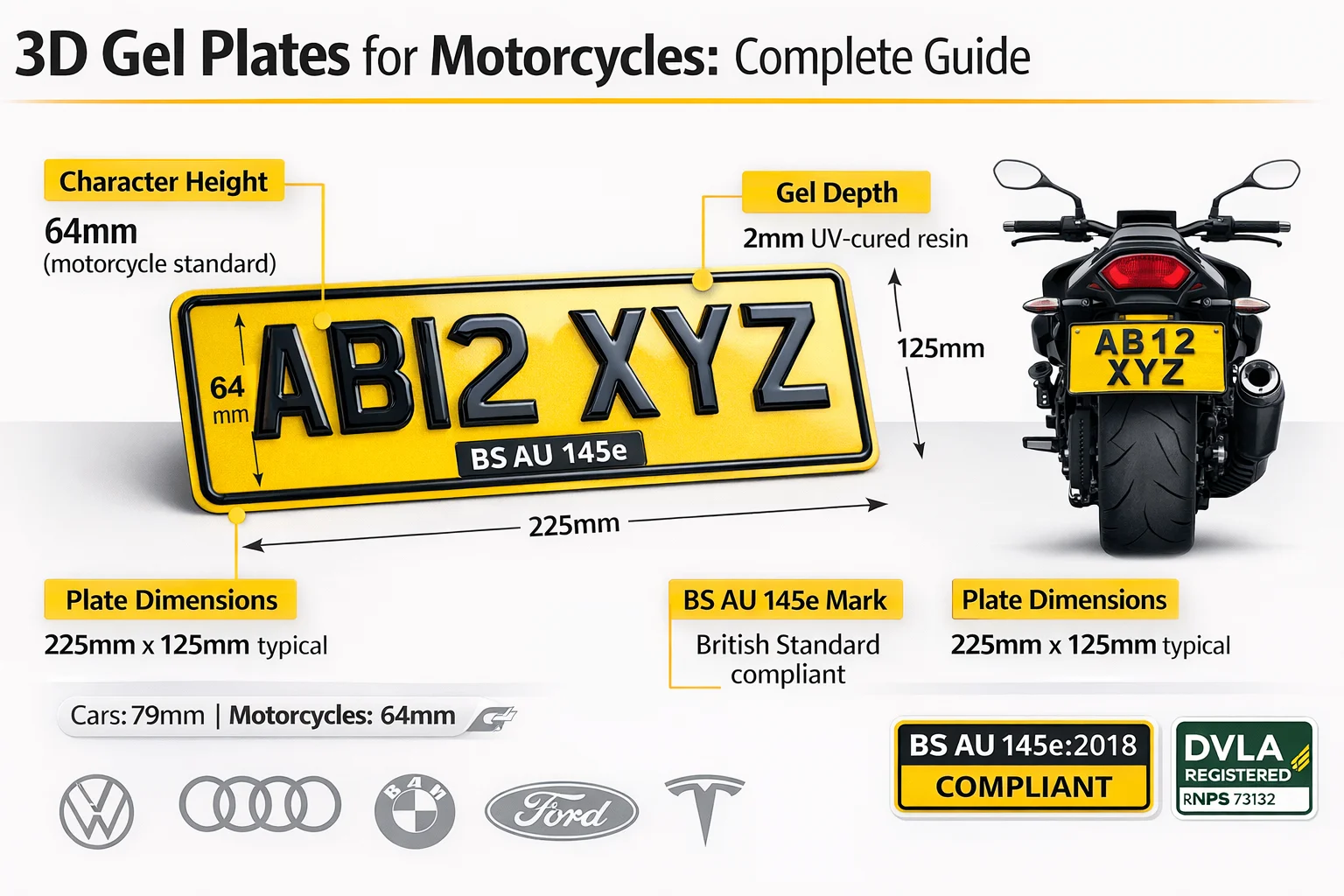
3D gel number plates are fully legal for motorcycles in the UK when manufactured to BS AU 145e:2018 standards with the correct 64mm character height, proper character spacing, and supplier RNPS identification. Motorcycle number plates differ from car plates in several key ways: characters are 64mm tall instead of 79mm, only a rear plate is required (no front plate), and plate dimensions typically measure 225mm x 125mm though this can vary by motorcycle model.
At Private Number Plate Maker Ltd, we manufacture every 3D gel motorcycle plate on-site at our Ilford workshop using BS AU 145e-certified materials and verify all required documents before production as a DVLA-registered supplier (RNPS ID: 75449). Our motorcycle plates use the same UV-cured resin gel technology as car plates, providing enhanced durability and appearance while maintaining full DVLA compliance for MOT and ANPR readability.
Related guide: Learn more about 3D gel plate technology in our main guide | Quick FAQ
Motorcycle Number Plate Requirements vs Cars
Key Differences at a Glance
Motorcycle number plates have distinct requirements compared to car plates:
| Specification | Motorcycles | Cars |
|---|---|---|
| Character height | 64mm | 79mm |
| Character width | 44mm (excluding I and 1) | 50mm (excluding I and 1) |
| Stroke thickness | 10mm | 14mm |
| Character spacing | 10mm | 11mm |
| Front plate required | No | Yes |
| Rear plate required | Yes | Yes |
| Typical plate size | 225mm x 125mm | 520mm x 111mm |
| BS AU 145e:2018 | Required | Required |
Important: All other compliance requirements remain the same including Charles Wright 2001 font, reflective substrate, and supplier identification.
Related guide: Complete motorcycle number plates overview | Charles Wright font guide
Why Motorcycle Plates Are Different
The smaller character size and plate dimensions accommodate motorcycle design constraints: limited space on motorcycle rear sections, different mounting positions than cars, exposure to different weather conditions, vibration considerations during riding, and visibility requirements still maintained for ANPR.
Are 3D Gel Plates Legal on Motorcycles?
Short Answer: Yes, When Compliant
3D gel number plates are 100% legal for motorcycles in the UK when manufactured correctly. The same legal framework applies to motorcycles as cars:
Legal Requirements:
- Road Vehicles (Display of Registration Marks) Regulations 2001
- BS AU 145e:2018 British Standard compliance
- Charles Wright 2001 mandatory font
- Correct character dimensions for motorcycles
- Supplier RNPS identification visible
Related guide: Are 3D gel plates legal? Complete UK legality guide | BS AU 145e explained
What Makes Motorcycle 3D Plates Legal:
- 64mm character height (not 79mm car standard)
- Solid black characters without highlighting
- Clear UV-cured gel (no tint or colour)
- BS AU 145e:2018 certification mark
- Proper character spacing and margins
What Makes Motorcycle 3D Plates Illegal
Motorcycle 3D plates become illegal when they have:
- Wrong character height (using car 79mm standard)
- Highlighting effects creating shadows on characters
- Non-standard fonts other than Charles Wright 2001
- Incorrect character spacing or dimensions
- Missing BS AU 145e certification mark
- Missing supplier RNPS identification
- Reflective coatings or tints on characters
Penalties: Under Section 42 of the Vehicle Excise and Registration Act 1994, fines up to £1,000 (Level 3 standard scale) can apply for non-compliant plates.
Technical Specifications for Motorcycle 3D Plates
Character Dimensions (Motorcycle Standard)
All motorcycle number plates must meet these specifications:
| Specification | Measurement | Tolerance |
|---|---|---|
| Character height | 64mm | +/- 1mm |
| Character width | 44mm (excluding I and 1) | +/- 1mm |
| Stroke thickness | 10mm | +/- 0.5mm |
| Character spacing | 10mm between characters | +/- 0.5mm |
| Age identifier gap | 27mm | +/- 1mm |
| Minimum margins | 11mm around edges | Minimum |
Note: The character 'I' and numeral '1' may be narrower than other characters.
Related guide: Charles Wright font requirements: complete guide
Plate Size Options for Motorcycles
Motorcycle plate sizes can vary by manufacturer and model:
| Size Option | Dimensions | Common Applications |
|---|---|---|
| Standard | 225mm x 125mm | Most modern motorcycles |
| Compact | 200mm x 110mm | Smaller bikes, scooters |
| Custom | Varies by model | Specific manufacturer requirements |
| Import plates | Varies | Non-UK registered motorcycles |
Important: Plate size must accommodate all required characters with proper spacing and margins.
3D Gel Specifications for Motorcycles
The 3D gel construction for motorcycles matches car plate standards:
| Specification | Motorcycle 3D Gel |
|---|---|
| Gel depth | 2mm raised (typical) |
| Gel material | UV-cured resin |
| Gel clarity | Clear (no tint) |
| UV protection | UV-stabilised formulation |
| Curing process | 8-minute UV exposure cycle |
| Durability | 5-7 years with proper care |
Related guide: Learn about our UV curing process for 3D gel plates
BS AU 145e:2018 Compliance for Motorcycles
Four Mandatory Requirements
BS AU 145e:2018 applies equally to motorcycle and car plates:
- Reflectivity: Yellow reflective background for rear plates, photometric performance for visibility in all conditions, must remain visible to ANPR cameras
- Impact Resistance: Withstands stone chips and road debris, important for motorcycles due to exposure, gel layer provides additional protection
- Weathering: 2,275 hours UV exposure testing, resists fading from sunlight, withstands rain, temperature changes
- NIR Compatibility: Near Infrared readability for ANPR, clear gel must not interfere with infrared, essential for speed camera and enforcement systems
Related guide: What is BS AU 145e:2018? Full explanation | How ANPR cameras work
Motorcycle-Specific Compliance Considerations
Motorcycles face unique conditions that affect plate compliance:
| Condition | Impact on Plate | Mitigation |
|---|---|---|
| Weather exposure | Higher than cars (no body protection) | Quality gel provides protection |
| Vibration | Constant during riding | Proper gel adhesion essential |
| Road debris | More exposed position | Impact-resistant materials |
| Cleaning frequency | Often less than cars | Regular maintenance important |
| Storage conditions | May be outdoors | UV-stable materials critical |
MOT Requirements for Motorcycle Number Plates
What MOT Testers Check
Motorcycle MOT inspection includes number plate verification:
MOT Plate Checks:
- Characters easily readable from reasonable distance
- Font matches Charles Wright 2001 specification
- 64mm character height (not car 79mm standard)
- No cracks, discolouration, or damage
- BS AU 145e mark present and visible
- Supplier identification visible
- Plate securely attached to motorcycle
Common Motorcycle MOT Failures:
- Characters faded or illegible
- Gel peeling from character base
- Missing or illegible certification marks
- Incorrect character size or spacing
- Plate not securely fixed
- Damage affecting readability
Maintaining MOT Compliance
Keep your motorcycle 3D plates MOT-compliant with these practices:
Regular Maintenance:
- Clean plates monthly (more in winter)
- Check for gel damage after rides
- Verify all characters remain legible
- Ensure fixings are secure
- Replace plates showing significant wear
When to Replace:
- Gel peeling from multiple characters
- Significant fading affecting readability
- Cracks through gel layer
- Missing or illegible BS AU 145e mark
- MOT failure due to plate condition
Related guide: Number plate maintenance tips to extend lifespan | Replacement buying guide
Fitting 3D Gel Plates to Motorcycles
Mounting Position Requirements
Motorcycle rear plates must be mounted correctly:
Legal Mounting Requirements:
- Vertically positioned (within 10 degrees of vertical)
- Between 230mm and 1000mm from ground level
- Clearly visible from rear of vehicle
- Not obscured by any part of motorcycle
- Securely fixed to prevent movement
Common Mounting Locations:
- Rear mudguard/fender
- Rear subframe
- Tail section
- Licence plate holder/bracket
- Integrated into tail light assembly (some models)
Fitting Process for Motorcycle 3D Plates
Follow these steps for proper installation:
- Step 1: Prepare Mounting Surface
Clean surface thoroughly, remove old plate and adhesive residue, check mounting bracket condition, ensure surface is flat and secure - Step 2: Position New Plate
Align plate centrally, check vertical positioning, verify all characters visible, mark fixing hole positions - Step 3: Secure Plate
Use appropriate fixings for motorcycle, consider vibration-resistant fixings, do not over-tighten (can crack gel), use rubber washers to protect gel surface - Step 4: Final Check
Verify plate is secure, check no movement during vibration, confirm all characters visible, ensure BS AU 145e mark visible
Related guide: Complete number plate fitting guide with photos
Fixing Options for Motorcycles
| Fixing Type | Best For | Considerations |
|---|---|---|
| Standard screws | Most motorcycles | Use rubber washers |
| Vibration-resistant fixings | High-mileage bikes | Prevents loosening |
| Adhesive pads | Some tail sections | Check adhesion regularly |
| Quick-release brackets | Security-conscious owners | Easy plate removal |
| Manufacturer brackets | Specific models | OEM fitment |
Security Tip: Consider security fixings to deter plate theft, which is more common with motorcycles than cars.
Document Requirements for Motorcycle Plates
Required Documentation
The same document requirements apply to motorcycle plates as car plates:
Acceptable Documents:
- V5C Registration Certificate (logbook)
- V750 Certificate of Entitlement
- V778 Retention Document
- V948 Authorisation Letter
- Valid driving licence
- Passport (as secondary ID)
Important: Bank statements and utility bills are not accepted as proof of entitlement.
Related guide: DVLA document requirements: what you need | V5C vs V750 vs V778 explained
Motorcycle-Specific Document Considerations
Some motorcycle-specific scenarios require attention:
| Scenario | Document Required | Notes |
|---|---|---|
| New motorcycle purchase | V5C (new keeper supplement) | Section 6 of V5C |
| Private registration | V750 or V778 | Must show entitlement |
| Imported motorcycle | V555 or V556 | Import documentation |
| Classic motorcycle | V5C or historical documentation | Age-related registration |
| Company motorcycle | V5C + company authorisation | Business registration |
Document Verification: As a DVLA-registered supplier, we verify all documents before production begins at our Ilford workshop.
3D Gel vs Other Plate Types for Motorcycles
Comparison Table
| Feature | Standard 2D | 3D Gel | 4D Laser-Cut |
|---|---|---|---|
| Character Construction | Printed/digitally applied | UV-cured resin gel | Laser-cut acrylic |
| Character Depth | 1mm (flat) | 2mm raised | 3mm raised |
| Durability | Standard | High | Very High |
| Vibration Resistance | Good | High | High |
| Weather Resistance | Standard | High | Very High |
| Price Range | Budget | Mid-range | Premium |
| Legal Status | Fully legal | Fully legal | Fully legal |
Related guide: Compare all plate types side-by-side | 4D vs 3D detailed breakdown
Why Choose 3D Gel for Motorcycles
Motorcycle owners commonly choose 3D gel plates for these reasons:
Advantages:
- Better durability than standard plates
- Enhanced appearance without 4D cost
- Gel protects characters from weather
- Good vibration resistance when properly fitted
- MOT compliant when manufactured correctly
- Mid-range pricing suitable for most budgets
Considerations:
- Slightly higher cost than standard plates
- Requires gentle cleaning (no pressure washer direct)
- Gel can be damaged by impact if hit directly
- Not as bold as 4D for maximum appearance
When 4D Might Be Better for Motorcycles
Consider 4D laser-cut plates if you:
- Want maximum depth and appearance
- Ride in all weather conditions frequently
- Park outdoors regularly
- Want maximum durability
- Budget allows for premium option
Note: 4D plates are heavier; ensure your motorcycle mounting can support the weight.
Related guide: Full comparison: 3D vs 4D vs 5D number plates | Are premium plates worth it?
Maintenance for Motorcycle 3D Plates
Cleaning Motorcycle 3D Plates
Motorcycle plates require regular cleaning due to exposure:
Cleaning Process:
- Rinse with water to remove loose dirt
- Apply mild car shampoo with soft cloth
- Gently wipe gel characters (do not scrub hard)
- Rinse thoroughly with clean water
- Dry with soft microfiber cloth
Cleaning Frequency:
- Monthly under normal conditions
- Every 2 weeks in winter (road salt)
- After long rides (insect buildup)
- Before MOT inspection
What to Avoid When Cleaning
| Avoid | Reason | Alternative |
|---|---|---|
| Pressure washer (direct) | Can lift gel edges | Garden hose or bucket |
| Abrasive sponges | Scratches gel surface | Soft microfiber cloth |
| Solvent cleaners | Degrades resin | Mild car shampoo |
| Stiff brushes | Damages gel | Soft bristle brush only |
| Petrol/diesel contact | Dissolves gel | Wipe immediately if contacted |
Protection Tips for Motorcycles
Extend your motorcycle 3D plate lifespan with these tips:
Protection Methods:
- Apply car wax every 2-3 months
- Check fixings regularly for tightness
- Inspect after long rides for damage
- Store motorcycle indoors when possible
- Use motorcycle cover for outdoor parking
Winter Considerations:
- Road salt accelerates gel degradation
- Clean more frequently in winter months
- Apply protective wax before winter
- Check for ice damage after freezing
Common Motorcycle Plate Questions
Can I Use Car 3D Plates on My Motorcycle?
No. Car and motorcycle plates have different requirements:
- Car plates: 79mm character height
- Motorcycle plates: 64mm character height
- Using wrong size is illegal and will fail MOT
- Different plate dimensions may not fit mounting
Always order motorcycle-specific plates with 64mm characters.
Do I Need a Front Plate on My Motorcycle?
No. UK motorcycles only require a rear number plate:
- Cars require front and rear plates
- Motorcycles require rear plate only
- Front plate on motorcycle is optional (not recommended)
- If fitted, front plate must also be compliant
This differs from some other countries where motorcycle front plates are required.
Will 3D Gel Plates Affect My Motorcycle Warranty?
No. Number plate choice does not affect motorcycle warranty:
- Plates are separate from motorcycle components
- No manufacturer warranty implications
- Choose any compliant plate type
- Ensure proper fitting to avoid damage
Can 3D Plates Handle Motorcycle Vibration?
Yes, when properly manufactured and fitted:
- UV-cured gel is durable and flexible
- Proper adhesion prevents peeling
- Quality fixings prevent movement
- Regular inspection recommended
- Replace if any gel lifting detected
Related guide: 3D gel plates FAQ: quick answers | Do 3D plates work with ANPR?
Our Motorcycle Plate Services
Motorcycle-Specific Manufacturing
At Private Number Plate Maker Ltd, we manufacture motorcycle-specific 3D gel plates at our Ilford workshop:
Motorcycle Plate Features:
- 64mm character height (motorcycle standard)
- BS AU 145e:2018 certified materials
- Charles Wright 2001 font verified
- Correct spacing for motorcycle dimensions
- RNPS ID: 75449 on all plates
- Document verification before production
All Motorcycle Types Supported:
- Modern motorcycles (all makes and models)
- Classic and vintage motorcycles
- Scooters and mopeds
- Trikes (different requirements may apply)
- Electric motorcycles
Collection and Delivery for Motorcycle Owners
Same-Day Collection (Ilford):
- Ilford workshop location
- Bring original documents for verification
- Plates ready within hours of order
- No delivery charges for collection
UK Delivery:
- Next-day delivery available
- Secure packaging prevents transit damage
- Tracking information provided
- Signature required on delivery
Note: Motorcycle plates are smaller and may qualify for reduced delivery charges in some cases.
Related guide: Same-day number plates in Ilford: what you need to know | Delivery times guide
Legal Compliance Reminders
Summary of Motorcycle Plate Legal Requirements
All motorcycle number plates must comply with:
Mandatory Requirements:
- 64mm character height (motorcycles)
- Charles Wright 2001 font
- 10mm character spacing
- 10mm stroke thickness
- BS AU 145e:2018 certification mark
- Supplier RNPS identification visible
- Yellow reflective background (rear only)
- Vertically mounted (within 10 degrees)
Not Allowed:
- Car-size characters (79mm)
- Tinted or coloured gel coatings
- Highlighting effects on characters
- Non-standard fonts or spacing
- Missing certification marks
- Obscured supplier identification
Enforcement and Penalties
Non-compliant motorcycle plates can result in:
| Penalty | Amount | Circumstances |
|---|---|---|
| Fixed Penalty Notice | £100 | Minor infringements |
| Maximum Statutory Fine | £1,000 | Level 3 standard scale |
| MOT Failure | N/A | Plate non-compliant |
| Vehicle Seizure | Possible | Serious repeat offences |
Note: Police and ANPR systems can detect non-compliant plates during routine checks.
Related guide: UK number plate fines: complete guide | 3D gel plates legality
Frequently Asked Questions
Yes, 3D gel number plates are fully legal for UK motorcycles when manufactured to BS AU 145e:2018 standards with 64mm character height, Charles Wright 2001 font, and proper supplier identification (RNPS) visible. The Road Vehicles (Display of Registration Marks) Regulations 2001 apply equally to motorcycles. At our Ilford workshop (RNPS ID: 75449), we verify all documents before producing compliant motorcycle plates.
UK motorcycles require rear plates with 64mm character height (compared to 79mm for cars), 44mm character width, and 10mm stroke thickness. Typical dimensions are 225mm x 125mm, though this varies by model. Only a rear plate is mandatory for motorcycles. All plates must display the BS AU 145e:2018 certification mark and supplier RNPS identification.
Yes, all motorcycle number plates sold in the UK must comply with BS AU 145e:2018, the British Standard for retro-reflective number plates. This ensures proper reflectivity, impact resistance, weathering performance, and ANPR readability. Non-compliant plates can result in MOT failure or fines up to £1,000 under the Vehicle Excise and Registration Act 1994.
As a DVLA-registered supplier (RNPS 75449), we require proof of entitlement before manufacturing plates. Acceptable documents include your V5C registration certificate, V750 certificate of entitlement, V778 retention document, or V948 authorisation letter, plus valid photo ID. Bank statements and utility bills are not accepted. We verify all documents on-site at our Ilford workshop before production begins.
Yes, 3D gel motorcycle plates pass MOT inspections when manufactured to BS AU 145e:2018 with correct 64mm characters, Charles Wright 2001 font, and visible certification marks. MOT testers check readability, font compliance, secure fitting, and absence of damage. Regular cleaning and inspection help maintain compliance. Replace plates showing gel peeling or fading before your MOT test.
Related guide: Read real 3D gel plate reviews from UK motorcycle owners
This guide references the following official and verified sources:
DVLA Official Guidance
Road Vehicles (Display of Registration Marks) Regulations 2001 (SI 2001/561)
legislation.gov.ukBritish Standards Institution - BS AU 145e:2018
knowledge.bsigroup.comBritish Number Plate Manufacturers Association (BNMA)
bnma.orgVehicle Excise and Registration Act 1994
legislation.gov.ukDVLA INF104 Vehicle Registration Numbers and Number Plates
gov.uk