
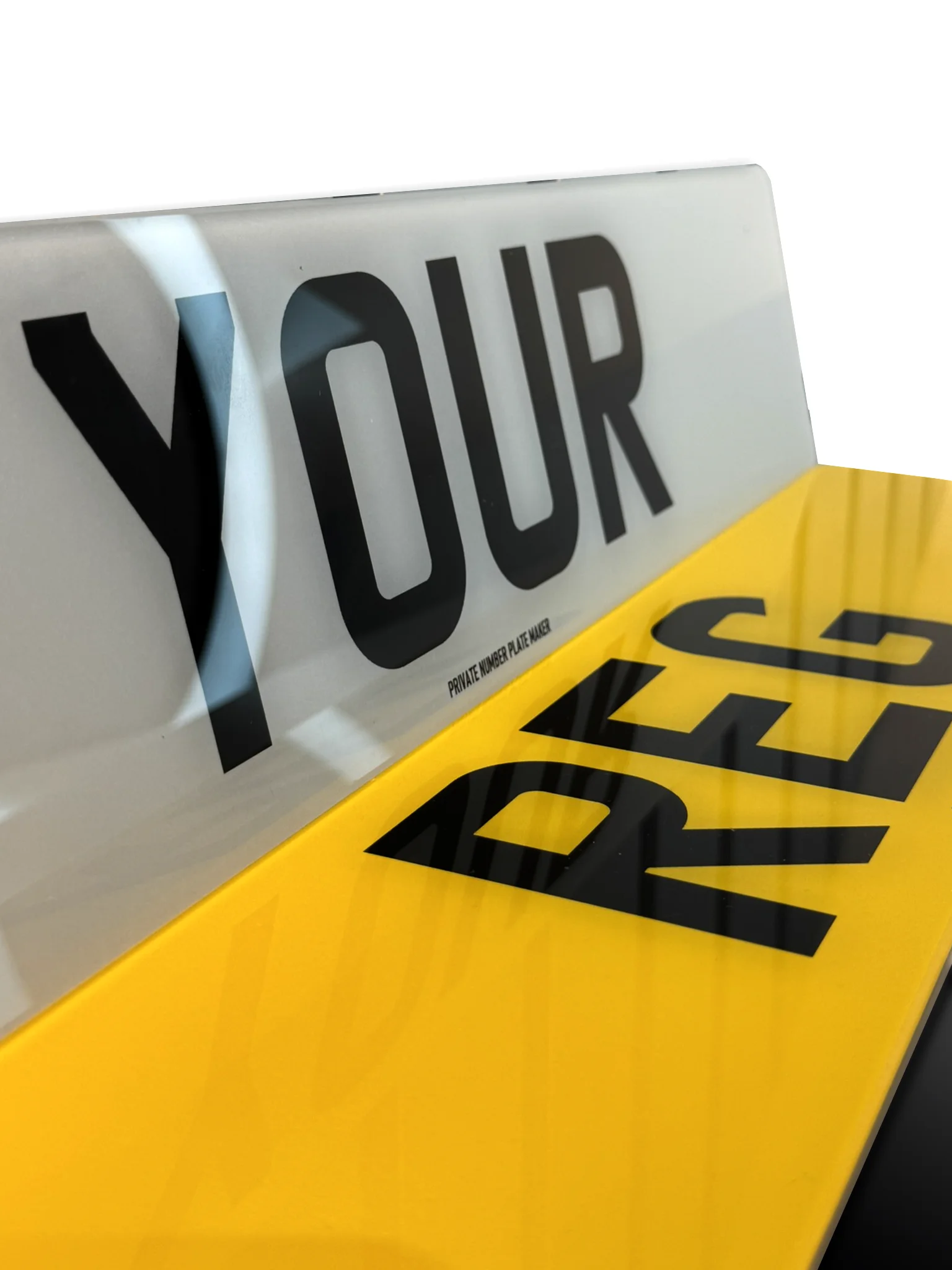
 Printed
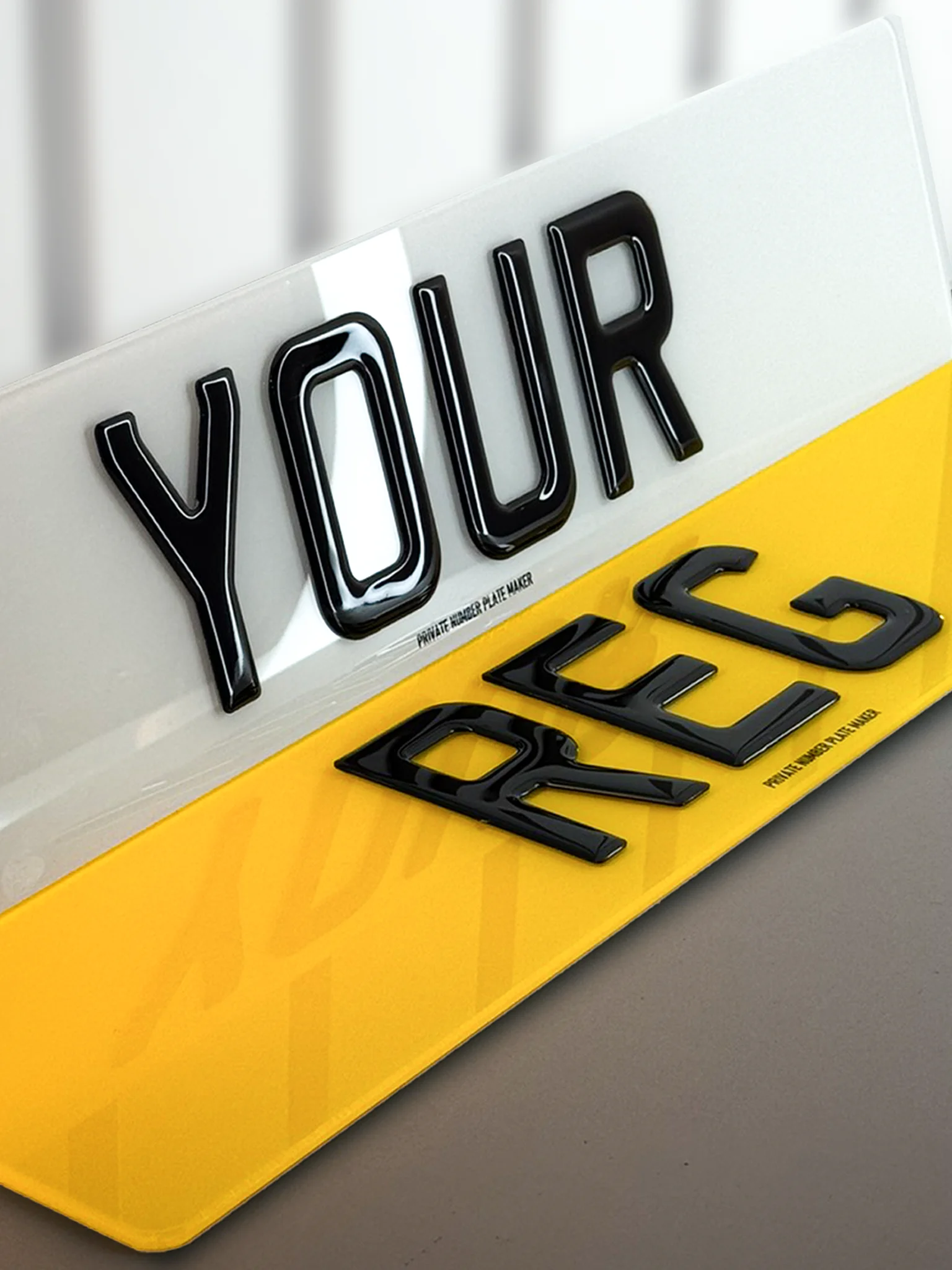 3D Plate
 4D Plate
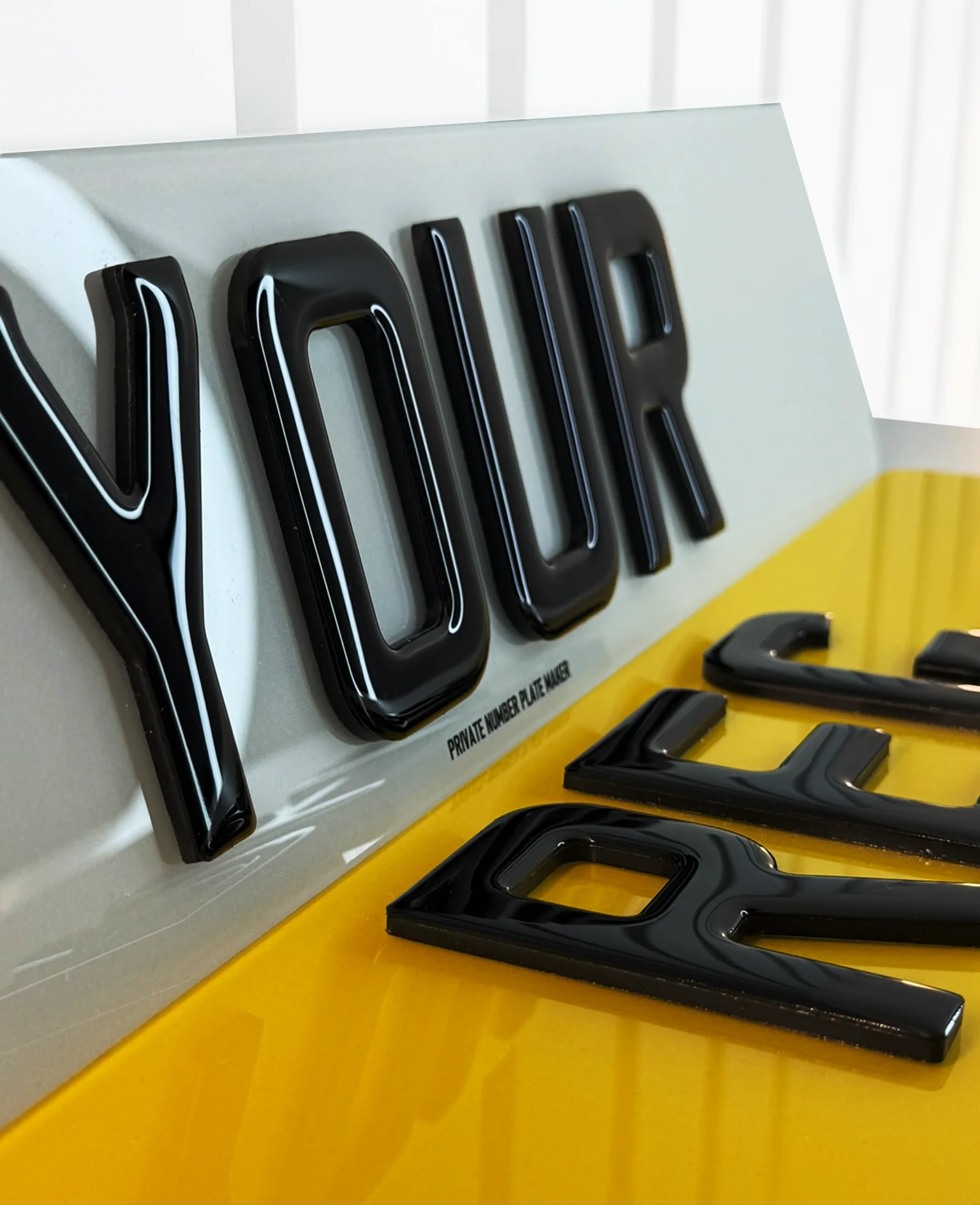 5D Plate
 Ghost
Ghost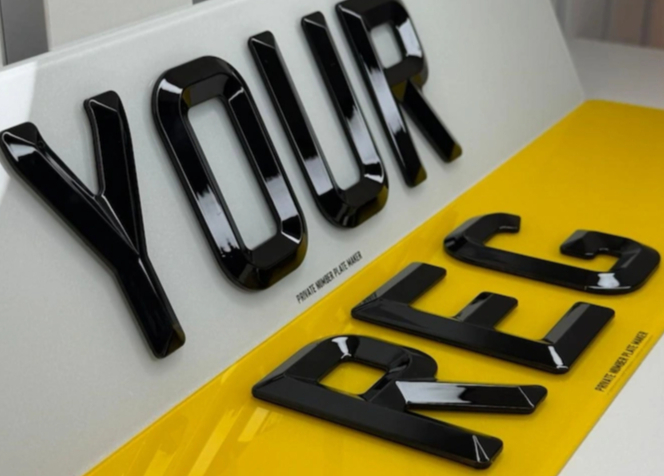 Bevel
BevelAre Bevel Number Plates Legal? 2026 UK Regulations & Thickness Guide
Summary
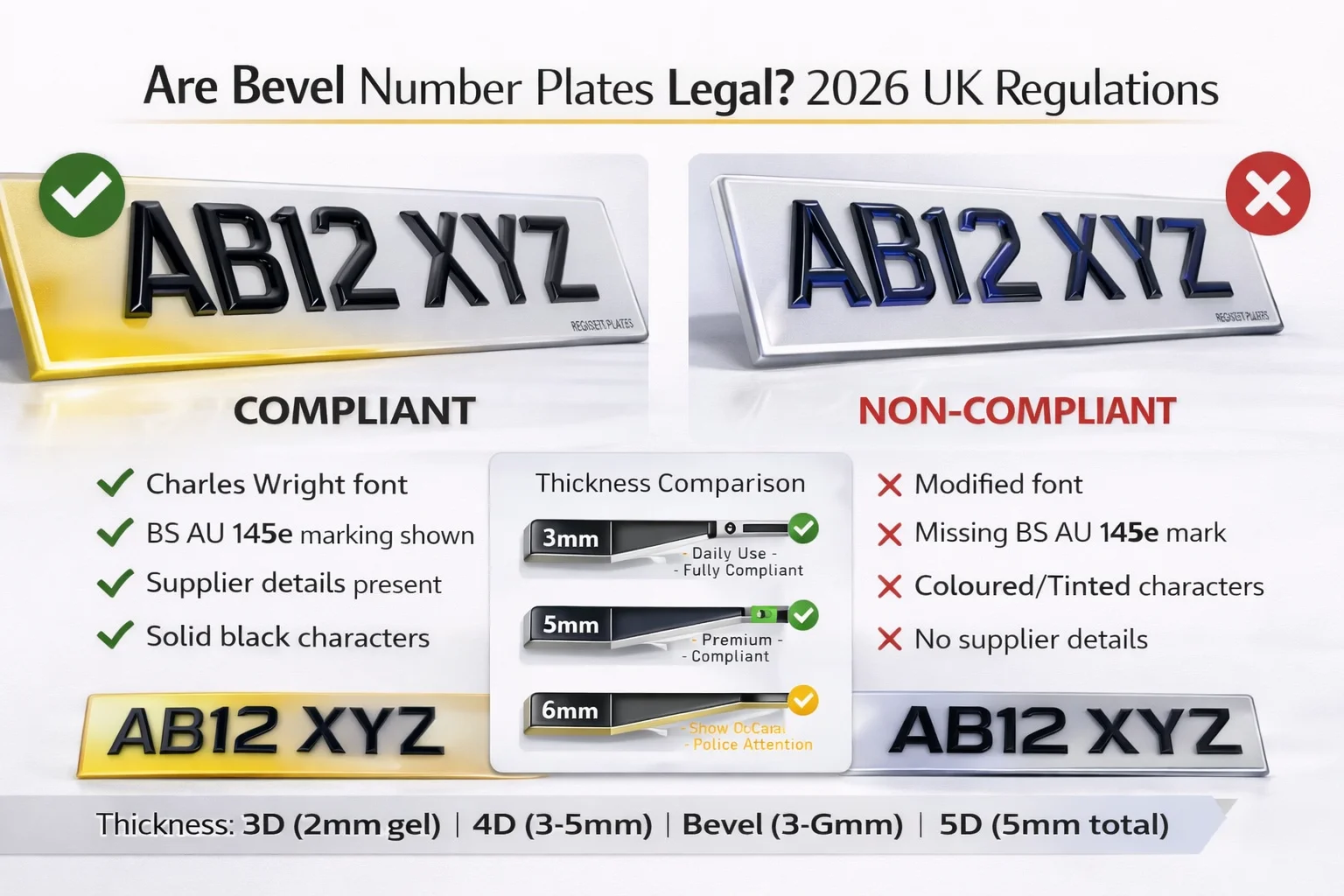
Bevel number plates are legal in the UK when manufactured to comply with the Road Vehicles (Display of Registration Marks) Regulations 2001, which requires Charles Wright font, solid black characters, BS AU 145e:2018 certified reflective materials, visible supplier details, and correct character dimensions (79mm height, 50mm width, 14mm stroke thickness). The bevelled diamond-cut edges themselves do not affect legality provided they do not alter character recognition or interfere with ANPR camera readability.
Bevel Number Plates Explained Guide | BS AU 145e Explained Guide
Thickness considerations matter for practical compliance: 3mm bevel plates are fully compliant and safe for daily road use, 5mm bevel plates remain compliant but offer enhanced premium appearance, and 6mm bevel plates while technically compliant may attract police attention during enforcement stops due to their substantial depth. All thickness options must maintain BS AU 145e:2018 standards including reflectivity, impact resistance, weathering, and NIR compatibility for ANPR systems.
Legal Framework for Bevel Number Plates in the UK
Understanding the specific regulations governing bevel plates helps you make informed purchasing decisions with confidence.
Primary Legislation Governing Number Plates
Road Vehicles (Display of Registration Marks) Regulations 2001:
This statutory instrument (SI 2001/561) sets out the fundamental requirements for all number plates used on UK roads:
- Regulation 14 specifies character dimensions and spacing
- Regulation 16 addresses construction and marking requirements
- Schedule 2 covers document requirements for suppliers
Vehicle Excise and Registration Act 1994:
Section 42 provides enforcement powers and penalty provisions for number plate offences:
- Fines up to level 3 on the standard scale (currently £1,000)
- Powers for vehicle seizure in serious cases
- Criminal liability for both suppliers and vehicle owners
British Standard BS AU 145e:2018:
This standard specifies technical requirements for retroreflective number plates:
- Became mandatory for all plates supplied from 1 September 2021
- Four requirements: reflectivity, impact resistance, weathering, NIR compatibility
- Must be marked on all compliant plates
What Makes Bevel Plates Legal
| Requirement | Specification | Compliance Check |
|---|---|---|
| Font | Charles Wright (mandatory since 2001) | No stylised or modified characters |
| Character Height | 79mm for cars, 64mm for motorcycles | Must be exact measurement |
| Character Width | 50mm (excluding 'I' and '1') | Standard width maintained |
| Stroke Thickness | 14mm | Consistent throughout character |
| Character Spacing | 11mm between characters | Uniform spacing required |
| Age Identifier Gap | 33mm | Must be present and correct |
| Margins | 11mm minimum | All four sides must comply |
| Colour | Solid black characters on white (front) or yellow (rear) | No two-tone or coloured characters |
| BS AU 145e Marking | Must be visible on plate | Post-September 2021 plates only |
| Supplier Details | Name and postcode on plate | Centre-bottom positioning |
What Makes Bevel Plates Non-Compliant
| Non-Compliant Feature | Why It's Illegal | Potential Consequence |
|---|---|---|
| Modified font shape | Charles Wright must be maintained | MOT failure |
| Incorrect character dimensions | Regulations specify exact measurements | Fine up to £1,000 |
| Missing BS AU 145e marking | Standard compliance not verifiable | Enforcement action |
| Missing supplier details | RNPS requirements not met | Questioned by police |
| Coloured or two-tone characters | Must be solid black | MOT failure |
| Reflective coatings on bevel | Interferes with ANPR | Potential seizure |
| Obscured character boundaries | Reduces legibility | MOT failure |
Thickness Considerations: 3mm vs 5mm vs 6mm Bevel Plates
Thickness affects both appearance and practical compliance considerations for bevel plates.
3mm Bevel Plates - Standard Compliance
Legal Status: Fully compliant for all road use
Characteristics:
- Standard premium thickness
- Subtle bevel effect
- Lightest weight option
- Most cost-effective bevel option
Compliance Advantages:
- No thickness-related concerns
- Fits all standard plate holders
- Minimal police attention risk
- Ideal for daily drivers
Best Suited For:
| Use Case | Suitability | Reason |
|---|---|---|
| Daily driving | Excellent | No compliance concerns |
| Fleet vehicles | Excellent | Consistent compliance |
| MOT testing | Excellent | Standard thickness accepted |
| Police stops | Excellent | No attention drawn |
| Long-term use | Excellent | Proven track record |
5mm Bevel Plates - Premium Compliance
Legal Status: Fully compliant for all road use
Characteristics:
- Enhanced depth and presence
- Stronger light reflection from bevel
- More substantial feel
- Mid-range pricing
Compliance Considerations:
- Still within acceptable thickness range
- May require deeper plate holders
- Slightly more noticeable to police
- No legal restrictions
Best Suited For:
| Use Case | Suitability | Reason |
|---|---|---|
| Daily driving | Excellent | Fully compliant |
| Executive cars | Excellent | Professional premium |
| Enthusiast vehicles | Excellent | Noticeable upgrade |
| MOT testing | Excellent | Within compliance |
| Police stops | Very Good | Minimal attention |
6mm Bevel Plates - Maximum Thickness
Legal Status: Technically compliant but may attract attention
Characteristics:
- Maximum thickness available
- Most dramatic light reflection
- Heaviest option
- Premium pricing
Compliance Considerations:
- No specific thickness limit in regulations
- Must still meet all character dimension requirements
- May be questioned during enforcement stops
- Best for show/display use
Best Suited For:
| Use Case | Suitability | Reason |
|---|---|---|
| Show cars | Excellent | Maximum visual impact |
| Display vehicles | Excellent | Not subject to regular enforcement |
| Daily driving | Moderate | May attract questions |
| MOT testing | Good | Compliant but noticeable |
| Police stops | Moderate | May be questioned |
Thickness Comparison Summary
| Thickness | Legal Status | Daily Use | Police Attention | MOT Risk | Recommendation |
|---|---|---|---|---|---|
| 3mm | Fully Compliant | Excellent | None | None | Recommended for all |
| 5mm | Fully Compliant | Excellent | Minimal | None | Recommended for premium |
| 6mm | Technically Compliant | Good | Possible | Low | Show/display use |
ANPR Compatibility and Bevel Plates
Automatic Number Plate Recognition (ANPR) compatibility is a critical compliance requirement for all number plates including bevel plates.
How ANPR Systems Work with Number Plates
ANPR Reading Process:
- Camera captures image in visible and Near Infrared (NIR) spectrum
- Software identifies plate location and character boundaries
- Optical Character Recognition (OCR) converts image to text
- Database cross-reference for enforcement actions
NIR Compatibility Requirements:
- BS AU 145e:2018 mandates NIR compatibility
- Black characters must absorb NIR light
- White/yellow background must reflect NIR light
- Contrast must be maintained for camera readability
Bevel Plate ANPR Compliance
Why Bevel Plates Work with ANPR:
- Bevel is on character edges, not face
- NIR contrast maintained on character surface
- Edge reflection does not affect camera read
- Testing confirms compatibility when manufactured correctly
Compliance Requirements:
- Charles Wright font must be maintained
- Character face must remain flat and unmodified
- No reflective coatings on bevel edges
- Solid black colour on character surface
What Can Cause ANPR Read Failures
| Issue | Cause | Solution |
|---|---|---|
| Reflective bevel coating | Coating interferes with NIR | Use only clear gel/coating |
| Modified character shape | Font not Charles Wright | Maintain standard font |
| Dirty plates | Dirt obscures characters | Regular cleaning |
| Damaged characters | Cracks affect recognition | Replace damaged plates |
| Incorrect mounting angle | Plate not vertical | Remount within 30 degrees |
ANPR Testing for Bevel Plates
Manufacturing Testing:
- NIR contrast verified during production
- Character recognition tested
- Edge reflection must not interfere
- Multiple angle reads confirmed
Our Testing Process:
- All bevel plates tested for ANPR compatibility
- BS AU 145e:2018 NIR requirements verified
- Quality control before dispatch
- Compliance documentation maintained
MOT Compliance for Bevel Number Plates
MOT testers check number plates as part of every vehicle test, and bevel plates must meet specific criteria to pass.
MOT Inspection Criteria for Number Plates
DVSA MOT Inspection Manual Requirements:
| Check Item | Requirement | Bevel Plate Consideration |
|---|---|---|
| Legibility | Characters clearly visible | Bevel edges must not obscure |
| Condition | No cracks affecting readability | Check bevel edges for damage |
| Security | Securely attached to vehicle | Thicker plates need secure mounting |
| Colour | Black characters on correct background | Bevel must not add colour |
| Markings | BS AU 145e visible (post-2021) | Must not be obscured by fitting |
Common MOT Failures Related to Bevel Plates
| Failure Reason | Cause | Prevention |
|---|---|---|
| Obscured characters | Dirt or damage on bevel edges | Regular cleaning and inspection |
| Missing BS AU 145e mark | Plate from non-compliant supplier | Use RNPS-registered supplier |
| Loose characters | Adhesive failure on acrylic | Quality manufacturing essential |
| Incorrect font | Modified Charles Wright | Verify font before purchase |
| Damaged bevel edges | Impact damage to facets | Careful driving and parking |
Pre-MOT Checklist for Bevel Plates
4-6 Weeks Before MOT:
- Full plate inspection
- Check bevel edges for chips or cracks
- Verify BS AU 145e marking visible
- Clean plates thoroughly
2 Weeks Before MOT:
- Final compliance check
- Address any damage found
- Order replacements if borderline
- Allow time for delivery
Day Before MOT:
- Quick clean and inspection
- Ensure plates presentable
- Check mounting secure
- Verify all markings visible
Police Enforcement and Bevel Plates
Understanding how police enforce number plate regulations helps you avoid unnecessary attention during stops.
When Police Check Number Plates
Common Enforcement Scenarios:
- Routine traffic stops
- ANPR flag for other offences
- MOT or tax enforcement
- Vehicle crime investigations
- Road safety campaigns
What Police Look For:
- Legible registration characters
- Correct font (Charles Wright)
- BS AU 145e marking (post-2021 plates)
- Supplier details present
- No obscuring modifications
Bevel Plates and Police Attention
3mm Bevel Plates:
- Minimal police attention
- Standard premium appearance
- No enforcement concerns
- Treat as standard plates
5mm Bevel Plates:
- Low police attention
- Recognised premium style
- Compliance easily verified
- No issues if compliant
6mm Bevel Plates:
- May attract questions
- Unusual thickness noticeable
- Compliance must be verifiable
- Keep documentation available
Potential Enforcement Actions
| Violation | Penalty | Likelihood for Compliant Bevel |
|---|---|---|
| Non-compliant font | £1,000 fine | None if Charles Wright used |
| Missing BS AU 145e | £1,000 fine | None if marked correctly |
| Obscured characters | £1,000 fine | None if maintained properly |
| Incorrect dimensions | £1,000 fine | None if manufactured correctly |
| Thickness alone | No specific penalty | None (no thickness limit) |
What to Do If Stopped by Police
If Your Bevel Plates Are Compliant:
- Remain calm and cooperative
- Explain plates are from RNPS-registered supplier
- Provide supplier details if requested
- Offer documentation if available
- Plates should pass visual inspection
If There Are Compliance Questions:
- Listen to officer's concerns
- Do not argue at roadside
- Note any reference numbers given
- Follow up with supplier if needed
- Rectify any genuine issues promptly
Common Misconceptions About Bevel Plate Legality
Several myths circulate about bevel number plates. Here are the facts.
Myth: "Bevel Plates Are Automatically Illegal"
Fact: Bevel plates are legal when manufactured to compliance standards:
- Charles Wright font must be maintained
- All dimension requirements apply
- BS AU 145e marking required
- Bevel edges do not affect legality
Why This Myth Exists:
- Confusion with illegal modified plates
- Some suppliers sell non-compliant bevel
- Police attention on thicker plates
- Lack of clear public information
Myth: "6mm Plates Are Too Thick to Be Legal"
Fact: No specific thickness limit exists in regulations:
- Regulations specify character dimensions, not plate depth
- 6mm remains compliant if all other requirements met
- May attract attention but not illegal
- Best for show/display use
Practical Considerations:
- May not fit all plate holders
- More vulnerable to impact damage
- Could be questioned during stops
- Document compliance if challenged
Myth: "Bevel Edges Interfere with ANPR Cameras"
Fact: Properly manufactured bevel plates work with ANPR:
- Bevel is on character edges, not face
- NIR contrast maintained on character surface
- Edge reflection does not affect camera read
- Testing confirms compatibility
When ANPR Issues Occur:
- Reflective coatings on bevel (illegal)
- Dirty or damaged plates
- Non-compliant font used
- Incorrect mounting angle
Myth: "All 4D Bevel Plates Are the Same"
Fact: Significant variations exist between suppliers:
- Compliance not guaranteed across all suppliers
- Quality varies by manufacturer
- RNPS registration essential
- Some sell non-compliant bevel plates
How to Verify Compliance:
- Check supplier RNPS registration
- Verify BS AU 145e marking on plate
- Confirm Charles Wright font used
- Request compliance documentation
4D Number Plates Explained Guide
Myth: "Police Will Fine You for Premium Plates"
Fact: Police enforce compliance, not style:
- Premium plates legal when compliant
- Fines for violations, not appearance
- Bevel style not prohibited
- Documentation helps if questioned
When Fines Are Issued:
- Non-compliant font
- Missing required markings
- Obscured characters
- Incorrect dimensions
Our Bevel Plate Compliance at Private Number Plate Maker Ltd
As a DVLA-registered manufacturer (RNPS ID: 75449), we ensure all bevel plates meet full legal compliance at our Ilford workshop in Ilford.
Our Compliance Standards
Manufacturing Compliance:
- BS AU 145e:2018 materials verified
- Charles Wright font templates confirmed
- Character dimensions measured
- Bevel angle consistency checked
- ANPR readability tested
- Final inspection before dispatch
Documentation Provided:
- RNPS registration number on all plates
- BS AU 145e:2018 marking applied
- Supplier details (name and postcode)
- Compliance certificate available on request
Quality Control Process:
- Every plate inspected before dispatch
- Batch tracking for all orders
- Defect replacement guarantee
- Records kept for DVLA audit
Thickness Options We Offer
| Thickness | Compliance Status | Recommended Use | Lead Time |
|---|---|---|---|
| 3mm Bevel | Fully Compliant | Daily driving, all use | Same-day collection |
| 5mm Bevel | Fully Compliant | Premium daily use | 1-2 days |
| 6mm Bevel | Technically Compliant | Show/display vehicles | 2-3 days |
Number Plate Delivery Times Guide
Our Ilford Workshop Services
Same-Day Collection:
- Castleview Gardens, Ilford, East London
- Documents verified on arrival
- Plates manufactured while you wait
- Compliance checked before collection
UK Delivery:
- Next-day delivery available
- Secure packaging for bevel plates
- Tracking provided
- Signature required
Local Coverage:
- Barking, Romford, Dagenham areas
- Greater London accessible
- UK-wide delivery service
Why Choose Our Bevel Plates
On-Site Manufacturing:
- Unlike resellers, we manufacture on-site
- Full quality control over every plate
- Immediate correction of any issues
- No drop-shipping delays
Compliance Assurance:
- RNPS registration maintained
- DVLA requirements followed
- Document verification completed
- Records kept for audit
Expert Guidance:
- Staff knowledgeable about compliance
- Help you choose right thickness
- Legal questions answered
- Installation advice provided
Choosing the Right Bevel Plate Thickness for Your Needs
Selecting appropriate bevel plate thickness depends on your vehicle type, usage, and compliance comfort level.
Decision Framework by Vehicle Use
| Vehicle Use | Recommended Thickness | Compliance Confidence | Police Attention Risk |
|---|---|---|---|
| Daily Commuting | 3mm | Maximum | None |
| Business Use | 3mm or 5mm | High | Minimal |
| Weekend Enthusiast | 5mm | High | Low |
| Show Car | 5mm or 6mm | Good | Moderate |
| Track Day Only | 6mm | Good | N/A (not on public roads) |
| Fleet Vehicles | 3mm | Maximum | None |
Bevel Plates Vehicle Type Style Guide
Decision Framework by Priority
Priority: Maximum Compliance Confidence
- Recommended: 3mm bevel
- Reason: Standard thickness, no questions asked
- Best for: Daily drivers, fleet vehicles, business use
Priority: Premium Appearance with Compliance
- Recommended: 5mm bevel
- Reason: Enhanced depth, still fully compliant
- Best for: Executive cars, enthusiast vehicles
Priority: Maximum Visual Impact
- Recommended: 6mm bevel
- Reason: Maximum thickness available
- Best for: Show cars, display vehicles
- Caveat: May attract police questions
Thickness Selection Checklist
Before ordering, consider:
- Primary vehicle use (daily/show/mixed)
- Comfort level with potential police attention
- Plate holder depth compatibility
- Budget considerations
- Long-term maintenance requirements
- Resale value considerations
Frequently Asked Questions
Yes, bevel number plates are legal in the UK when manufactured to comply with the Road Vehicles (Display of Registration Marks) Regulations 2001. This requires Charles Wright font, solid black characters, BS AU 145e:2018 certified materials, visible supplier details, and correct character dimensions. The bevelled edges themselves don't affect legality provided they don't alter character recognition. As a DVLA-registered manufacturer (RNPS ID: 75449), we ensure all bevel plates meet these standards at our Ilford workshop.
Bevel plates pass MOT when they meet standard compliance criteria: legible characters in Charles Wright font, visible BS AU 145e:2018 marking, solid black characters on correct background, and no damage affecting readability. The bevelled edges must not obscure characters or add colour. DVSA testers check these elements during every MOT. We manufacture all bevel plates to full compliance with document verification available, ensuring your plates meet MOT standards.
UK regulations specify character dimensions but not plate thickness, so 3mm, 5mm, and 6mm bevel plates are all technically compliant when other requirements are met. However, 3mm and 5mm are recommended for daily road use with minimal police attention, while 6mm may attract questions during enforcement stops despite being compliant. For maximum compliance confidence, choose 3mm; for premium appearance with full compliance, 5mm is ideal. All thicknesses must maintain BS AU 145e:2018 standards.
Yes, compliant bevel plates work with ANPR and speed camera systems. BS AU 145e:2018 mandates Near Infrared (NIR) compatibility, which we verify during manufacturing. The bevel is on character edges, not the face, so NIR contrast between black characters and reflective background remains intact for camera readability. Issues only arise with reflective coatings on bevels, modified fonts, or dirty plates - all avoidable with proper manufacturing and maintenance from an RNPS-registered supplier.
You can only be fined if your bevel plates are non-compliant, not for the bevel style itself. Fines up to £1,000 apply for violations like incorrect font, missing BS AU 145e marking, obscured characters, or incorrect dimensions under the Vehicle Excise and Registration Act 1994. Thickness alone carries no penalty. To avoid fines, ensure plates are from a DVLA-registered manufacturer (RNPS ID: 75449) with all required markings and Charles Wright font.
This guide references the following official and verified sources:
Road Vehicles (Display of Registration Marks) Regulations 2001
Statutory instrument governing registration mark display
legislation.gov.ukBritish Standards Institution - BS AU 145e:2018
Specification for Retroreflecting Number Plates
knowledge.bsigroup.comVehicle Excise and Registration Act 1994 - Section 42
Enforcement powers and penalty provisions
legislation.gov.ukNational Police Chiefs' Council - ANPR Operational Guidance
www.npcc.police.uk