 Printed
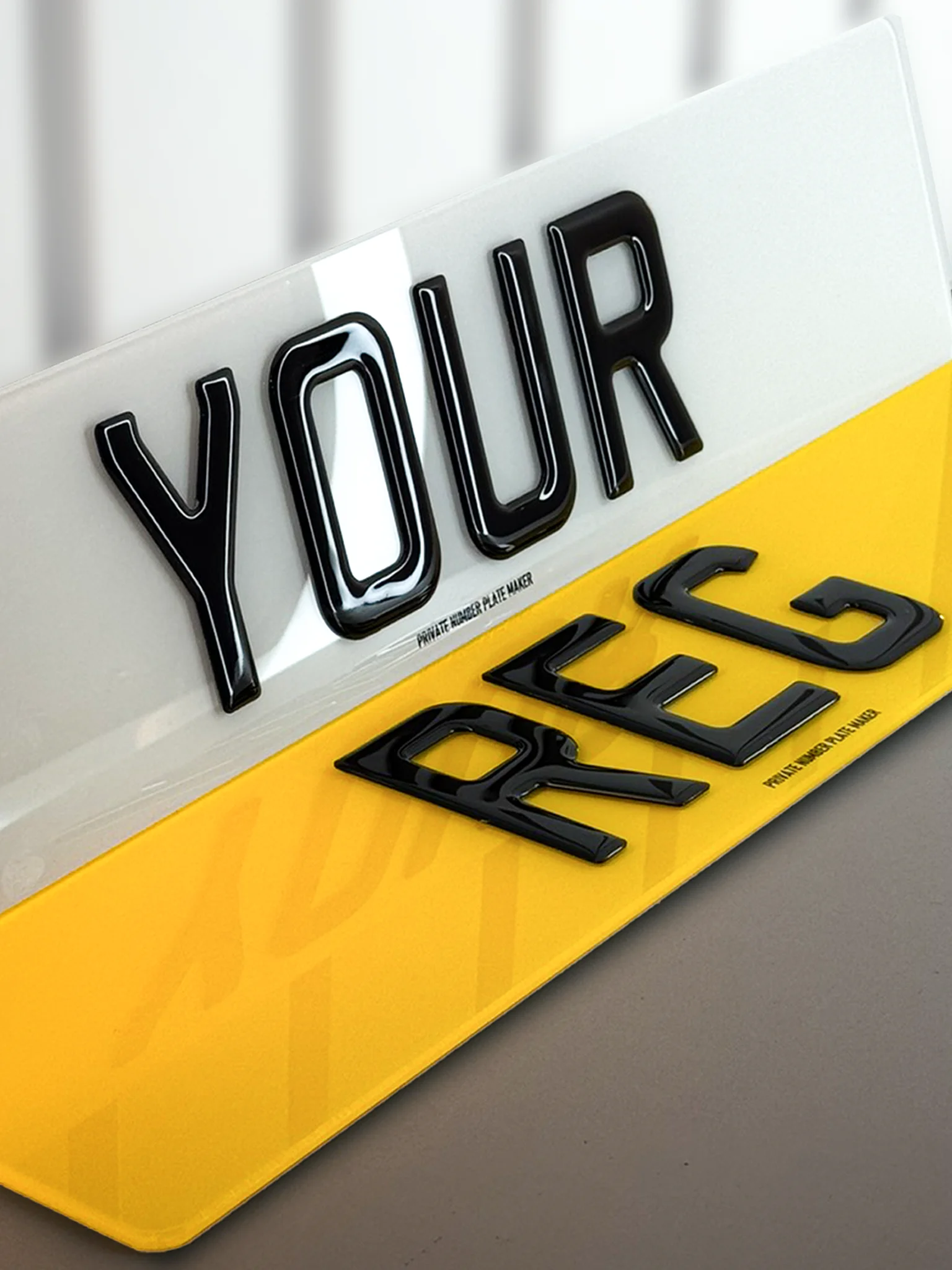 3D Plate
 4D Plate
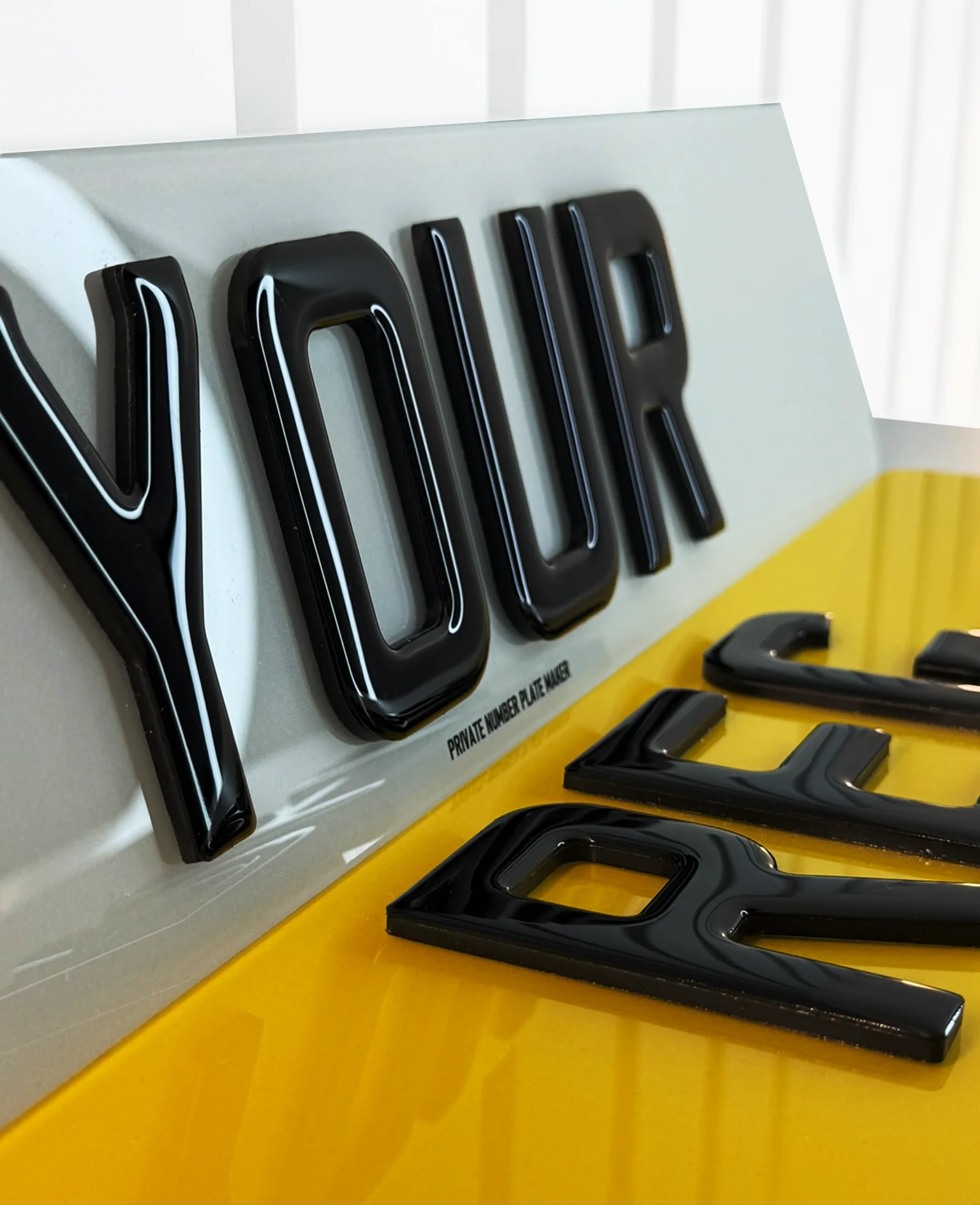 5D Plate
 Ghost
Ghost Bevel
BevelTinted Number Plates vs Ghost Plates: What's Legal?

Summary
Tinted or smoked number plates - those with dark films or coatings applied to reduce visibility - are illegal in the UK under all circumstances. Ghost plates, when manufactured correctly using BS AU 145e:2018 certified materials with subtle gradient effects that maintain full reflectivity and ANPR readability, can be legal.
The critical distinction is that ghost plates achieve their aesthetic through approved printing techniques on compliant substrates, while tinted plates use films or coatings that deliberately reduce reflectivity and interfere with Automatic Number Plate Recognition systems. Under Regulation 16 of the Road Vehicles (Display of Registration Marks) Regulations 2001, any modification that reduces plate reflectivity breaches legal requirements. As a DVLA-registered manufacturer (RNPS ID: 75449), we only produce plates that meet all UK regulations.
Related guide: BS AU 145e explained Guide | Number plate fines UK Guide
Understanding the Confusion: Ghost vs Tinted Plates
The terms "ghost plates," "tinted plates," and "smoked plates" are often used interchangeably in online forums and social media, creating significant confusion among drivers. However, these represent fundamentally different products with opposite legal statuses.
Where the Confusion Originates
Visual Similarity
Both ghost plates and tinted plates can appear darker or more subdued than standard high-contrast number plates. To an untrained observer, they may look similar at first glance.
Marketing Misrepresentation
Some illegal suppliers deliberately market tinted plates as "ghost plates" to capitalise on the aesthetic popularity of legal ghost plates while selling non-compliant products.
Lack of Technical Understanding
Many drivers do not understand the technical requirements for number plate compliance, particularly regarding reflectivity standards and ANPR compatibility.
The Fundamental Difference
The distinction is not about appearance alone, but about manufacturing method and compliance:
Legal Ghost Plates:
- Manufactured using BS AU 145e:2018 certified substrates
- Gradient effect achieved through approved printing techniques
- Maintain full retroreflective performance
- Remain ANPR-readable
- Display correct Charles Wright font
- Include required markings and supplier details
Illegal Tinted/Smoked Plates:
- Standard plates with dark films or coatings applied
- Reflectivity deliberately reduced or blocked
- Designed to interfere with ANPR detection
- Often lack proper markings
- Breach Regulation 16 of the Road Vehicles Regulations 2001
What Are Ghost Plates?
Ghost plates refer to number plates featuring a subtle grey or tonal gradient effect where the registration characters blend with the background rather than standing out in high-contrast black on white or yellow.
Legal Manufacturing Method
Certified Substrates
Legal ghost plates begin with BS AU 145e:2018 certified reflective substrates. These materials meet the British Standard requirements for:
- Retroreflectivity
- Impact resistance
- Weathering durability
- NIR (Near-Infrared) compatibility
Approved Printing Techniques
The gradient effect is achieved through specialised printing processes that:
- Use approved inks and methods
- Maintain underlying reflectivity
- Do not apply opaque coatings
- Preserve NIR compatibility
Compliance Verification
Legal ghost plates display:
- BS AU 145e:2018 marking
- Supplier name, postcode, and RNPS ID
- Correct Charles Wright font
- Standard character dimensions (79mm height, 50mm width, 11mm spacing)
Performance Requirements
ANPR Readability
Legal ghost plates must remain fully detectable by Automatic Number Plate Recognition cameras. The gradient effect cannot interfere with:
- Visible light imaging
- Near-infrared detection
- Pattern recognition algorithms
Reflectivity Maintenance
Despite the subtle appearance, legal ghost plates must reflect light adequately for camera detection in all lighting conditions, driver visibility at night, and compliance with BS AU 145e:2018 standards.
Related guide: BS AU 145e explained Guide | Charles Wright font Guide
What Are Tinted or Smoked Plates?
Tinted or smoked number plates are standard number plates that have been modified with dark films, sprays, or coatings applied to reduce visibility and reflectivity.
Illegal Modification Methods
Tinted Films
Transparent or semi-transparent dark films are applied over the plate surface. These films:
- Reduce light transmission
- Block or scatter reflected light
- Interfere with NIR wavelengths
- Create a "smoked" or darkened appearance
Reflective Sprays
Coatings sprayed onto plates to:
- Create matte or reduced-reflectivity finish
- Obscure characters from certain angles
- Attempt to evade camera detection
- Often wear unevenly
Intent and Design
Evasion Purpose
Tinted plates are typically marketed and sold with the explicit intent to:
- Avoid speed camera detection
- Evade congestion charges
- Prevent vehicle identification
- Circumvent ANPR enforcement
Marketing Claims
Illegal suppliers often use phrases such as:
- "ANPR-proof"
- "Camera evasion"
- "Invisible to cameras"
- "Stealth plates"
- "100% smoked"
These claims provide evidence of illegal intent under UK law.
The Legal Distinction: Why One Is Legal and the Other Is Not
The legality of number plates in the UK is determined by specific regulatory requirements, not subjective appearance or marketing claims.
Regulatory Framework
Road Vehicles (Display of Registration Marks) Regulations 2001
Regulation 13 mandates that characters must be clearly visible and legible, correctly formed using Charles Wright font, of specified dimensions and spacing, and unobscured by any material or coating.
Regulation 16 requires that plates must be made of reflective material, meet performance standards for retroreflection, not be treated with substances that reduce reflectivity, and comply with British Standard specifications.
BS AU 145e:2018 British Standard
This standard mandates four critical requirements:
- Retroreflectivity - Plates must reflect light back to its source at specified levels
- Impact Resistance - Materials must withstand stone chips and minor impacts
- Weathering - Plates must resist fading, cracking, or deterioration
- NIR Compatibility - Materials must be detectable by near-infrared wavelengths
How Ghost Plates Can Comply
Legal ghost plates comply because they:
- Use certified substrates meeting all BS AU 145e:2018 requirements
- Achieve gradient effect without reducing reflectivity below standard thresholds
- Maintain NIR compatibility for ANPR detection
- Display correct font and dimensions
- Include all required markings
The gradient is a printing effect, not a reflective-reducing modification.
Why Tinted Plates Always Breach Regulations
Tinted plates breach regulations because they:
- Apply films or coatings that deliberately reduce reflectivity
- Block or interfere with NIR wavelengths
- Obscure characters contrary to Regulation 13
- Treat plates with substances that reduce reflectivity contrary to Regulation 16
- Fail BS AU 145e:2018 requirements
The modification itself is the violation, regardless of intent or degree of tinting.
Why Ghost Plates Can Be Legal
Understanding why ghost plates can be legal when manufactured correctly helps clarify the distinction from illegal tinted plates.
Manufacturing Process
Step 1: Certified Substrate Selection
Legal ghost plates begin with BS AU 145e:2018 certified reflective substrates from approved suppliers. These materials have been tested and certified to meet all performance requirements.
Step 2: Digital Design
The registration is formatted using approved software ensuring:
- Correct Charles Wright font
- Standard character dimensions
- Proper spacing and margins
- Gradient effect integrated into design
Step 3: Specialised Printing
The gradient effect is achieved through:
- Controlled ink application
- Layered printing techniques
- UV-cured processes
- Methods that do not compromise substrate reflectivity
Step 4: Quality Control
Every plate undergoes testing for:
- Reflectivity levels meeting BS AU 145e:2018
- ANPR readability across multiple camera systems
- Correct font and dimensions
- Proper marking placement
Technical Compliance
Reflectivity Preservation
The printing techniques used for legal ghost plates:
- Do not create opaque layers
- Allow underlying reflective substrate to function
- Maintain light reflection within required parameters
- Preserve NIR compatibility
ANPR Performance
Legal ghost plates must pass ANPR readability tests demonstrating:
- Consistent detection across multiple camera angles
- Reliable character recognition
- No interference with enforcement systems
- Performance equivalent to standard plates
Supplier Accountability
DVLA Registration
Legal ghost plates must be manufactured by DVLA-registered suppliers (RNPS) who:
- Hold valid registration
- Verify customer documents
- Maintain compliance records
- Are subject to DVLA audits
Document Verification
Under Schedule 2 of the Road Vehicles Regulations 2001, suppliers must verify customer identity, entitlement to registration mark, and valid documentation (V5C, V750, V778, etc.). This verification process ensures accountability and traceability.
Why Tinted Plates Are Always Illegal
Tinted or smoked plates cannot be made legal under UK regulations because their fundamental design breaches mandatory requirements.
Inherent Regulatory Breaches
Regulation 16 Violation
Any film, spray, or coating applied to reduce reflectivity directly breaches Regulation 16 of the Road Vehicles (Display of Registration Marks) Regulations 2001, which requires plates to:
- Be made of reflective material
- Maintain specified retroreflective performance
- Not be treated with substances that reduce reflectivity
The application of tinting materials is itself the violation.
BS AU 145e:2018 Failure
Tinted plates inherently fail BS AU 145e:2018 requirements because:
- Films block or scatter reflected light
- Coatings reduce retroreflectivity below required thresholds
- NIR wavelengths cannot penetrate tinting materials
- Impact resistance and weathering are compromised
Regulation 13 Breach
Tinting materials obscure characters, breaching Regulation 13 requirements for clear visibility, legibility, and unobscured presentation.
Intent and Marketing
Evidence of Illegal Purpose
Tinted plates are typically marketed with claims that provide evidence of illegal intent:
- "ANPR-proof"
- "Camera evasion"
- "Invisible to police"
- "Stealth technology"
These marketing claims demonstrate the product was designed to evade enforcement, strengthening prosecution cases.
No Legal Defence
Unlike ghost plates where compliance can be demonstrated through BS AU 145e:2018 certification, ANPR readability testing, proper markings and supplier details, tinted plates have no compliance pathway. The modification itself is illegal regardless of:
- Degree of tinting
- Supplier claims
- Customer intent
- Perceived effectiveness
Supplier Illegality
Unregistered Operations
Suppliers of tinted plates typically:
- Lack DVLA RNPS registration
- Do not verify customer documents
- Operate through social media or unverified platforms
- Cannot provide compliance documentation
Criminal Liability
Suppliers manufacturing or selling tinted plates face prosecution under Regulation 16, fines and potential imprisonment, seizure of equipment and stock, and civil claims from affected customers.
How to Tell the Difference: Visual and Physical Tests
Drivers can use simple tests to distinguish legal ghost plates from illegal tinted plates.
Visual Inspection
Check for Films or Coatings
Examine the plate surface closely for:
- Visible film edges or bubbles
- Texture changes indicating applied coating
- Uneven finish suggesting spray application
- Peeling or lifting materials
Legal ghost plates have a uniform printed finish with no applied layers.
Reflectivity Test
In a dimly lit area, shine a torch or phone light at the plate from the angle a camera would view it (approximately 15-30 degrees):
Legal Ghost Plates:
- Reflect light clearly back toward the source
- Maintain consistent reflection across entire surface
- Characters remain visible under reflected light
- Gradient effect does not eliminate reflectivity
Illegal Tinted Plates:
- Appear matte or non-reflective
- Show inconsistent or absent reflection
- Light is absorbed or scattered rather than reflected
- Dark appearance persists under direct light
Marking Verification
Legal Ghost Plates Display:
- BS AU 145e:2018 marking (permanent, embedded)
- Supplier name and postcode
- RNPS ID number
- All markings clearly legible
Illegal Tinted Plates Often Lack:
- BS marking entirely
- Or have markings obscured by tint
- No supplier details or fake details
- Markings that appear to be stickers
Physical Tests
Touch Test
Run your finger lightly across the plate surface:
Legal Ghost Plates:
- Smooth, uniform finish
- No raised edges or film boundaries
- Printed surface feels integrated
Illegal Tinted Plates:
- May feel film edges or coating texture
- Uneven surface where film applied
- Possible bubbling or lifting
ANPR Test
Drive through a known ANPR location (car park entry, toll booth, speed camera zone):
Legal Ghost Plates:
- Read consistently by the system
- No repeated failures
- Performance similar to standard plates
Illegal Tinted Plates:
- Frequently fail to register
- Inconsistent reads
- May trigger alerts for non-readable plates
Professional Verification
Supplier Documentation
Legal Suppliers Provide:
- BS AU 145e:2018 batch certification
- RNPS registration details
- Compliance guarantees
- Verifiable business address
Illegal Suppliers:
- Cannot provide certification
- Lack RNPS registration
- Make evasion claims
- Operate anonymously
Penalties for Tinted Number Plates
Using tinted or smoked number plates carries serious legal consequences under UK law.
Financial Penalties
Fixed Penalty Notice: £100
Police officers and traffic enforcement agents can issue a £100 Fixed Penalty Notice for non-compliant plates under the Road Vehicles (Display of Registration Marks) Regulations 2001.
Court Prosecution: Up to £1,000
Under Section 42 of the Vehicle Excise and Registration Act 1994, prosecuted cases can result in fines up to level 3 on the standard scale, currently £1,000, plus:
- Court costs (£50-£200 typical)
- Victim surcharge (£22-£100)
- Legal representation costs if contested
Criminal Record
Conviction results in a criminal record, which may affect employment in regulated sectors, travel visa applications, professional licensing, and insurance premiums.
MOT Failure
Vehicles fitted with tinted plates automatically fail MOT inspection under the "Registration Plates" item. Consequences include:
- Cannot drive legally except to pre-booked repairs
- Cannot renew vehicle tax without valid MOT
- Insurance may be invalidated
- Vehicle cannot be sold with valid MOT
- Retest fees and replacement plate costs
Vehicle Seizure
Under Section 165A of the Road Traffic Act 1988, police can seize vehicles when:
- Insurance cannot be verified due to unreadable plates
- Road tax cannot be confirmed via ANPR
- Criminal use is suspected
Seizure Consequences:
- Immediate loss of vehicle access
- Recovery and storage fees (£150-£300)
- Must fit compliant plates before release
- Vehicle may be crushed if not claimed within 14 days
Enhanced Enforcement in 2026
The government has intensified enforcement against illegal number plates in 2026, with coordinated police and Trading Standards operations, increased ANPR flagging of non-readable plates, raids on suppliers of tinted plates, and higher penalty issuance rates.
Legal Alternatives to Tinted Plates
Drivers seeking a sophisticated, understated appearance have several legal options that do not breach regulations.
Legal Ghost Plates
Subtle Gradient Effect
Legal ghost plates achieve the desired aesthetic through:
- BS AU 145e:2018 certified materials
- Approved printing techniques
- Maintained reflectivity and ANPR readability
- Full regulatory compliance
Benefits:
- Sophisticated appearance
- Legal for road use
- MOT compliant
- No enforcement risk
- Available from registered suppliers
Premium 3D, 4D, and 5D Plates
Raised Character Options
These legal premium plates offer:
- 3D gel plates: 2mm raised UV-cured resin characters
- 4D plates: 3mm laser-cut acrylic characters
- 5D plates: 3mm acrylic base with 2mm gel overlay (5mm total)
Compliance:
- All use BS AU 145e:2018 certified substrates
- Maintain correct font and dimensions
- Full ANPR compatibility
- MOT compliant
Standard 2D Plates with Custom Finishes
Legal Customisation Options include:
- Border styles (national flags where eligible)
- Approved colour combinations
- Green flash for eligible electric vehicles
- Subtle texture variations within regulations
Our Manufacturing Guarantee
At Private Number Plate Maker Ltd (RNPS ID: 75449), we manufacture only compliant plates at our Ilford workshop. Every plate:
- Uses BS AU 145e:2018 certified materials
- Displays correct Charles Wright font and dimensions
- Includes required BS marking and supplier details
- Is verified against your entitlement documents
- Is guaranteed MOT-compliant and legal for road use
We offer same-day collection from our Ilford workshop and next-day UK delivery.
Frequently Asked Questions
No, tinted or smoked number plates are illegal under all circumstances in the UK. Regulation 16 of the Road Vehicles (Display of Registration Marks) Regulations 2001 prohibits any film, coating or treatment that reduces plate reflectivity. Such plates also fail BS AU 145e:2018 requirements for retroreflectivity and ANPR compatibility. Penalties include £100 Fixed Penalty Notices, up to £1,000 fines if prosecuted, automatic MOT failure, and potential vehicle seizure. Always purchase from a DVLA-registered supplier (RNPS ID verified) to ensure compliance.
The fundamental difference lies in manufacturing method, not appearance. Legal ghost plates achieve a subtle gradient effect through approved printing techniques on BS AU 145e:2018 certified substrates, maintaining full reflectivity and ANPR readability. Illegal tinted plates use dark films or coatings applied to reduce visibility and evade detection, breaching Regulation 16. Ghost plates display correct Charles Wright font, required markings and supplier RNPS details; tinted plates often lack these. Only DVLA-registered manufacturers can produce compliant ghost plates.
Yes, when manufactured correctly. Legal ghost plates use BS AU 145e:2018 certified materials that maintain the retroreflectivity and Near-Infrared (NIR) compatibility required for ANPR camera detection. They must display the correct Charles Wright font, standard character dimensions, and include permanent BS markings with supplier details. At our Ilford workshop (RNPS ID: 75449), every ghost plate undergoes quality control testing to ensure ANPR readability and MOT compliance. Illegal tinted plates, by contrast, deliberately block reflectivity and will fail both tests.
Check for three key indicators: (1) the permanent BS AU 145e:2018 marking embedded in the plate material; (2) the supplier's name, postcode and DVLA RNPS ID (such as 75449); and (3) correct Charles Wright font with standard 79mm character height. Perform a simple reflectivity test: in dim light, shine a torch at the plate - legal plates reflect light clearly back toward the source. Only purchase from DVLA-registered suppliers who verify your entitlement documents and provide compliance guarantees.
Fitting tinted plates can result in a £100 Fixed Penalty Notice, or up to £1,000 plus court costs if prosecuted under Section 42 of the Vehicle Excise and Registration Act 1994. Your vehicle will automatically fail its MOT, preventing tax renewal and potentially invalidating insurance. Under Section 165A of the Road Traffic Act 1988, police can seize vehicles when plates prevent ANPR verification of tax or insurance. With intensified 2026 enforcement, the risks of illegal plates far outweigh any perceived benefits.
This guide references the following official and verified sources:
Road Vehicles (Display of Registration Marks) Regulations 2001
legislation.gov.ukVehicle Excise and Registration Act 1994, Section 42
legislation.gov.ukRoad Traffic Act 1988, Section 165A
legislation.gov.ukBritish Standards Institution: BS AU 145e:2018
knowledge.bsigroup.comDVLA Registered Number Plate Supplier (RNPS) requirements
gov.ukMOT Inspection Manual
gov.ukTrading Standards guidance on number plate compliance
www.gov.uk